The Space Between
A dynamic program designed to give you the tools to live your life in a more meaningful way through the comprehensive study of ancient yogic healing practices.
Through these practices, we will learn how we can bring forth the most authentic, healthy, radiant, connected parts of ourselves to then lead others towards their own source and truth.
Table of Contents
Policies, Agreements
+ Resources
The foundation of our leadership begins here—with a shared commitment to excellence, fairness, and right action. These policies guide us in moments of certainty and uncertainty alike, ensuring a safe and transformative environment for every student and teacher.
hours
Training Hours Breakdown
Your 200-hour certification is structured across five Yoga Alliance categories. Each discipline builds on the others—technique informs teaching methodology, anatomy deepens your cueing, philosophy grounds your leadership, and practicum ties it all together through real-world application.
Code of Conduct
The policies and agreements set forth here are to hold our instructors and trainees to a high standard of excellence, fairness, and right action. These are the very foundation of our leadership that reminds us of the right thing to do, especially in moments we are unsure. It’s our job as leaders to take care of ourselves, our students, and one another through upholding our commitment to quality values and ethical principles.
We believe that it is the responsibility of a teacher to ensure a safe environment in which our students can grow physically, mentally, emotionally, and spiritually. Our Code of Conduct was developed to protect our students in this potentially vulnerable relationship with their teachers and to uphold the highest professional standards.
Code of Conduct — CEREMNY Teacher Training
At CEREMNY, we recognize that stepping into a yoga teacher training is more than an educational experience—it is a threshold. A space of transformation, responsibility, and remembrance.
As facilitators, mentors, and space-holders, we commit to walking alongside you with integrity, presence, and care.
- Trauma-aware facilitation
- Consent-based practices (physical, emotional, and energetic)
- Zero tolerance for discrimination, harassment, or exclusion
Your voice matters here. Your boundaries are honored here.
- Clearly differentiate between tradition, lineage, and personal interpretation
- Credit sources, teachers, and cultural roots of practices
- Avoid misinformation or exaggerated claims
We honor yoga as a living tradition—not a commodity.
- Ongoing education around cultural context and history
- Avoiding appropriation and superficial use of sacred practices
- Encouraging thoughtful, respectful engagement rather than extraction
We invite you into relationship—not consumption.
- Maintain clear professional boundaries
- Avoid manipulation, favoritism, or coercion
- Not engage in exploitative relationships
Leadership, to us, means accountability.
- Communicate expectations, schedules, and requirements clearly
- Be available for questions, feedback, and support
- Address conflicts directly, respectfully, and in a timely manner
We welcome honest dialogue as part of your growth.
- Acknowledge our own humanity and ongoing learning
- Take responsibility when we make mistakes
- Model self-awareness, reflection, and repair
Your growth does not require perfection—only presence.
- Respect the privacy of personal stories and experiences
- Not share sensitive information without consent
- Create containers where vulnerability is protected
Trust is the foundation of this work.
- Encourage critical thinking and self-inquiry
- Support your authentic voice as a teacher
- Honor diverse expressions of practice and leadership
You are not here to fit a mold—you are here to remember your way.
- The pacing and rhythm of the container
- The emotional and energetic tone of the group
- The integration of practices—not just their delivery
We treat this training as ceremony, not just curriculum.
- Listening without defensiveness
- Taking responsibility for impact (not just intention)
- Engaging in repair processes when needed
Accountability is how trust is sustained.
Student Code of Conduct — CEREMNY Teacher Training
By entering this training, you are stepping into a shared container—one built on trust, presence, and mutual respect.
We ask that you meet this space with intention and integrity, honoring both your personal journey and the collective experience.
- Arrive on time and prepared
- Participate with attention and care
- Minimize distractions (devices, side conversations, disengagement)
Your presence shapes the depth of this container.
- Ask before offering physical touch or adjustments
- Respect “no” without question or pressure
- Honor your own limits as well as others’
Your awareness supports collective safety.
- Speak and act without discrimination or harm
- Avoid language or behavior that excludes or marginalizes
- Stay open to perspectives different from your own
Growth often lives outside of comfort.
- Engage with teachings respectfully and thoughtfully
- Avoid appropriation or misrepresentation of practices
- Stay curious about the deeper context of what you are learning
This is a practice of relationship, not ownership.
- Complete required coursework and assignments honestly
- Not present others’ work or teachings as your own
- Engage in discussions with sincerity rather than performance
Your growth is your responsibility.
- Take ownership of your physical, emotional, and mental wellbeing
- Seek support when needed (from facilitators or external resources)
- Recognize your impact on others within the space
Self-awareness is part of the practice.
- Keep personal stories and experiences shared by others private
- Not discuss or share sensitive information outside the training
- Ask for consent before referencing someone else’s experience
Trust allows depth.
- Ask questions when unclear
- Share feedback respectfully and constructively
- Address concerns directly rather than through gossip or withdrawal
Your voice is part of the container.
- Help maintain cleanliness and order of practice spaces
- Be mindful of the group’s energy and dynamics
- Contribute to an atmosphere of respect and presence
We co-create this environment together.
- Listen when feedback is offered
- Reflect without immediate defensiveness
- Participate in repair when needed
Accountability is part of ethical leadership.
A Living Practice
This Code of Conduct is not about perfection—it is about practice.
You will be invited, again and again, to return to:
- Awareness
- Responsibility
- Compassion
- Integrity
This is how we grow—not only as teachers, but as humans in relationship.
To receive your 200-hour certification, you must complete all of the following:
Professional Standards
The following standards define our expectations for ethical, professional, and compassionate conduct. As yoga teachers, we hold ourselves accountable to these principles in every interaction—on and off the mat.
Trainee Agreement Terms
A teacher shall accurately represent his or her professional qualifications and certifications along with his or her affiliations with any organization(s). Announcements and brochures promoting classes or workshops shall describe them with accuracy and grace.
We do not permit managers, employees, teachers, independent contractors, students, or others in the workplace to harass any other person because of age, gender (including pregnancy), race, ethnicity, culture, national origin, religion, sexual orientation, disability, socioeconomic status, genetic information, or any other basis proscribed by law.
Teachers will welcome, accept, and support all students regardless of religion, gender, sexual orientation, language, nationality, political, or cultural background. Teachers will embrace yoga equity and emphasize the importance of learning, teaching, and practicing yoga honestly—which means promoting equity, reducing harm, honoring and leveraging cultural differences, and fostering diversity and inclusion in all areas of yoga while honoring the integrity of yoga’s cultural and historical roots.
Attendance & Program Policies
Each student can miss 24 hours, or two weekends, of the 200 hour program with advanced approval from the lead facilitator. These missed hours must be revisited by reviewing the training content and completing missing assignments.
If you miss more than 24 hours / 2 weeks, you will forfeit your ability to receive certification.
The program may terminate any student’s participation if:
- False information was used in the admission process
- A student missed more than 20% of any subject category
- A student is absent for more than 3 consecutive weekends without contacting the program director
- The student fails to make timely payments of tuition
Learning Environment & Resources
These guidelines create the container for a safe, supportive, and transformative learning experience. Carry them with you through every session.
These texts support and deepen your training experience across multiple dimensions of study.
Required
Required
Schedule
Your week-by-week training schedule, including session dates, times, facilitators, and topics covered across all 10 weeks of the program.
training
Schedule
This schedule is subject to change based on the progress of each session. All times are PST.
- Thursdays — 6–8pm on Zoom
- Saturdays — 12–6pm at CEREMNY
- Sundays — 12:30–6pm at CEREMNY
No session Sunday, April 5th (Easter) or Memorial Day week — Thurs May 21st, Sat May 23rd, Sun May 24th
6–8pm
10am–6pm
12:30–6pm
6–8pm
12–6pm
6–8pm
12:30–6pm
12:30–6pm
6–8pm
12–6pm
12:30–6pm
6–8pm
12–6pm
12–6pm
6–8pm
12–6pm
12:30–6pm
6–8pm
12:30–6pm
12:30–6pm
6–8pm
12:30–6:30pm
Master Class: Somatic Chakra Breathwork & Soundbath – Open Workshop with Imari & Ashley
12:30–6pm
6–8pm
12:30–6pm
12:30–6pm
6–8pm
12–6pm
12:30–6pm
Personal + Professional
Development
Evolving how we think, not what we think — developing yourself at a cellular level through experience, reflection, and integration.
Introduction to Personal/Professional Development
While technical education is incredibly important, it's only as good as the practical application to which we use it. Developing yourself personally and professionally at a cellular level is the key to maximizing that very education and applying what you've learned into real-life scenarios and circumstances. Working on yourself creates observable impact in every area of your life, not just the information you know. This concept is evolving HOW we think, not WHAT we think.
These are skills learned through a combination of experiences, personal reflection, and integration. All of this information will make you not only a well rounded instructor and leader, but also a more evolved human being that is able to connect and thrive in this relational life that we are living.
A multitude of topics in this area are woven into your learning curriculum. Keep in mind, this level of content applies across and throughout your life experience — your career, your relationships, and your emotional management — so enjoy it!
Holding Space
Holding space is the foundation of leadership and connection. It means being fully present and witnessing another's experience from a neutral place — free from the need to fix, change, or influence.
By listening actively and surrendering your ego, you empower others to feel seen and supported. Sometimes, simply offering this neutral presence is the key to someone's healing and self-realization.
Reflection: How can I create a neutral experience within myself so I can hold space for someone else's experience?
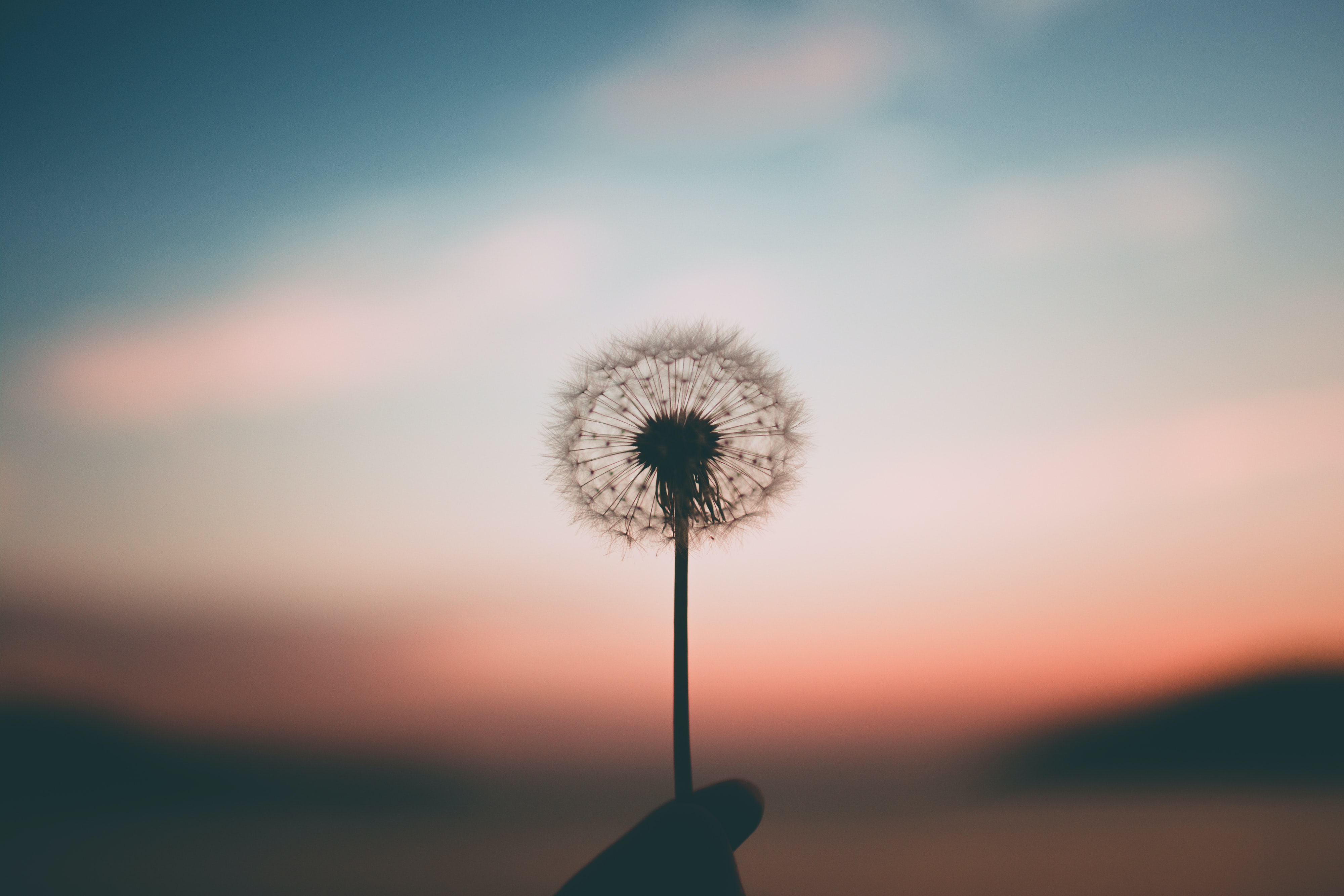
The greatest gift you can give another person is your full, undivided presence—free from the need to fix, change, or influence their experience.
Modeling + Embodiment
Modeling has been used from the beginning of time as a form of teaching and learning. We learn from our parents' modeled behavior when we are young, just like we also use successful figures to model and grow our expertise in areas such as healthy relationships, good leadership, entrepreneurism, skill building, etc.
For example, if you'd like to become a comedian or an actor, you'd study the depths of someone who has done well at these things. If you'd like to learn the stock market, you might spend time apprenticing for a brokerage so you can learn from seasoned vets.
Seeing the behavior or characteristics of someone who is your ideal version of a leader, teacher, guide, or healer can be an incredible way to develop yourself. After all, even when we are teachers, we are still students. Not only will you grow using this method, but you will also have a chance to study multiple different perspectives of modeling so you can discern what is applicable to the unique leader you intend to become.
Having mentors, teachers, people of excellence that can be a model for you is an incredibly overlooked piece in leadership. Lebron needs a coach. The best people in the world at what they do still need guidance and support from an outside lens.



True teaching goes beyond external modeling — it requires embodiment. Embodiment means we don’t just demonstrate the practices, values, and presence we teach; we live and breathe them at every level. It is the difference between performing a role and inhabiting it fully. When you embody the teachings, your students don’t just hear your words — they feel your authenticity. Your presence becomes the lesson itself.
Embodiment asks you to integrate what you learn into your daily life — your relationships, your choices, your stillness, and your movement. It is the practice of aligning who you are on the mat with who you are off the mat, so that the wisdom you share comes from a place of lived experience rather than intellectual understanding alone.
Reflection: Where in my life am I modeling the teachings of yoga, and where am I truly embodying them? What would it look like to close that gap?
Emotional Intelligence
Consider all the emotions you have ever felt. They are designed to shift the chemical components of the way your body responds to something in order to get your attention. Your heart rate, blood pressure, breathing, temperature, ability to focus, and more, are all linked to your state of being and how your emotions are making their journey through your body.
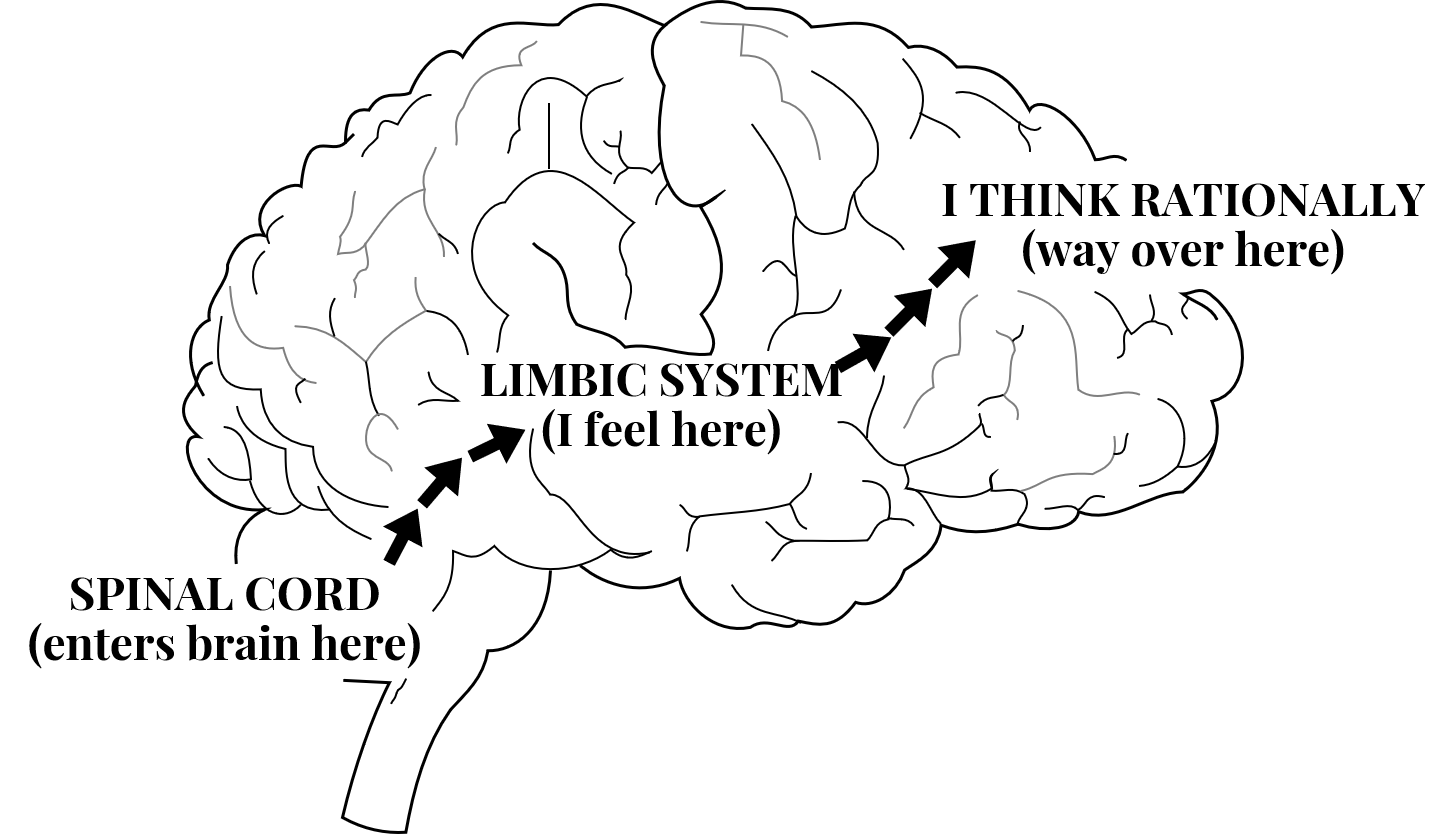
Emotions affect our state of being. In fact, we are biologically hardwired to "feel" emotions before we can even think rationally and question where they came from and if they're serving us or not.
We have all had our emotions run our behavior and lose our ability to think logically and rationally in the ocean of reactivity. Because feelings are a necessary part of our human experience, the only antidote to feeling them is actually doing just that. The more familiar we are with the variety of what's inside us, the more supportive we can be as a leader.
Remember as you stay curious about your feelings and give yourself permission to explore the deeper core meaning of them, you give yourself options for your healing and equip yourself with powerful tools to do so in a healthy way.
The physiological effects of emotional residue stay in the body for a total of only 90 seconds. Everything that happens thereafter reflects our internal conditioning and tools to properly process and move on.
The Five Pillars of EQ
Emotional Intelligence (EQ) is the form of intellect related to our ability to notice emotions when they arise, label and understand them, and manage accordingly when interacting with situations, circumstances, and people. It includes our capacity to be aware of, control, and express one's emotions, and to handle interpersonal relationships judiciously and empathetically.
Definition: The ability to recognize your own emotions, triggers, and patterns as they arise, and understand how they impact others.
Qualities: Emotional literacy (naming feelings accurately). Awareness of inner dialogue and body cues. Alignment of values and actions.
Yoga Lens: Svadhyaya (self-study) — using practice to notice patterns. A teacher who knows when they are nervous, distracted, or projecting can pause and recenter, teaching authentically rather than performing.
Practices: Daily reflection: “What am I feeling? Where do I feel it in my body?” Journaling before or after teaching. Mindfulness or breathwork check-ins throughout the day.
Definition: The ability to manage and channel emotions constructively, choosing response over reaction.
Qualities: Impulse control and thoughtful decision-making. Resilience under stress. Adaptability and calm presence.
Yoga Lens: Teachers are “nervous system anchors.” A dysregulated teacher makes the room feel unsafe. Self-regulation shows up when a student challenges you, tech glitches happen, or your class turnout is small — and you stay grounded. In yoga philosophy: pratyahara and pranayama are tools for regulating.
Practices: Pause and breathe before responding. Grounding rituals before class. Reframe challenges: “This is an opportunity to model steadiness.”
Definition: Intrinsic drive to act from purpose and values, even in the face of challenges.
Qualities: Purpose-driven, optimistic, committed. Sees setbacks as growth opportunities. Passion for continuous learning.
Yoga Lens: Teaching from dharma (service) rather than ego. Staying resilient when classes are small or self-doubt arises. Motivation inspires students to reconnect to their own inner strength.
Practices: Journaling: “Why do I teach? What is my deeper purpose?” Celebrate small impacts. Anchor teaching as seva (selfless service). Stay a student yourself.
Definition: The ability to attune to, understand, and connect with others’ emotions and perspectives.
Qualities: Compassion and perspective-taking. Sensitivity to non-verbal cues. Holding space without judgment or fixing.
Yoga Lens: Trauma-informed principle: empathy over sympathy. We don’t rescue students; we witness and hold space. Adjusting teaching if you sense fatigue or dysregulation. Each student arrives with a different body, story, and nervous system.
Practices: Active listening (listen without preparing a response). Use inclusive, invitational language (“If it feels safe, try…”). Metta (loving-kindness meditation).
Definition: The ability to communicate, influence, and build healthy, trust-based relationships.
Qualities: Clear, kind, intentional communication. Conflict navigation with respect. Leadership that inspires and uplifts.
Yoga Lens: How you speak, cue, and hold group energy. Your ability to regulate group dynamics (energize a sleepy class or soften an anxious room) is rooted in skillful communication.
Practices: Concise cueing (less is more for nervous systems). Reflective listening. Non-verbal skills: eye contact, tone, pacing. Set healthy boundaries (scope of role as teacher vs. therapist).
Elevating your EQ is the secret sauce to leadership. It's said to be the predictor for success both interpersonally, in relationships, and in professional success, plus it also gives personal understanding of oneself and a path to Self mastery.
The Feelings Wheel
Personal Responsibility
Effective leaders share a commitment to personal responsibility. The idea of taking accountability for your actions, choices, thoughts, beliefs, words, and feelings is what allows us to move to the next step in our evolution every. single. time. When someone takes responsibility for their part in front of the collective, it sets an example of leadership for each individual to also take responsibility for their parts, while uplifting the organization or relationship as a whole.
This concept is rooted in humility and a willingness to see where we have contributed to or deterred from our own successes and failures. Like holding space, it requires for us to step out of our ego and take ownership of every part of ourselves.
Personal Responsibility can often feel confronting as it puts us face to face with our shadow. Although difficult, this can be a path to building confidence in who we are.
The most honorable thing we can do as leaders is owning our mistakes, saying we're sorry, or admitting we are wrong and that we don't know everything.
This practice allows us to understand ourselves deeply, step into our growth, and be even more authentic in our power and leadership.
Problem Solving
At any given time, there are a million and one things that we can complain about or could be considered as "going wrong". There are also a million and one ways we can reframe those challenges to be opportunities. Learning to be resourceful is one of the greatest skills we can develop. It's not a question of having access to answers or knowing everything, it's more of a conversation around a mindset shift from problem-oriented to solution-oriented.
From a teaching perspective, there will be moments that something comes up in class and you may be unsure of how to navigate the situation. From a personal perspective, you may have a challenge arise in your life that leaves you feeling overwhelmed.
Problem solving and being resourceful means that you can look at a situation in its entirety and momentarily separate your emotions in order to show up, find solutions, and support making a situation comfortable and resolved with ease. The success of problem solving depends more so on your ability to regulate your own state.
Problem solving does not mean you ignore your emotions, it means that you are able to master your state temporarily knowing that you have support in place to clean up the emotional residue in a more contained and intentional way. Embodying the foundation of leadership can sometimes mean taking responsibility for discernment of when and where emotions will take the wheel.

Mindful Communication
As a yoga instructor or practitioner, our communication is a huge tool to express, lead, and guide ourselves and others. Research studies conducted by Professor Mehrabian of UCLA shows a listener's understanding of communication is composed of 7% spoken words or content, 38% vocal tone and 55% body language. This means that the words we use are only a small fraction of our actual communication.
When we learn to articulate the way we deliver and respond to information, we can truly communicate from a more elevated place and achieve a desired result of harmony, alignment, and connection.
Sensory Awareness
The ability to read what is present in a room is an important leadership skill. When you begin a conversation, are you paying attention to the subtle energy, the body language, the temperature, the type of person in front of you? Or do you already have an agenda as to what you want to say or how you want to be?
This concept is mindfulness at its best — it's noticing the subtleties of what's going on, the verbal and nonverbal cues of your interaction, the response you are receiving as a result of your communication, and the way you receive the information back.
Some more specific examples of sensory awareness in yoga application include noticing if your students are breathing and really engaged with class or if they're tired and falling behind with the pace you've set. It's noticing if some people are moving forward before you say the poses or if some are potentially needing you to meet them slower.
Once you become aware, you then have the ability to make informed adjustments. In simple conversation and even conflict (when it can be more important), sensory awareness is noticing someone's vocal tone or inflection change. You want to make note of body language — particularly shoulders and spine. If they are rounded forward, someone may feel uncomfortable or uneasy. If this is paired with a quiet demeanor and fear of speaking up, you can possibly gauge low confidence.
Alternatively, if someone's shoulders are back and their spine is straight, you may notice a level of excitement or receptivity towards what you are offering, allowing you to expand and connect further.
Picking up on these small, oftentimes subtle cues gives you information as to how to both approach and handle situations and communication. This awareness contributes to your responsibility as a leader to shift gears and sync with students and relationships.
Framing
The way you package and deliver communication impacts the response you receive back as well as your listener's ability to actually hear what you are saying. To use your language as a bridge for compassion and understanding, you can use framing to prepare a listener before receiving the actual content of the information. The purpose of this is to create preparation and increased receptivity.
As we learned earlier in mindful communication, it's not always what we say but often how it's delivered that makes all the difference in how a listener receives the information. By giving a structure to your communication and a readiness to your listener, you are setting up an interaction for success.
An example of framing in the context of yoga would be to begin a physically challenging class with reminding students of how strong they are and to remember that when they are approaching difficult postures.
An example of framing in your personal life may be to say, "Mom, don't be mad… but I broke your favorite dish." Or, in your professional life, you may begin a team meeting by saying, "The purpose of this meeting is to gain clarity on our upcoming goals for how we are approaching events and partnerships."
Your Body Language
Body language is another form of communication we often forget about because it doesn't relate directly to our words or tone. As a leader, your body language when you're instructing is important to the message you are delivering.
Particularly in yoga, it's essential to pay attention to your posture and energy you carry in a room. When discussing meditation, be mindful of your posture and body language even when you aren't in practice in your own physical body.
Trauma-Informed Language
Trauma is defined by an experience in which an individual is overwhelmed beyond their capacity and unable to re-regulate or find equilibrium which results in feelings of stress, shut down, helplessness, frustration, anger, and many other impactful side effects.
Because of the nature of trauma's complexity with a multitude of layers and factors, it's essential that we, as yoga teachers create environments that feel safe and neutral.
Regardless of background or history, every person has varying levels of trauma — big T or small t — and in the environment of the yoga space, often the symptoms of our unconscious wounding and trauma may surface. Because of our more attentive awareness to the present moment during class and practices, we may find that stories, ideas, beliefs, and old pain can take form in a bigger role than in our normal daily life.
The natural intelligence of yoga will support practitioners in seeing the truth about ourselves, our light, and bring healing to the very pain we have felt through our trauma. As the role of the instructor, you are holding a container for that to unfold — which is where it becomes incredibly important to hold that responsibility with gentleness, intention, and fragility.
Sensitivity in language to support a welcoming environment can create a safe space when you are serving a class or a room with a variation of people coming from different backgrounds.
Using the yogic principle AHIMSA (doing no harm), doesn't just apply to what you don't say, but also to what you do say.
Reframing Language
"Lift your arms overhead and extend through your fingertips."
Directive language that removes student autonomy and choice.
"Reaching your arms towards the ceiling to a comfortable level, make sure that this feels okay for you."
Gives the student more choice — framed as an invitation instead of a command.
One example gives the student more choice and the language is framed more as an invitation instead of a command. This example of language patterning can be the key to you being able to show up in trauma sensitive environments and be a more adaptable and well-rounded instructor.
When considering the best language or tone to use, if you think it might be "on the edge," it probably is. Now, this isn't always a bad thing. If the person you are or the brand you are developing is more edgy and speaks to a specific audience, this can certainly set you apart from others in your industry.
However, when dealing with a more sensitive demographic — prisons, mental health rehabilitation, substance abuse treatment centers, underserved markets, children — you may consider modifying your verbiage and agenda to ensure everyone in the space can feel honored.
Teaching in this way invites you to take a good look at the output you offer, especially the words you use, the theming and specific focal points in class, and postures you choose. Being intentional is essential to crafting a trauma informed class that honors where all beings are at while still giving access to the healing properties that yoga offers.
Feedback
Feedback is the ongoing circuit loop of content that goes back and forth between two points, containing valuable information and data. It is, at its most essential, the call and response language of the universe—an energetic exchange that flows between all living things. Just as nature offers feedback through seasons, sensations, and cycles, life is constantly reflecting back to us the quality and direction of our choices, thoughts, actions, and behaviors, showing us how aligned they are with the outcome we originally intended.
In any learning environment, feedback is the catalyst that transforms information into wisdom. Without it, growth stalls. A student practicing an asana in silence, never guided toward refinement, may build habits that limit their potential. A teacher who never pauses to listen—to the room, to their students, to themselves—teaches in a vacuum. Feedback closes the gap between where we are and where we are reaching to be, making it one of the most powerful tools for personal development and self-evolution. It asks us to be honest, to be humble, and to remain curious about our own blind spots.
For the yoga teacher, feedback takes many forms—and not all of them are spoken. When you stand at the front of the room, you are in constant dialogue with the energy before you. The shifting weight of a student who has lost focus. The collective exhale that tells you the room has settled into presence. The eyes that search for reassurance, or the body that quietly resists a cue. This is the unspoken feedback of the room—felt and seen more than heard—and learning to read it is one of the most important skills you will develop as a teacher. It is the living, breathing response to your offering.
Beyond the yoga room, feedback is a cornerstone of leadership. Leaders who seek feedback grow. Leaders who resist it plateau. Your willingness to both offer and receive honest, compassionate feedback will shape the depth of your relationships, the trust your students place in you, and ultimately the kind of leader you become—not just on the mat, but in every room you walk into.
- Be Supportable: In order for effective feedback to take form and INform, the listener must be open to allowing it to land and resonate.
- Be Open: Information coming towards us is oftentimes revealing something in our blind spot. The only way we can hear it is if we are willing to understand it in the frame that it’s here to help us, not hurt us.
- Consider the source: Is the person giving you feedback a reliable resource? Is this someone who might have a POV that can be helpful for your growth?
- Read between the lines: Observe the format it’s coming in: It won’t always be delivered in a pretty package or the way you want to hear it.
- Notice Patterns: Pay close attention to the content—have you heard it in other places and settings? If so, would it be valuable to start to consider integrating a version of it?
- Be Brave: Giving feedback is a powerful leadership quality and asks us to be empowered and share from a loving place.
- Self Check-In: Notice in your body how you feel when you give feedback and come from a loving place. Consider: Is it valuable? Is it helpful? Will it support their evolution? Is it coming from a place of my own stuff, or is it actually applicable to this person?
- Start with Permission: “May I give you some feedback on this?” — prepare your listener for the frame they need to actually hear you.
- Be Specific & Objective: Avoid vague generalizations and be as specific as you can with examples.
- Focus on Transformation: What can be changed or improved? Isolate behaviors/actions from character.
- State Intentions: Offer a reason why the feedback is being given and how it can better serve the situation/experience.
- Offer Solutions: Ask how you can help support or give more detail.
- Make it a Conversation: Open a two-way dialogue and offer the opportunity to ask questions.
You want someone to leave the conversation feeling like you genuinely care about their growth, well-being, and would like to see them excel.
As you continue to allow feedback as a powerful leadership tool, its benefits span beyond your professional space into your personal relationships, sacred practices, and Self reflections.
Business Development in the Wellness Industry
In any industry, it's essential one knows the "business" and how to succeed. Sometimes being good at business can be misperceived as taking away from the good-stuff, or the healing that we do as practitioners, but like any industry — you have to learn both business and specialized skills.
The yoga, fitness, meditation, and mindfulness healing industries can be challenging because there are often "preconceived notions" about who you are and what you have to offer. Sometimes people can be really excited about it, and sometimes people can be quite resistant without knowing much. It's your job as a leader to make yourself and your brand accessible and marketable to the right people who fit your message.
By nature, healing practices come with deep relationships. It can be quite common to either lean more on the personal, teacher-first, always-want-to-help, people-pleasing side or on the side of being business savvy and professional.
It's important to remember that you aren't defined by either of those things and there is also a way to have both. In fact, when you do have both, you are often more respected in your industry.
Establishing a value-for-value exchange between you and the clients, students, and employers you are working with is essential. What you have to contribute is worth something. Whether you are compensated in money or something else valuable to you (social posts and promotion, trade services, etc.), you still must be compensated equally to the work you are doing. Adversely, you have an ethical responsibility to offer up the value you are receiving.
Holistic
Wellness
At CEREMNY, wellness is not something we "do"—it's a state of being we cultivate through conscious choices, self-inquiry, and deep listening. It is a lifestyle rooted in presence, ritual, and integration.
wisdom
Introduction to Wellness
The conversation around wellness has become central in our culture—and for good reason. As we collectively remember the importance of living in harmony with the body, mind, and spirit, more people are turning to holistic practices as pathways to sustainable vitality.
At CEREMNY, wellness is not something we "do", it's a state of being we cultivate through conscious choices, self-inquiry, and deep listening.
Yet, in a world driven by speed and surface-level satisfaction, two common obstacles often arise: the endless craving for more, and the lure of instant gratification. These patterns pull us away from the present moment.
Your environments, habits, thoughts, and behaviors are all shaping your inner ecosystem. When you learn to tune into the body's subtle messages, you gain access to your most intelligent guide: your inner teacher.

In this module, you'll explore tools from both Eastern wisdom and Western science and learn how they intersect and how to adapt them to your life and your teaching.
Together, we'll move beyond theory into direct experience—integrating practices that nourish the nervous system, uplift the spirit, and ground the body.
Holistic Wellness
The conversation around wellness has become central in our culture—and for good reason. As we collectively remember the importance of living in harmony with the body, mind, and spirit, more people are turning to holistic practices as pathways to sustainable vitality.
At CEREMNY, wellness is not something we “do”—it’s a state of being we cultivate through conscious choices, self-inquiry, and deep listening. It is a lifestyle rooted in presence, ritual, and integration. True well-being honors the whole system: physical, mental, emotional, energetic, and spiritual.
Yet, in a world driven by speed and surface-level satisfaction, two common obstacles often arise: the endless craving for more, and the lure of instant gratification. These patterns pull us away from the present moment, creating restlessness and disconnection from what is already within us. Wellness is not a quick fix; it is a long-term relationship with life itself.
Your environments, habits, thoughts, and behaviors are all shaping your inner ecosystem. When you learn to tune into the body’s subtle messages—through breath, sensation, energy, or intuition—you gain access to your most intelligent guide: your inner teacher.
There is no single formula for health or healing. Each individual is uniquely woven. This journey is about cultivating attunement to your constitution, your needs, and your capacity so you can meet yourself and others with clarity, compassion, and care.
In this module, you’ll explore tools from both Eastern wisdom and Western science and learn how they intersect and how to adapt them to your life and your teaching. You’ll develop the capacity to support your own healing journey while also guiding others toward balance and embodied vitality.
Emotional Health
Mental Health
Physical Health
Spiritual Health
Let’s visit the intersection of our mental, emotional, physical, and spiritual health as it relates to our daily awareness and our ability to self-diagnose illness. This requires that we take into account the interconnectedness of each aspect of our relationship to life. Often, unbeknownst to us, the part of ourselves that we resist the most or feel the most discord within, is the part that is asking to be healed and offered resolution and attention.
When we feel unwell, it’s not always obvious that our sadness may be blocking our ability to feel love, or that our anxiety could be the source of our stomach aches, or that our lack of sleep fuels feeling angry easier.
Being human means we aren’t just robots operating a body of flesh to simply work, eat, procreate, and die. It also means that we feel deep and profound emotions, have access to many states of consciousness, are blessed with a powerful tool called the mind, and a body temple that has an abundant amount of wisdom already built within it.
Zooming out, this holistic perspective can be broken down further into understanding our interactions with physical movement and exercise, diet, stress management, mental health, self-care practices, habits and routines, relationship health, fulfillment, and dharma, purpose or career-based life. The components of how we show up to these areas combined, not just singularly, will drive the results of the quality of our life and outcomes.
Our physical health does not just include how many times a week we work out. It encompasses our rest and sleep habits, the foods we eat or don’t eat, our hygiene, our movement practices, the amount of demand we put on our bodies, how much time we spend outdoors, and our ability to supplement ourselves when we feel off kilter.
Physical health is often the facet of wellness that is prioritized based on how Western medicine and culture leans. This doesn’t mean that other things aren’t addressed, but what it does mean is that we usually will go straight towards a mindset of pinpointing “what’s wrong” with our bodies when we aren’t feeling our best. We pick apart our bodies like a machine to diagnose and treat based on fixing the symptom, yet we often forget to inquire the cause, or reflect on the little things unknowingly affecting our body.
Our mental health is often an overlooked conversation when addressing wellness. If we feel sick, we go to a doctor and have them take our temperature and our vitals, yet ironically when our heart is broken, we feel chest pain. We are physically and emotionally connected to our mental state of being and vice versa, which is why it’s so important to contemplate the state of our mental health when discussing holistic wellness.
This entails everything from the way we speak to ourselves, to the type of imagery and videos we watch, to feeling safe mentally, to the way we manage our stress, to our meditation practice and beyond.
Keep in mind that as a yoga instructor, you are not certified nor are you equipped to deal with issues around mental illness. You are, however, in a place to support, coach, and teach students to have a positive experience within themselves as they practice with you and encourage them to always find the support they need.
Creating emotional understanding, intelligence, and capacity is one of the most important skills we can learn in our lifetime. We are hardwired to feel and each feeling we come across has a divine purpose and source for its existence.
Emotions aren’t a bad thing simply because they are uncomfortable. In fact, unpleasant emotions can be our greatest teacher if we can understand how to feel and express them in a healthy way. Getting more familiar with the beautiful range we have to feel makes us better, more resilient, and experienced humans with a higher bandwidth to lead.
The goal of yogic practices is to calm the fluctuations of our mind (which also includes those produced by emotions), so that we can realize who we truly are as spirit and remember our source.
Giving our emotions the time of day will influence the outcome of circumstance or situation. The concept of Emotional Intelligence (also referred to as emotional quotient, or EQ) involves noticing when your emotions arise, labeling and identifying them for what they really are, investigating and inquiring the triggers behind them, pausing to bring space between the stimulus and response, and showing up according to logic and open mindedness versus exploding into reaction.
Strengthening your emotional intelligence clears a path for you to have a better relationship with your guidance system, live freely and expansively in a way that’s connected to your authentic truth, and uninhibited, uncensored, and released from irrational triggers and shackles of unmet needs.
Spiritual health is the dimension of wellness that speaks to our connection with something greater than ourselves—whether we call it God, Source, the Universe, or simply the intelligence of life itself. It is the felt sense of belonging to a web of existence that extends far beyond our individual identity.
Tending to our spiritual health means creating space for awe, reverence, and surrender. It means cultivating practices that help us remember that we are not separate from the whole, but an expression of it. This can look like prayer, meditation, journaling, time in nature, sacred ritual, breathwork, devotional practice, acts of service, community, or any act that reconnects us to the sacred. Spiritual health is not about religion—it’s about the relationship you have with your own spirit and the way you tend to it.
When our spiritual health is neglected, we may feel a persistent sense of emptiness, disconnection, or purposelessness—even when everything on the surface appears fine. This inner void often drives us toward external seeking: more achievements, more possessions, more stimulation. Yet the remedy is not more, but deeper. When spiritual health is nourished, it becomes the foundation for resilience—supporting our ability to find meaning in suffering, to trust the process of growth, and to stay grounded in our values even when the world around us feels chaotic.
As yoga practitioners and teachers, we hold space for this dimension of the human experience. We don’t prescribe belief systems, but we honor the universal longing for meaning, for connection, and for the experience of being held by something infinitely wise and loving. Your spiritual health directly impacts the energy you bring into a room—the depth of your own practice, your commitment to your inner work, and the authenticity of your connection to spirit will be felt by your students, often without a single word being spoken.
It’s not the things you do once in a while that matter, it’s the things you do everyday that have the biggest impact on your long-term health. This introduces the possibility that you can utilize your consistent practices to shape how you feel on a day-to-day basis.
Your life is a result of your previous self’s choices, and your now choices are the ingredients to your future self’s results.
Building new habits can be one of the most challenging things we do. We are biologically and mentally programmed to run the path of least resistance. For some of us, that means an autopilot, conditioned way of being based on our upbringing and societal influence on how things “should be” as it creates ease and familiarity. When we question our autopilot tendencies, we start to explore possibilities of new ways of doing things that will result in more alignment in the other areas of our life.
An integral part of transformation when it comes to habits and routines is asking the right questions so you can seek truthful answers.
The only constant in life is change, and you are ever-changing—so wouldn’t that mean your habits and routines must evolve to support your growth?
Exercise and physical fitness are often considered the “all-healing magic potion” to a healthy and happy life. Endorphins are the hormone chemicals released in the body when we move. Not only do they trigger a positive feeling in our bodies, they also interact with receptors in our brains that reduce our perception of pain. Movement can be incredibly healing—science proves that our bodies store traumatic experiences and that certain forms of exercise will help trigger a safe release of those experiences.
There isn’t an ultimate “movement recipe” that should be prescribed to every person because every person’s body and needs are different. Some bodies have injuries, some respond better to more low-impact movement, some need more intensity, some have conditions and contraindications. A general guideline to follow is to have a balance in the types of movement you introduce to offer variety and curiosity towards your optimum health. This includes cardiovascular, weights, resistance, restoration, and recovery. YES, recovery is a part of movement practice, and an important part at that.
Our bodies are fully functioning, alive, and conscious. They thrive off the things we put inside them to convert into energy and use for output. The impact of food and diet in the functionality of our physical bodies is already astronomical, but you may be surprised to learn of the impact food and diet have on our mental, emotional, and spiritual beings too. Everything is connected. Similar to putting gas in a car, if you want your locomotive (in this case, your body) to run well, you put the good stuff in.
If you are paying close attention, you may notice when you’ve consumed something that didn’t agree with your body. In fact, balance here is essential—certain diet patterns have been linked to depression, anxiety, overwhelm, bloating, heart disease, lack of focus, sleep fatigue, and low energy.
Similar to exercise, habits, relationships, and everything else in life, there isn’t a one-size-fits-all when it comes to diet. When we find a diet that makes us feel great and function optimally, we can begin to recognize the times in which we stray away from that to satisfy quick-fix needs and attain short-term gain. The louder your intuition, the closer your relationship to your body, the more you learn to listen and act on those signals, the less “dieting” becomes a chore.
One of the most powerful tools that we have is understanding the way we interact with everything around us through relationships. The most important one, being our relationship with Self, is often a direct, mirror reflection of the way we show up in the world, whether it’s with our family, friendships, intimacy, money, food, religion, sex, environment and space, etc. If we feel angry with the external world, it’s likely that we feel angry with ourselves. If we are joyful and see the world as a beautiful place, we likely identify a similar sense of beauty and joy in ourselves.
Relationship (self, others, and things around us) is our constant conversation and feedback loop of how we are doing inside. It’s a guidance tool as to how we are showing up and how we can show up better. It’s a barometer for how we give and receive love and energy, and how we grow as individuals.
Our relationships are our spiritual teachers as life is our guru. The interaction we have with the world around us can be a key to deep growth and healing. Having strong and powerful relationships is a highway to integrating support, gaining valuable insight and feedback, taking risks, and feeling whole, seen, and loved. Our interconnectedness is how we find meaning and value and this is accessible through the experience we have within our relationships.
Everything is energy—the unwritten, unspoken, unseen thing we all feel and live in. When someone walks into a room, you can feel the vibe. When something feels “off” in your gut, you already know. When your body communicates through nervous system impulses, you can tell. When you connect into a higher power within yourself through meditation or practice, you feel it. This encompasses everything from chakras, to breathwork, to mindfulness, to ethics. This concept is all about alignment and knowing whether you are in or out of balance, and your attunement to this will give you the information you’ll need to make a shift.
This is the relationship we have to the subtle life force that beats through all living things. Your wisdom being is always speaking, yet sometimes it needs to be in shouts in order for us to hear.
Ayurveda
Originating in India between 3,000 and 5,000 years ago, Ayurveda is one of the world’s oldest holistic healing systems. Translated as the “science of life,” it views health as a dynamic balance between mind, body, and spirit—maintained through diet, herbal remedies, yoga, and intentional lifestyle practices.
This “knowledge of life” encompasses the full scope of human experience—health and disease, happiness and sorrow, pain and pleasure—addressing both its physical and metaphysical dimensions.
At its core, Ayurveda works across the mental, emotional, and physical layers of a person as a whole, cultivating healing, harmony, and balance both in the world around us and within our own bodies. Central to this approach are three fundamental energies called doshas—Vata, Pitta, and Kapha—whose unique balance defines each person’s constitution.
Because Ayurveda recognizes that every individual is different, it tailors its approach to suit the distinct makeup of each person rather than applying a one-size-fits-all solution. This stands in contrast to Western medicine, which tends to focus on acute conditions and treat symptoms as they arise. While that approach is effective for urgent health issues, it can sometimes overlook how each person responds uniquely to life’s stresses and conditions.
Ayurveda is rooted in the Vedas, the ancient body of sacred knowledge compiled roughly 5,000 years ago, drawing most directly from the Atharva Veda—which contains hymns, mantras, and prescriptions for healing. Often called the “sister science” to Yoga, Ayurveda sustains the body and mind while Yoga aims at spiritual liberation (moksha). Together they form a complete system for living well and awakening.
The philosophical backbone of Ayurveda comes from Sāṅkhya Philosophy, one of the six classical schools of Indian thought, which teaches that all of existence arises from the interplay of two eternal realities:
- Purusha — pure consciousness, the unchanging witness
- Prakruti — primordial nature, the material creative principle
Prakruti contains three fundamental qualities called the gunas, which combine in different proportions to produce everything in the manifest world—including our bodies, minds, and temperaments.
Sattva — clarity, harmony, lightness
Rajas — activity, movement, passion
Tamas — inertia, heaviness, darkness
Every person, food, time of day, and season has a predominant guna. Ayurveda and Yoga both aim to cultivate sattva—a state of clarity and balance—while understanding that all three gunas are necessary and present in life.
In Vedic philosophy, Ṛta refers to the natural rhythm and order of the universe—the cycles of day and night, the turning of seasons, the rhythm of breath. Ayurveda sees health not merely as the absence of disease, but as living in harmony with Ṛta: aligning daily habits, diet, and practices with nature’s rhythms. When we fall out of sync with these rhythms, imbalance arises.
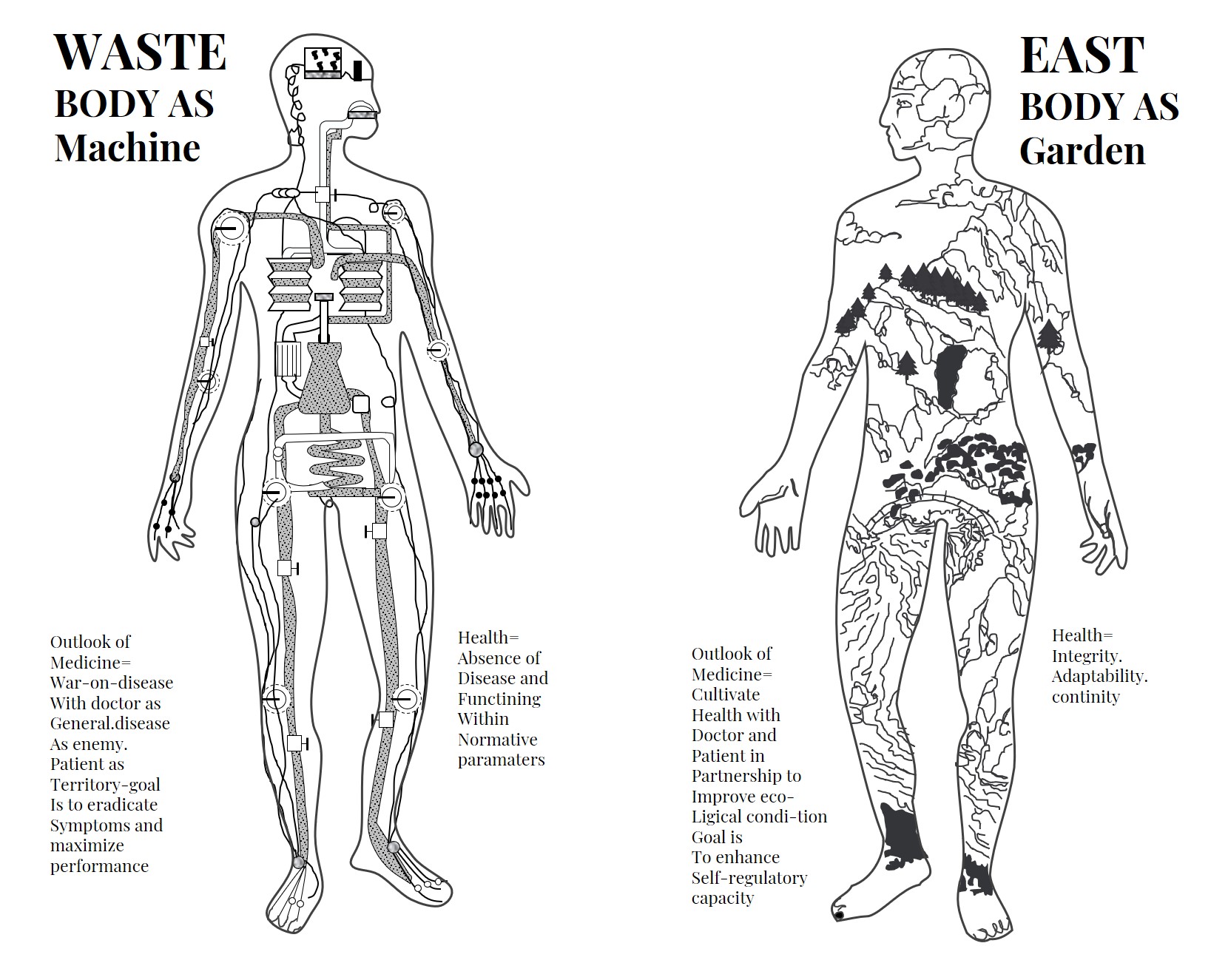
Goal: Eradicate symptoms and maximize performance
Health = Absence of disease and functioning within normative parameters
Goal: Enhance self-regulatory capacity
Health = Integrity, adaptability, and continuity
Source: Ayurveda Fundamental Principles Volume 1 by Vasant Lad M.A.Sc.
Doshic Theory
Within the Ayurvedic discipline lives the recognition of the five elements as a bridge to understanding and classifying attributes within the world around us and within us. This relates to form and how everything that currently exists came into vibration.
It's from the soundless sound of AUM, the vibration of creative consciousness, that congregated the five elements in an explosive order of operations to create all that exists: ether, air, fire, water, earth.
Ether — Ākāsha
In yoga: Spaciousness in poses and breath—creating room within the body and mind. Ether invites us to pause, listen, and allow emptiness as a place of potential.
Air — Vāyu
In yoga: Flowing sequences, vinyasa transitions, and prāṇāyāma. Air governs the prana that moves through the nāḍīs and animates every cell.
Fire — Tejas
In yoga: Heat-building sequences, core work, tapas (disciplined effort). Fire transforms food into energy and experience into wisdom.
Water — Jala
In yoga: Restorative flow, fluid transitions between poses, and practices that cultivate adaptability and emotional release.
Earth — Pṛthvī
In yoga: Grounding poses, standing foundations, and practices that build steadiness, patience, and endurance. Earth is the container for all other elements.
- Qualities (Gunas): Light (laghu), dry (rūkṣa), cold (śīta), subtle (sūkṣma), mobile (cala), rough (khara), clear (viśada)
- Balanced: Imaginative, adaptable, lively, quick-thinking, enthusiastic, flexible, joyful, creative, spiritually attuned
- Imbalanced: Anxiety, fear, insomnia, dry skin, scattered mind, restlessness, irregular digestion, bloating, cracking joints, tremors, feeling ungrounded
- Tastes that Increase: Bitter, Astringent, Pungent
- Tastes that Balance: Sweet, Sour, Salty
- Support: Warm, oily, grounding foods; consistent daily routine (dinacharya); calming practices; warmth and stability; self-massage with warm sesame oil (abhyanga); gentle, steady prāṇāyāma such as Nāḍī Śodhana
- Qualities (Gunas): Hot (uṣṇa), sharp (tīkṣṇa), oily (snigdha), intense, light (laghu), liquid (drava), spreading (sara)
- Balanced: Courageous, discerning, charismatic, sharp intellect, natural leaders, joyful, confident, strong digestion, clear complexion
- Imbalanced: Irritability, anger, inflammation, skin rashes, heartburn, competitiveness, jealousy, excessive hunger, acid reflux, loose stools
- Tastes that Increase: Salty, Sour, Pungent
- Tastes that Balance: Sweet, Bitter, Astringent
- Support: Cooling, hydrating foods; moderation in intensity; time in nature near water; avoid excess heat, spice, and fermented foods; moonlit walks and cooling breathwork (Śītalī)
- Qualities (Gunas): Heavy (guru), cool (śīta), slow (manda), dense (sāndra), stable (sthira), smooth (ślakṣṇa), oily (snigdha), soft (mṛdu)
- Balanced: Calm, loving, forgiving, strong endurance, steady temperament, loyal, compassionate, nurturing, content, excellent immunity
- Imbalanced: Lethargy, weight gain, congestion, attachment, possessiveness, resistance to change, depression, water retention, excessive sleep, sinus issues
- Tastes that Increase: Sweet, Salty, Sour
- Tastes that Balance: Pungent, Bitter, Astringent
- Support: Light, warming, spicy foods; regular vigorous movement; early rising; variety and stimulation in routine; dry brushing; invigorating prāṇāyāma such as Kapalabhāti
Prakruti (constitution) is your unique doshic blueprint—the specific ratio of Vata, Pitta, and Kapha you were born with. It is determined at conception and remains constant throughout your life. Your Prakruti reflects your natural strengths, tendencies, and vulnerabilities. Most people have one or two dominant doshas (e.g., Pitta-Vata, Kapha-Pitta), though tridoshic constitutions exist.
Vikruti (current state) is your present condition—the doshic imbalance caused by environment, diet, stress, season, lifestyle, and life stage. Vikruti shifts constantly in response to what you eat, how you sleep, the weather, your emotional state, and more.
Bring your Vikruti (current imbalance) back toward your Prakruti (original constitution) through diet, lifestyle, yoga, seasonal adjustment, and self-awareness. Healing in Ayurveda is not about becoming something different—it is about returning to who you already are at your most balanced.
This is the core therapeutic principle of Ayurveda. A Vata person in a cold, windy autumn (Vata season) will accumulate more Vata—leading to dryness, anxiety, and scattered energy. The remedy: warmth, moisture, grounding, and routine—the opposite qualities.
Rooted in Ayurvedic philosophy, Brahmana and Langhana describe the two fundamental therapeutic actions used to restore doshic balance—expansion and reduction.
Brahmana
Increases mental activity
Enhances metabolic functions
Strengthens nervous system
Langhana
Calms breathing & metabolism
Relaxes nervous system
Restores balance

3.11 — Taking Wellness Off The Mat
Our practice has tremendous value to teach us. When on our mat, we are encouraged to be completely present with our mind, body, spirit and its connectedness with our breath.
The benefits of our practice are endless, but what’s really important is how we apply these lessons from the sacred time on our mats into our daily lives.
Yoga is no walk in the park. Nor is life. The ability to consistently carve out time for yourself to practice facing challenges in a safe environment is precious in forming a more resilient attitude and way of being through the ebbs and flows of life. Sometimes you’re in a challenging pose and it asks you to engage more, to show up more, to give more. Sometimes you’re in a more restorative pose and your mind instead challenges you to even stay present. Your ability to show up to all of these parts can help make you a better human, if you let it.
Anyone who has a developed and committed practice is often surprised at how many different areas of our lives our practice affects. These resulting effects are personal to each individual but no less impactful. It’s a perfect laboratory to observe deeper and see what comes up for you.
Spending time on our mats gives us patience, discipline, confidence, strength, and much more. It’s as if stepping on our mat provides us with a magnifying glass that allows us to see a clear picture of our soul and spirit, and with this information we can infuse our lives with more passion and meaning.
Philosophy + History of Yoga
Take a trip back in time—yoga is one of the most ancient and impactful forms of practice. While its roots can be quite ethereal, the concepts are wildly applicable to the same challenges and questions we have in our world today.
wisdom & practice
Introduction
This yoga, meditation, and breathwork teacher training involves a combination of yogic lineages combined with modern movement and draws practices, techniques, and teachings from each of these fields. We focus on ancient wisdom texts and teachings, looking to understand how they can be applied to modern day movement, concepts, and personal growth.
Although power yoga has become a modern type of group fitness, it's essential that we honor its roots within the Yoga practice and the mindful way of movement that houses its experience.
Philosophy + History of Yoga
Rooted in traditional approaches, these four paths represent distinct yet complementary orientations toward liberation and self-realization.
Sanskrit
Sanskrit is an Indo-Aryan language of the ancient Indian subcontinent with a 3,500-year history. It is the primary language of Hinduism and the predominant language of most works of Hindu philosophy. It's important to honor this language with respect to the origins of ancient yogic practice so we can show respect to culture and understand the roots of what we are teaching.
Patanjali + The Yoga Sutras
The Yoga Sutras of Patanjali are a foundational text of classical yoga philosophy, originating in ancient India, likely around the 2nd century BCE. Traditionally attributed to the sage Patanjali, the work may actually represent the teachings of a group of sages, compiled over time.
The Sutras are a concise collection of 196 aphorisms that outline the philosophy, practice, and goals of yoga, including the path to self-realization and inner mastery. Central to the text is the concept of the Eight Limbs of Yoga (Ashtanga Yoga).
The Eight Limbs provide a step-by-step framework for ethical living, physical discipline, breath control, meditation, and ultimate union with the Self (samadhi). Despite the mystery surrounding its authorship, the Yoga Sutras remain one of the most influential guides for practitioners, teachers, and scholars of yoga worldwide.
The kleshas are the five root causes of suffering described in the Yoga Sutras (2.3–2.9). They are deeply embedded mental-emotional patterns that distort our perception and keep us trapped in cycles of pain. Patanjali teaches that these afflictions operate on a spectrum—from dormant to fully active—and that the practice of yoga is designed to weaken their grip on our consciousness. Recognizing the kleshas in our own lives is the first step toward liberation.
The Eight Limbed Path
In chapter two of Patanjali's sutras, the eightfold path is called “ashtanga”—from the Sanskrit roots ashta (eight) and anga (limb). Together, ashtanga means “eight limbs.” These act as guidelines to live a more meaningful and purposeful life. They serve as a prescription for moral and ethical conduct and self-discipline, they direct attention toward one's health, and they help us acknowledge the spiritual aspects of our nature.
Each stage of the path prepares us for the next. The idea is that you master each of the eight limbs to finally arrive at Samadhi, which is ultimate enlightenment.
The practice of non-harming in thought, word, and action. It is the foundation upon which all other Yamas rest. Practicing Ahimsa doesn’t mean avoiding conflict, but rather choosing compassion, care, and understanding even in the face of challenge.
“What does non-violence mean to me? Where do I tend to be harsh with myself or with others?”
Instead of snapping back when a colleague frustrates you, pause, take three breaths, and respond with curiosity rather than anger.
“I treat myself and others with care and compassion.”
Living in alignment with your deepest truth in words, thoughts, and actions. Rooted in the word sat (“that which is”), Satya is not just about being honest but about seeing and expressing reality as it truly is. Because we all view life through our own lens, Satya requires humility and openness. It is practiced with Ahimsa in mind: truth delivered with compassion.
“What is something I wholeheartedly believe to be true? Where am I not fully honest with myself?”
Instead of pushing your body into an advanced posture to impress others, you honor your truth and modify to protect your well-being.
“I stand in my integrity with every ounce of my being.”
Extends beyond physical theft. It invites us to avoid taking more than what is freely given—whether that’s someone’s time, energy, ideas, or trust. The root of stealing often lies in scarcity thinking; practicing Asteya teaches us gratitude and sufficiency.
“Where has the law of reciprocity shown up in my life recently? Where do I ‘take’ without realizing it?”
You resist the urge to dominate a conversation and instead listen fully, giving the gift of attention.
“I am supported by the abundance of the universe.”
Using our energy wisely and mindfully. Its deeper meaning is about channeling our life force (prana) toward what nourishes rather than letting it scatter through excess or distraction.
“Where in my life do I currently need more moderation? What practices truly restore and energize me?”
Instead of staying up late scrolling endlessly, you close your phone early, choosing rest and presence over depletion.
“I am intentional with my energy and how I share love.”
Letting go of clinging to things, people, or outcomes. It reminds us that all things are borrowed, not owned, and that freedom comes when we release grasping. When practiced with gratitude, Aparigraha helps us trust the natural flow of life.
“What am I holding onto too tightly? What do I get out of doing that? Do I want to let it go?”
You donate clothes that no longer serve you, creating space in your closet and in your mind for new possibilities.
“I free myself by letting go.”
Physical, mental, and emotional cleanliness. It asks us to clear away clutter, toxins, and distractions so we can experience clarity and vitality. Purity is not about perfection but about creating intentionality and care for our body, mind, and environment.
“What physical, mental, or emotional clutter clouds my clarity? How can I create a cleaner, more nourishing space?”
You clear your desk of clutter before sitting down to work, and immediately feel more focused and calm.
“I am pure, whole, and aligned with love.”
Finding peace and gratitude in the present moment rather than chasing fulfillment elsewhere. It invites us to let go of the “I’ll be happy when…” mindset and recognize that joy already exists right now. Contentment is not complacency but the foundation for resilience and inner peace.
“What can I appreciate about my life as it is now? Where do I seek happiness outside of myself?”
Instead of comparing yourself to a friend’s accomplishments, you pause and remind yourself of three things you appreciate about your own life.
“Everything I could ever possibly have, want, or need is within me now.”
Meaning “to burn,” represents the inner fire that fuels growth. It is the willingness to stay committed even when uncomfortable, knowing that true transformation requires effort. Tapas is not self-punishment but devotion to the process of becoming.
“What small daily action could move me toward my best self? How can I show up with greater consistency?”
You commit to meditating for 10 minutes every morning even when you don’t feel like it and notice how consistency creates clarity.
“My discipline fuels my highest self.”
Reflecting on our thoughts, words, and actions to better understand ourselves. Through journaling, meditation, or studying sacred texts, we uncover patterns and deepen self-awareness. Svadhyaya invites us to move from unconscious habit to conscious choice.
“How do I currently participate in the practice of self-study? What patterns or habits do I notice in myself?”
After journaling daily for a week, you notice a recurring theme of self-doubt, which helps you understand where to bring more compassion.
“I know myself deeply and live in alignment.”
Surrendering to a higher power or the flow of life. It invites us to release the illusion of control and trust in something greater. This surrender is not weakness but a profound strength, allowing us to flow with peace, humility, and grace.
“Where in my life am I trying to control or ‘have it all figured out’?”
Instead of stressing over a delayed flight, you take a deep breath and trust that the timing is working in your favor.
“I trust the process of life.”
Sāṅkhya Philosophy
Sāṅkhya is one of the six classical schools of Indian philosophy and provides the theoretical foundation for both Yoga and Ayurveda. The word sāṅkhya means “enumeration”—it systematically enumerates the 25 tattvas (principles) that describe how consciousness evolves into the material world.
At its heart, Sāṅkhya describes a dualistic cosmology: Purusha (pure consciousness, the witness) and Prakruti (primordial nature, the creative force). When Purusha “sees” Prakruti, creation begins to unfold through a sequence of emanations—from the subtlest aspects of mind and ego down to the gross elements that form the physical world.
Understanding this map of consciousness is essential for yoga practitioners. It reveals that what we experience as “reality” is the interplay of three fundamental qualities—the gunas—and that liberation (kaivalya) comes when Purusha recognizes itself as distinct from the dance of Prakruti.
Sāṅkhya gives us the five elements. Ayurveda pairs them into three doshas:
Sāṅkhya explains why these elements exist. Ayurveda shows how they combine to shape your constitution.
The Bhagavad Gītā
The Bhagavad Gītā (“The Song of God”) is a 700-verse scripture embedded within the Indian epic the Mahābhārata. Set on the battlefield of Kurukshetra, it takes the form of a dialogue between the warrior prince Arjuna, who is paralyzed by doubt on the eve of battle, and his charioteer Lord Krishna, who reveals himself as a divine teacher. Their conversation unfolds into one of the most profound and widely studied spiritual texts in history.
The Gītā is not a manual for war—the battlefield is a metaphor for the inner struggles every person faces. It addresses the fundamental questions of human existence: Who am I? What is my purpose? How should I act in the face of difficulty? Its teachings form the philosophical backbone of yoga practice and remain deeply relevant to modern life.
The Bhagavad Gītā offers a philosophical framework that enriches every aspect of teaching—from theming classes around dharma and non-attachment, to understanding the gunas in sequencing energy, to embodying equanimity when challenges arise in the classroom. Its message that yoga is not escape from the world but full engagement with it gives teachers a grounded, practical philosophy to share with their students.
Yoga of the Subtle Bodies
Beyond the physical body lies the world of subtle energy. The koshas, chakras, nadis, bandhas, vayus, mudras, and chant traditions are the maps yogis have used for millennia to navigate this inner terrain.
anatomy & practice
The Koshas
Kosha means “sheath” in Sanskrit, and it refers to the metaphorical layers in the human body. This meaning comes from the ancient Hindu texts called “The Upanishads.” Like onions, we have multiple layers that signify or separate the domains of our experience. There are five different main layers, and much like chakras, they are meant to provide a lens as to how we understand the human experience rather than a literal translation.
Annamaya Kosha
Sanskrit Meaning: Anna = food, Maya = made of — “That which is made of food”
The Annamaya Kosha is the outermost layer and represents the physical body—including skin, muscles, bones, organs, and physical nervous system function. This body is sustained by nutrition, movement, rest, and lifestyle habits.
Because the body is built from what we consume, this layer reflects physical health, posture, strength, and bodily comfort. When imbalances occur, they may appear as tension, pain, fatigue, or illness.
Practices that support this kosha:
Asana and mindful movement
Proper nutrition and hydration
Physical relaxation and body awareness
Working with this layer helps prepare the nervous system and body for deeper meditation.
Pranamaya Kosha
Sanskrit Meaning: Prana = life force energy, Maya = made of — “Body made of life energy”
The Pranamaya Kosha governs the flow of prana, or life force energy, throughout the body. This layer connects physical health to emotional and mental states through breathing and physiological rhythm.
Breath is the primary bridge between the conscious and unconscious nervous system. When breath is calm and regulated, the mind and emotions tend to follow.
Practices that support this kosha:
Pranayama (breath control techniques)
Slow rhythmic breathing
Energy-balancing meditation practices
Balanced prana often manifests as vitality, emotional stability, and mental clarity.
Manomaya Kosha
Sanskrit Meaning: Manas = mind, Maya = made of — “Mind-made layer”
The Manomaya Kosha includes thoughts, emotions, memories, and habitual mental patterns. This is the layer where perception, emotional reactions, and internal dialogue shape experience.
Stress, anxiety, and repetitive thinking patterns often originate here. Meditation helps create observational distance between awareness and mental activity.
Practices that support this kosha:
Mindfulness meditation
Emotional awareness and acceptance practices
Mantra repetition
Observing thoughts without attachment
When balanced, this layer supports emotional intelligence and mental calm.
Vijnanamaya Kosha
Sanskrit Meaning: Vijnana = wisdom, discernment, higher knowledge, Maya = made of — “Wisdom body”
The Vijnanamaya Kosha represents higher cognition, intuition, insight, and inner knowing beyond logical reasoning. This is the seat of discernment, ethical clarity, and spiritual intelligence.
This layer allows individuals to perceive truth more directly rather than analyzing experience intellectually.
Practices that support this kosha:
Witness consciousness meditation
Contemplative reflection
Insight-based meditation
Silent observation of awareness itself
When developed, individuals often experience stronger intuition, clarity of purpose, and wiser decision-making.
Anandamaya Kosha
Sanskrit Meaning: Ananda = bliss, joy, divine happiness, Maya = made of — “Body made of bliss”
The Anandamaya Kosha is the innermost and most subtle layer of being. This is not emotional excitement, but a deep, stable state of peace, love, and contentment that is independent of external conditions.
This layer is often experienced during very deep meditation, spiritual absorption, or profound inner stillness.
Experiences associated with this kosha:
Deep peace
Compassion and unconditional love
Unity consciousness
Transcendent stillness
In yogic philosophy, spiritual practice ultimately removes obstacles across outer layers so this natural state can be experienced more consistently.
Chakras
The word “chakra” in Sanskrit translates to “wheel” or “disk.” The chakras are a system in which concepts and ideas related to how we experience life intersect with our physical bodies. They are considered energetic spinning wheels that live in different locations of our being and correlate with our interaction in the world around us.
The chakra system originated in India between 1500–500 BC in the oldest text called the Vedas. There are seven total, the first being located from the base of our tailbone (sacrum), moving up our spine to the last being at the crown of our head.
Because each of these chakras relates to a different section of how we experience the world, they act as a guidance system to let us know how to rebalance ourselves through observing our emotions, thoughts, behaviors, actions, and words.
The seven chakras form a map of consciousness—from our most primal survival instincts at the root to our highest connection to the divine at the crown.
Each chakra governs specific physical, emotional, and spiritual aspects of our experience. When energy flows freely through all seven centers, we experience wholeness and alignment.
The central channel (Sushumna) runs along the spine, connecting all seven energy centers. This is the pathway through which kundalini energy rises during awakening.
- Balanced
- Grounded and present
- Sense of safety and belonging
- Financial and physical stability
- Trust in life
- Overactive
- Controlling, rigid, overly materialistic
- Fear-based thinking
- Resistance to change
- Deficient
- Anxiety, fear, insecurity
- Feeling ungrounded
- Financial instability
- Poor boundaries
- Affirmation: I am
- Asanas: Easy pose, child’s pose, frog squat, forward fold, mountain pose, savasana
- Balanced
- Emotional intelligence and flow
- Healthy boundaries
- Creativity and adaptability
- Overactive
- Overindulgence
- Emotional overwhelm
- Codependency
- Addictive behaviors
- Deficient
- Emotional numbness
- Lack of desire or creativity
- Guilt or shame
- Fear of intimacy
- Affirmation: I feel
- Asanas: Reclined bound angle, horse/goddess, wide legged forward fold
- Balanced
- Confidence and purpose
- Healthy discipline
- Motivation and follow-through
- Overactive
- Dominance, arrogance, control
- Perfectionism
- Anger or burnout
- Deficient
- Low self-esteem
- Victim mentality
- Difficulty making decisions
- Lack of willpower
- Affirmation: I do
- Asanas: Boat pose, camel, breath of fire, thread the needle
- Balanced
- Open to giving and receiving love
- Empathy and forgiveness
- Joy and compassion
- Overactive
- Over-giving or people-pleasing
- Jealousy
- Martyrdom
- Poor emotional boundaries
- Deficient
- Isolation or loneliness
- Fear of vulnerability
- Emotional coldness
- Resentment
- Affirmation: I love
- Asanas: Fish pose, crescent lunge backbend
- Balanced
- Honest, compassionate communication
- Authentic self-expression
- Good listening
- Overactive
- Talking excessively
- Harsh or critical tone
- Gossip
- Difficulty listening
- Deficient
- Fear of speaking up
- Difficulty expressing truth
- Inauthenticity
- Shyness
- Affirmation: I speak
- Asanas: Head and neck stretches, lion’s breath, shoulder stand
- Balanced
- Strong intuition and imagination
- Clear perception
- Reflective and wise
- Overactive
- Overanalyzing or fantasy
- Mental restlessness
- Spiritual arrogance
- Deficient
- Lack of imagination
- Confusion
- Difficulty seeing meaning
- Affirmation: I see
- Asanas: Child’s pose, dolphin, forward fold
- Balanced
- Peace and oneness
- Connection to higher self
- Presence and wisdom
- Overactive
- Spiritual bypassing
- Over-intellectualizing
- Dogmatism
- Escapism
- Deficient
- Disconnection from meaning
- Cynicism
- Lack of purpose
- Affirmation: I understand
- Asanas: Headstand, rabbit’s pose, easy seat, savasana
In yogic anatomy, nadis are the subtle energy channels through which prana (life force) flows. Classical texts describe 72,000 nadis, but three are considered primary. They originate at the base of the spine and weave through or alongside the chakras.
Nadis
Nadis is a term for the channels through which, in traditional Indian medicine and spiritual knowledge, the energies such as prana of the physical body, the subtle body and the causal body are said to flow. Within this philosophical framework, the nadis are said to connect at special points of intensity—the chakras.
Ida
Mental processes
Introverted energy
Comfort & receptivity
Pingala
Vital processes
Extroverted energy
Action & expression
Bandhas
The Bandhas are a system of muscular "locks" that protects the body from injury and builds heat, discipline, and focus to a specific area. The activation and engagement of muscle fibers, in strategic areas in the body, support in the toning and lifting of the systems of the body against the natural laws of gravity.
In yoga, we use three major bandhas to support our breath, movement, and meditative practices.
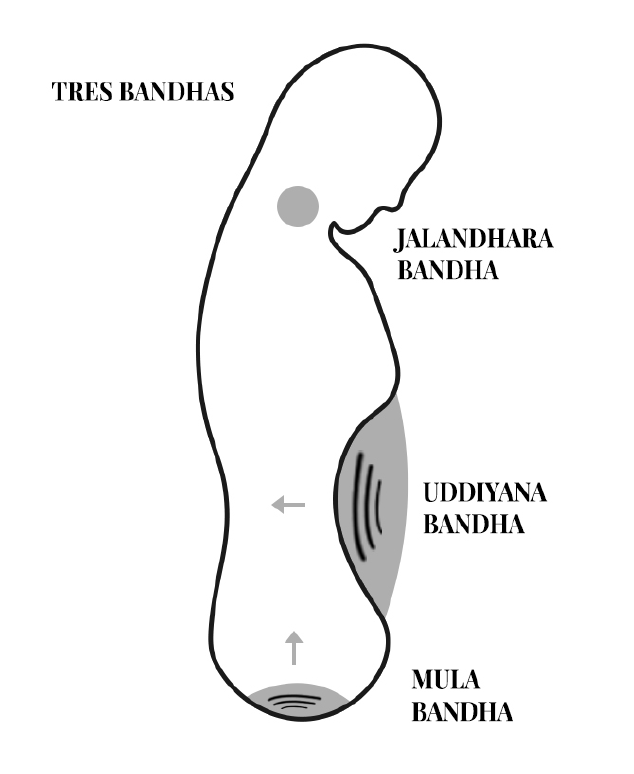
Prana Vayus
In yogic philosophy, Prana is the universal life force that animates all living things. Within the body, this vital energy divides into five distinct currents called Vayus (winds), each governing a specific region and function. Understanding the Prana Vayus deepens our awareness of how energy moves through the body and how breath, posture, and intention can direct that flow for healing, balance, and transformation.
Each Vayu has a unique direction of movement and governs specific physiological and energetic functions. When all five Vayus are balanced and flowing freely, the body-mind system operates in harmony.
Mudras
Mudras are hand positions that help link the brain to the body, soothe pain, stimulate endorphins, change mood, and increase our vitality. Each different position has a purpose to activate energy flow by creating a gentle "lock." Mudras have been an integral part of many Hindu and Buddhist rituals and are often used during sacred practice with intention.
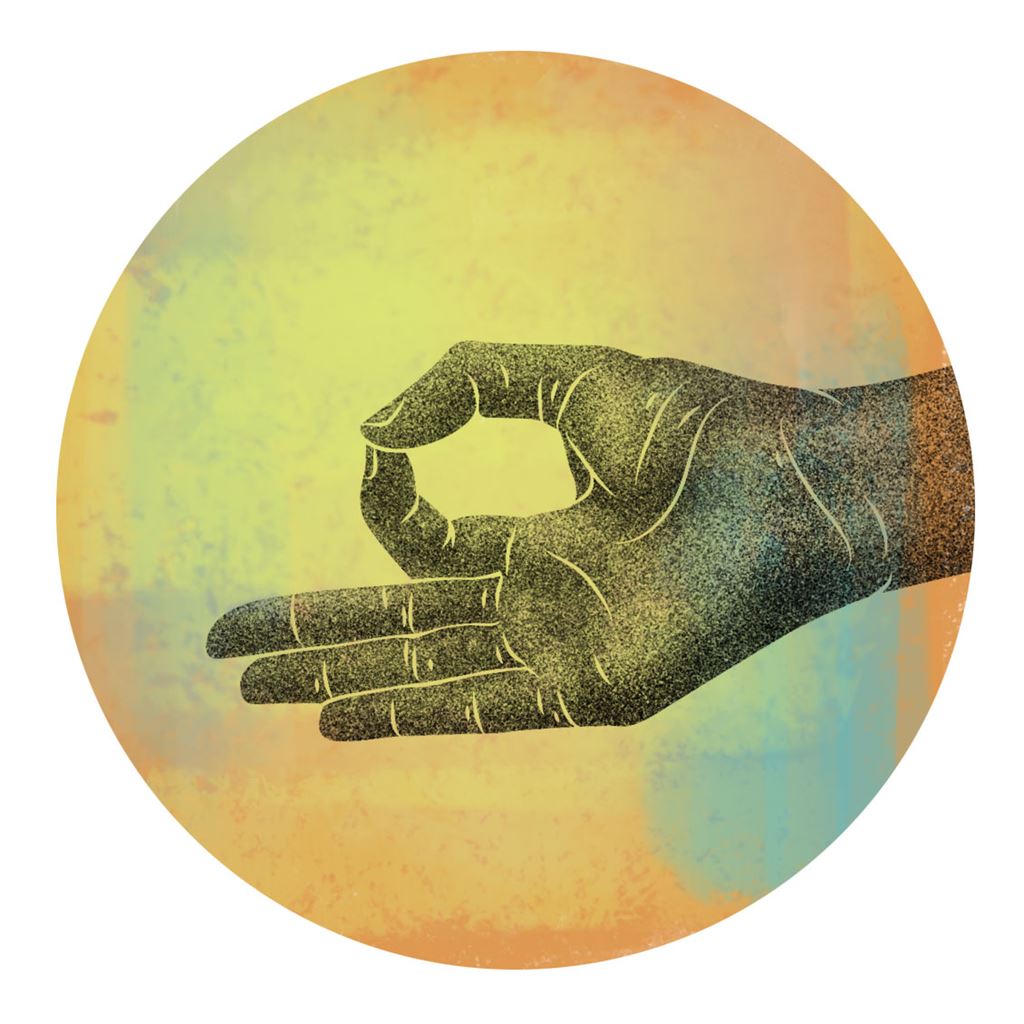




OM
Om (modern Hindi) or Aum (Sanskrit) is a word defined in Hindu scripture considered to be the first vibrational sound from which all other sounds and creations emerged—also known as the Big Bang theory.
Its primal sound signifies the essence of ultimate reality through birth, life, and death all in just one snapshot—inclusive of the four main states of human consciousness.
Because it is the seed sound of all creation, it includes the beginning, middle, and end of it all—past, present, and future.
The Om mantra when chanted vibrates at the frequency of 432 Hz—the same vibrational frequency of all things throughout nature (divisible by 8). Chanting it symbolically and physically tunes us into that sound and acknowledges our connection to everything in the world and the Universe.
Om is not just a sound or vibration. It is not just a symbol. It is the entire cosmos, whatever we can see, touch, hear, and feel. Moreover, it is all that is within our perception and all that is beyond our perception. It is the core of our very existence.
Amit Ray — Hindu Spiritual MasterThe rhythmic pronunciation and vibrations have a calming effect on the human body and the nervous system similar to the effects of meditation. This lowers the blood pressure and increases the health of the heart. The benefits of Om span to increasing spiritual connection, offering a sense of oneness with ourselves and nature.
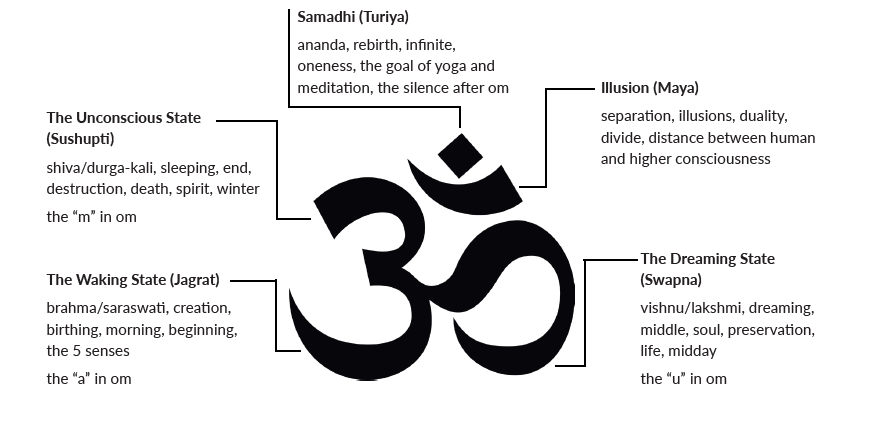
Chant Library
Guru Sakshat Parabrahma, Tasmai Shri Gurave Namah
Root Meaning: Gu = darkness, ignorance • Ru = remover, dispeller. The Guru is “the one who takes away darkness.”
This chant equates the Guru with the entire cycle of existence—creation, preservation, transformation, and ultimate transcendence. It is not just about an individual teacher, but about the principle of the Guru: the guiding light of wisdom present in outer teachers, inner intuition, and in life itself.
Guru Brahma — The Guru is Brahma (the Creator).
The Guru is the creative force—the one who gives birth to knowledge, wisdom, and new life within the student. Bow to all that is creation: birth, family, parents, body, the beginning of all things, the beginner mindset.
Guru Vishnu — The Guru is Vishnu (the Sustainer).
The Guru sustains, nurtures, and supports the student on their path—protecting the flame of knowledge so it doesn’t go out. Bow to all that is sustenance: work, friends, social responsibilities, career, leadership, tenacity, patience, courage.
Guru Devo Maheshwara — The Guru is Shiva (the Transformer).
The Guru helps dissolve ignorance, ego, and illusions, transforming the student toward higher consciousness. Bow to all that is annihilation: illness, challenges, disappointments, death—honor inevitable change, compassion for letting go.
Guru Sakshat Parabrahma — The Guru is verily the Supreme Brahman.
Beyond creation, preservation, and destruction is the formless, infinite, transcendent reality. The Guru is recognized as a living embodiment of this ultimate truth. Bow to the guru nearby: the circumstances of this very moment, thought, relationship, emotion, gratitude—and to the Guru beyond expressible form: the infinite, the mystical realm, beyond the beyond.
Tasmai Shri Gurave Namah — Salutations to that revered Guru.
The closing bow—offering gratitude, surrender, and reverence to the Guru, honored not just as a person but as the channel of divine wisdom itself. Everything is my teacher.
Samastah = of all the same
Sukhino = happiness or joy
Bhavantu = may everyone
Rama and Krishna refer to incarnations of Lord Vishnu.
When chanting this mantra, we are calling for that universal energy. This mantra has the power to dissolve bad habits and negative emotions. By chanting or listening, you become free from anxiety and inner fears.
Om Bhur Bhuvaḥ Svaḥ — We meditate on the three realms of existence: the physical (Bhur), the astral/mental (Bhuvaḥ), and the celestial/spiritual (Svaḥ).
Tat Savitur Vareṇyam — We honor that supreme, most excellent divine light of the Creator (Savitri).
Bhargo Devasya Dhīmahi — We meditate upon the radiant splendor of that divine being.
Dhiyo Yo Naḥ Pracodayāt — May that divine light illuminate and inspire our intellect, guiding our thoughts toward truth.
The Gayatri Mantra is traditionally chanted at sunrise, noon, and sunset. It is considered a universal prayer that transcends all boundaries, invoking clarity of mind and spiritual illumination.
Asato Mā Sad Gamaya — Lead me from the unreal (asat) to the real (sat). Guide me beyond illusion, beyond the temporary nature of the material world, toward the eternal truth of existence.
Tamaso Mā Jyotir Gamaya — Lead me from darkness (tamas) to light (jyotir). Dissolve the darkness of ignorance and illuminate my path with the light of wisdom and understanding.
Mṛtyor Mā Amṛtaṃ Gamaya — Lead me from death (mṛtyu) to immortality (amṛtam). Free me from the cycle of birth and death, and guide me to the realization of the deathless, eternal Self.
Om Śāntiḥ Śāntiḥ Śāntiḥ — Om, peace, peace, peace. The three repetitions invoke peace on three levels: physical (adhibhautika), divine/cosmic (adhidaivika), and spiritual/internal (adhyatmika).
This chant is a prayer for the journey of the soul—from confusion to clarity, from suffering to liberation. It is often chanted at the opening or closing of yoga practice.
Teacher Toolbox
The subtle yet essential details that craft a well-rounded yoga class. These tools will help you create meaningful, cohesive experiences—meeting your students where they are and nurturing their growth on their yoga journey.
disciplines
Teaching Methodology
Your Energy
Creating a sense of safety begins with your very first interaction with students. Approach them with warmth and intention, expressing who you are through your body language, presence, and openness. Use students’ names when engaging with them, and make gentle eye contact to establish a connection.
As a teacher, you are constantly setting the tone for the experience through the way you interact with your students physically, energetically, emotionally, and mentally. Even though unspoken, it’s important to pay attention to your own physiology, especially if you aren’t familiar being in front of people.
Your body language determines a lot about your internal experience, and the way you carry yourself will also direct the energy of your ability to command a room. You are also learning a new skill: teaching directionally. When facing your students from a side view, you’ll need to cue rights and lefts correctly to avoid confusion.
Distractions
Avoid distractions, such as your phone or side conversations, and remain fully present in the moment. If you’re dealing with something in your personal life, be aware of how it might affect your ability to hold space, and don’t hesitate to be honest with yourself about it.
Room Management
During your class, you own the room and the experience. It’s your obligation and responsibility to ensure the space is being directed, contained, and organized—whether it’s managing student etiquette, setting expectations, ensuring everyone can hear you, or properly giving modifications to keep everyone safe.
Adaptability
You won’t always know what you’re walking into as an instructor. Adaptability is one of your greatest tools—read the space, adjust in real time, and be willing to modify your sequence, playlist, or even throw the plan out altogether and simply hold space. Be ready for anything.
Creating community while instructing is an easy way to help people feel connected. Use names as you coach your students and encourage them to interact with each other whether it’s introducing themselves to someone they don’t know or commenting in the chat on Zoom. You can also do this by asking your students questions, reaching out to them directly to check in, and making eye contact as much as you can. Teach them that there are resources among their peers and that connection and relationship within community is one of their biggest teachers.
Give your students recognition when you see them pushing themselves or achieving personal goals. Make sure your students feel seen at their level, individually, not at the benchmark of the rest of the class. Put effort to also see when a modification is helping them get further in their body and encourage them to find safety in their choices.
The variables of an environment can tremendously affect the way a space is managed and contained. Understanding the environment you are utilizing is an important factor to consider in advance. Today, holding space as a healer can take place in many different settings—whether indoors in a private studio, outside for a more “event-style” practice, online through Zoom, in a classroom, or even in someone’s living room.
It’s crucial to ask as many questions as possible from the start and get a clear sense of the space, especially when working with new clients or studios. The conditions of your environment should support your goals as a teacher. For example, it’s generally easier to project your voice and control the energy of the space in an indoor setting, as opposed to outdoors.
Key elements that affect the environment include lighting, sound, temperature, cleanliness, available props, and the number of students. Being mindful of these factors will help you create an atmosphere that enhances your ability to lead and supports your students’ experience.
You also have a new skill you are learning: teaching directionally. When facing your students (from a side view), you’ll need to cue rights and lefts correctly to avoid confusion. Oftentimes, you can use direction cues such as “face front” or geographical landmarks to help you offer more clear, concise class management.
Your understanding of where anatomy, subtle energy, theming, and yogic philosophy meet is key to creating safe and intelligent sequences. When we look at progressions and regressions of postures (or modifications/variations), it gives us insight as to how to best prepare our bodies for the trajectory of where we are going.
Consider your goal when teaching practice and what foundational blocks you’ll need to get there based on the level and experience of your students.
Using modifications in your sequence to create a more accessible plan for everyone in the room allows students to find more agency in how they treat their body and meeting themselves where they are at.
Sequencing is a powerful tool you can use to adjust duration, tempo, and intensity of practice based on the time allotted and the students you are serving. It’s a tool to develop time management and ensure you are crafting a well-rounded experience every time.
Everything in life has a cadence or a flow. Slow, fast, steady, irregular. Everything in between. We live in a cyclical world. There is a perfect tempo and pace for every experience we have and it’s important for you as a leader and instructor to set pace. Whether it’s physical movement and postures, breathwork, or coaching, you hold the pacemaker for the tempo you’d like to guide people.
The pace of your class should reflect the intention behind it. A restorative or yin-style class naturally calls for slower, more deliberate pacing—longer holds, softer cues, and generous pauses. A power or vinyasa flow demands quicker transitions, sharper cues, and a rhythm that keeps students moving with their breath. Matching your tempo to the style of class you’re teaching creates coherence and trust.
Allow yourself to be hyperaware if the pace you’re setting for how you command the space is resonating with the students in the room. Read the energy—if students look rushed or confused, slow down. If they seem disengaged or restless, consider picking up the tempo or adding more dynamic transitions.
Your voice is one of your most powerful pacing tools. The speed, tone, and rhythm of your verbal cues directly influence how students experience each posture and transition. Practice varying your cadence—use a slower, grounding tone for holds and stillness, and a more energized rhythm for flows and movement. Silence is also a tool; strategic pauses give students space to internalize what you’ve offered.
Music is one of the most ancient medicines that exists and can offer a profound enhancement to any experience. Using frequency and vibration, it can set the tone or can take away from the experience you are creating for yourself and your students.
This sensory-based tool allows for us to connect deeper into our practice and customize the depth of the experience our students are having. It can help guide the depth of your class and be a support system to the way you hold space.
Music can also be a great tool for you to keep time in your class. Paying attention to the songs you’ve used allows you to know what section of your created sequence you are in and what postures you’ll move through to stay on time.
Be intentional about volume—music should support the experience, not overpower your voice or compete with your cues. Consider building playlists that arc with the energy of your class: softer and slower during grounding and opening, building through the peak of your sequence, and tapering for cool-down and savasana. Always preview your playlist to ensure lyrics and energy are appropriate for the space you’re holding.
Choosing an intention for your class is one way to guide the journey and create more powerful, deep, and specific experiences. It gives a path to more fullness and exploration on one particular subject or idea. This supports taking your students further into themselves and allowing a process of application to their real life—emphasizing in on a topic that unlocks more healing and understanding in a direction or concentrated area.
An intention can be woven throughout the class—introduced during opening, reinforced through cues and transitions, and revisited during savasana or closing. Themes might draw from yogic philosophy, personal growth, seasonal shifts, or the human experience. The more specific and authentic your theme, the more it will resonate. Allow your own life experience and practice to inform the themes you choose—students connect with what feels genuine.
This is probably the most important one. Your students have quite a bit to think about in general when practicing, so when instructing, it can be the most simple of offerings that will make the biggest difference. It’s not your job to teach the student everything you know about yoga, but rather to hold space for them to find their journey and practice on their own.
Resist the urge to over-cue or fill every moment with instruction. Give students time to feel and explore the postures on their own. A clear, concise cue will always land more effectively than a long, complex explanation. When in doubt, offer less—your presence and the quality of your guidance will speak louder than the quantity of your words. Trust the practice to do the work.
This skill is valuable in any setting but especially as you create an experience for someone else. Starting and ending class on time builds trust and respect between you and your student. Moving through your sequence with articulate time management creates an environment for you to ensure you are properly teaching safely, giving ample time to the important protocols for class.
Practice running through your sequence with a timer to build awareness of how long each section takes. Build in buffer time for transitions, modifications, and unexpected moments. Prioritize your savasana—it’s one of the most important parts of class, and it’s often the first thing that gets cut short when time runs thin. A well-managed class leaves students feeling complete, not rushed.
The Language Formula
The purpose of a language formula is to give a guideline for how to deliver clear and concise cueing. It's a support system, not a requirement, to help deliver information. During your early teaching days, imagine using it as a default to fall back on when you're still figuring out how to hold the room.
Be clear, concise, and as specific as possible. Say exactly what you mean so the body knows where to go.
Utilize vocal intonation as a tool to emphasize words that are important. Your voice is an instrument—use tone, pace, and volume intentionally.
Remove filler words and extra unnecessary verbiage such as “and we’re gonna” or “I want you to.” Let the cue speak for itself.
Replace indirect phrases like “try to” or “on your next” with direct commands. Confidence in your language builds trust.
Explain things in a way you know your students will understand. Your unique voice and perspective are your greatest teaching assets.
Look at the bodies in front of you and cue what you see—not what you memorized. Real-time observation lets you offer cues that are specific, relevant, and genuinely helpful rather than generic or pre-rehearsed.
Formula
Posture: Warrior 2
Cue: Spin your back heel down, pivot your hips to side wall, reach your arms to front and back of the room
Verb Formula
Body Part: the crown of your head
Direction: towards the ceiling
Types of Cues
Mastering the art of cueing is one of your most powerful teaching tools. Each type of cue serves a distinct purpose in guiding your students through practice safely, clearly, and with depth.
Breath Engagement & Disengagement
When practicing asana, the breath that fuels our physical movement is key to supplementing the body with oxygen. In the moments between focusing on the breath, it's helpful to remind students of their agency to take over the cadence of that lifeforce exchange for the duration of your other cues and teaching.
2. Cue: Spin your back heel down, pivot your hips to the side, reach your arms to the front and back of the room
3. Disengage: “Breathe here”
4. Teach: Insert cues, coaching, breath awareness
5. Re-engage: “Take an inhale… exhale, Side Angle Pose”
Vocal Tone & Inflection
Your voice expression has a powerful influence. While guiding a space, your voice is the main command center from which you are directing your class. The music, environment, physical demoing—all are a supportive choir to your voice.
As we learned in the communication section, 38% of our communication comes through tone and 7% through content of words. Use your tone to create alignment with where your students are and resonance in where you are taking them.
The volume of your voice may become higher and tone sharper as you direct more intense energy into a specific part of your sequence, whereas you'll want to soften and quiet during a surrender series.
In any practice that you lead, it's imperative that you develop your ability to teach with a supported, clear, commanding voice so your students can not only hear you, but also feel the energy of all that is you.
High Intensity
Rhythmic pacing
Energetic inflection
Motivational coaching
Low Intensity
Slower pacing
Warm tones
Space between words
Intention Setting
Setting intention at the beginning of practice is one of the quietest and most powerful tools a teacher carries. Whether it’s a personal intention for how you’d like to show up as an instructor, or an invitation for your students to set their own that feels personal and aligned, the act of naming intention shapes the entire experience that follows.
When we infuse an experience with intention, we invite intelligence to come alive within the container of that experience. We magnetize energy toward a certain goal—developing clarity, refinement, and understanding through the practice itself.
An intention is not a goal or a performance metric. It’s a quality of presence—a tone you choose to embody and return to whenever attention drifts. For the teacher, it might sound like: I show up grounded. I hold this room with care. I trust the practice to do the work. For the student, it could be as simple as a single word—steady, soften, open—offered back to themselves throughout the flow.
Open the container by giving students a moment of stillness to land in their breath, then invite the intention. Speak it slowly. Let it settle. Then return to it as a thread at meaningful pauses—before a peak posture, into savasana, on the final exhale of class.
Sequencing
The purpose of sequencing is to create a structure, timeline, and container for the experience of your offering. Sequencing is a powerful way to highlight intention or theme within a practice because it offers the ability to demonstrate examples through carefully selected pin points on the journey.
In anatomical sequencing, your goal is to ensure that as you approach the body system as a whole, you are also considering the safety of your students' physical body and what needs to happen to achieve your desired result. It's like building a house: you wouldn't paint the walls before putting in the electrical system or plumbing.
Sequencing in Practice
Below is an example of how theming, peak posture, modifications, and variations work together across every bucket of a power yoga class. Each row shows how one bucket adapts when the theme is the Heart Chakra and the peak posture is Dancer’s Pose.
| Bucket | ThemingHeart Chakra | Peak PostureDancer’s Pose | ModificationDown Level | VariationUp Level |
|---|---|---|---|---|
| GroundingGND | Start on back with hands over heart. Cue “Be willing to keep your heart open, especially when you feel the tug to close.” | Use language around courage and balance. | Extend grounding section to be longer. | Cue Ujjayi breath to build heat early on. |
| IntegrationINT | Add puppy pose after cat/cow. | Add hip circles in table top. | Add padding to knees and towel under calves to increase support. Widen stance more for ragdoll and deepen the bend in knees. | Spend more time in plank during integration. |
| Sun ASUN A | Add standing back bend; incorporate cues such as “lift your heart.” Add deepening cues that involve making more space in the heart area; emphasize opening during up dog and extension of chest to thighs during down dog. | Add side lateral stretch and standing back bend in Sun A. Cue more depth to standing forward fold. Encourage more time being cognizant of shoulder opening in up dog. | Widen stance for mountain pose, hands to thighs for halfway lift, skip vinyasas. | Repeat halfway lift and cue engagement of back muscles; add shoulder taps or push-ups to plank. |
| Sun A FlowSUN A FL | Continue to cue deeper back bending. | Include standing back bend in flow; emphasize engagement of glutes in up dog. | Skip vinyasas, move slower. | Add an extra round, incorporate standing back bends, cue deeper engagement. |
| Sun BSUN B | Cue awareness to heart space and bravery in crescent lunge; turn palms to face up in warrior two to open chest further. | Include scorpion leg in 3-legged dog. Add a quad stretch into twisting low lunge and cue to open shoulder and stretch thigh. | Use hands to prayer in chair, drop back knee in crescent, use cat/cow instead of vinyasas. | Use more intense music, add pulses to chair pose, include knee to nose. |
| Sun B FlowSUN B FL | Emphasize the feeling of the heartbeat during flow. | Add a standing back bend to crescent on first round of flow, and an open arm twist to second round. | Use blocks and cue breathing as you move slower. | Add back bends, increase vocal inflection, reach both arms forward in side angle. |
| Standing Balancing ASBA | Bring attention to the thumbs against the heart center in twisting crescent. Add awareness around lifting through heart in runner’s lunge. | Cue to interlace hands behind back in chest expansion. Add the option to bind during crescent lunge twist. Emphasize opening in runner’s lunge and add rockstar variation to side plank. | Drop back knee in twisting crescent, drop bottom knee in side plank. | Cue to lift elbow off thigh in twisting crescent; lift top leg in side plank. |
| Standing Balancing BSBB | Teach how to use the heart to lift the posture in Warrior 1. Cue to imagine the feeling of energy extending from heart to outer limbs. | Widen stance in Warrior 1 and reach up to open back-leg side of the body. Cue more extension to reach forward in Warrior 3. Add humble warrior after Warrior 3. Add upright pigeon. | Assist Warrior 3 with the back toes gently touching the floor; use pyramid instead of standing splits. | Add humble warrior; cue arms forward and backward with breath in Warrior 3. |
| Standing Balancing CSBC | Lift heart more towards the sky; bring your hands over your heart in triangle. Remind yourself of the courage you have by balancing in this posture today and being able to do all the things you desire, as you put your heart into them. | Remove SBC; add in peak posture: Dancer’s Pose. | Use blocks for triangle and twisting triangle; skip half moon and twisting half moon. | Incorporate more cues that emphasize lifting; add a bind to half moon; bring fingertips behind ear in twisting half moon. |
| CoreCORE | Face your heart upward as you crunch your chest up. | Focus on rounding forward type crunches to counter all the opening of the anterior part of the body. | Use dead bug core instead and shorten the time you spend in it. | Add leg lowers, flutter kicks, and more intensity to core movements. |
| SurrenderSRDR | Breathe into your heart space as you lift your hips in bridge pose. Melt over your heart center as you extend your arm in supine twist. | Emphasize happy baby to decompress spine. | Extend surrender longer; spend more time in each pose and add other posture variations that cool the body. | Find more active surrender postures; cue a bind with bridge pose and add half pigeon instead of figure 4. |
| SavasanaSAV | Cue intention to feel your heart deeper as you breathe slow love notes to your chest. | Cue knees bent for savasana to release lower back. | Offer a lengthened savasana and use silence instead of music. | Cue breathwork to help students calm their systems. |
Swipe to scroll the chart →
Assists
Assists are any given instruction that helps aid in deepening, correcting, or offering another perspective in a posture. This can happen verbally through words and phrases, visually through physical demonstration, directionally through landmarks around us, or kinesthetically through physical touch.
Yoga Props
Yoga props are tools—blocks, straps, bolsters, blankets, chairs, walls—that meet the body where it is, instead of asking the body to contort itself to meet the shape. They are not a sign of beginner status, a crutch, or evidence that something is “missing” in a student's practice. They are an extension of the practice itself, designed to make a posture more accessible, more sustainable, and more truthful to the body in front of you on any given day.
In a power yoga sequence—where the pace is brisk, the heat is building, and the body is asked to move through dozens of transitions—props become especially valuable. A block placed under the front hand in triangle gives the spine the length it would otherwise sacrifice for depth. A strap looped around the foot in a hand-to-big-toe balance lets a student engage their leg fully without rounding the back. A blanket under a tender knee in low lunge keeps the joint protected so the student can stay present in the breath rather than bracing against discomfort. The prop doesn't make the pose easier—it makes the pose honest.
Integrating props into a power class is also a quiet act of inclusion. It signals to your students that the practice is for everyone in the room—the seasoned athlete, the student returning from injury, the body that ran a marathon yesterday, the body that hasn't slept well in weeks. When you reach for your blocks at the top of your mat, you give every student permission to do the same without explanation, without apology, and without the sense that they are stepping outside the “real” pose. Over time, this shifts the entire culture of the class away from achievement and toward awareness.
As a teacher, your job is not just to know what each prop does, but to cue them with the same authority and curiosity you cue any other element of practice. Offer prop variations early in the sequence, before fatigue sets in. Demonstrate the prop option as confidently as you demonstrate the full expression. And remember: the prop is not the destination—the breath, the awareness, and the integrity of the body are. Props simply clear the path.
Teaching Online
In today's day and age, it's important to be prepared to teach anywhere. People need your gifts and where you teach should not be an obstacle to sharing that light. While being in-person with students is incredibly fun and exciting, more people prefer taking class at home where it's more easily accessible.
You can either stream your classes live or prerecord content. Live-streamed classes provide the most similar experience to in-person sessions, though some students enjoy recorded content at their own convenience. Practice and test your equipment until you've fine-tuned your process.
Musicality
Music is a powerful modality recognized by every culture, every age, and every demographic. Rhythm and cycle is something that exists everywhere in conscious life—whether it's the beat of our hearts, the feminine cycle, or the exhale that comes after the inhale. It's no wonder it feels incredible to move our bodies to the rhythmic beat of music.
While music isn't the main focus or element of your class, it can help build the container and environment you are trying to create as you hold space for your students.
The music you select has an exponential impact on the experience of your class. It sets the tone and vibe, creates a safe space for students to explore themselves in mind, body, and spirit. Music carries weight, memories, and emotions—it can be one of the most powerful tools you have available.
Looking deeper into music will give you great skills as a yoga instructor: confidence, timing, intentionality, and leadership. Together, we'll explore how music relates to movement and how to use it for safety, motivation, theming, healing, and timing.
Building Your Playlist
Think of your class as an album—each bucket is a track that flows into the next. Here’s an example playlist structure for a 60-minute power class:
Base Sequences
As we explore the physical practice of yoga, it’s important to remember that yoga, as a path of self-study, serves as a powerful tool to access the deeper, subtler layers of our being. Through a more profound connection with our bodies, we can begin to unlock and unravel the dis-ease, tension, and stored emotions that often hinder us from experiencing our true, peaceful, radiant nature.
yoga flow
Introduction
The more we understand our own physical being, and the more we cultivate a desire for continued learning, the better equipped we are as instructors to help others do the same. A thoughtfully sequenced, well-programmed, and mindful yoga class can support students in uncovering a fuller version of themselves, while encouraging confidence, self-reflection, and growth that extends beyond the mat and into other areas of their lives.
Think of each posture as a tool for healing. As an instructor, you take personal responsibility to always offer your best, using the knowledge and skills you’ve gained to make a real difference in your students’ lives. When you guide with intention, you create a space for your students to look within and connect with their deeper selves. We’ll start by exploring the most basic, foundational version of this class.
Sequence Overview
Breath to Posture
Posture Clinic
Beginning Your Class & Adjustment Waiver
Beginning your class is about helping students transition from their external world into the present moment of embodied practice. The opening moments of class set the tone for safety, presence, and connection to breath and body. Start by offering a simple, clear verbal introduction, followed by an invitation to arrive on their mats and begin connecting with their internal experience.
Cover the following points at the start of every class:
- Your name
- Type / style of class
- Duration of class
- Invitation to modify the sequence to suit their needs
- Any props needed for class
- Anything else students should expect
“Hi everyone, welcome. How are you today? My name is [Your Name], and I’ll be guiding you through a [30/45/60]-minute [style of class] today. Our theme for this practice is [theme or intention], inviting you to explore [brief explanation of theme]. As always, this is your practice. I’ll offer options and variations, and I invite you to customize in any way that best supports your body and energy today.”
Next, guide students into a comfortable starting shape that promotes grounding and awareness, such as Easy Pose or another seated position. Invite them to soften their gaze or close their eyes if that feels comfortable and safe. Allow a moment of silence for students to physically and mentally settle into the space.
To maintain safety, consent, and student autonomy, always provide students with the opportunity to opt out of physical touch adjustments. This can happen at any point in the first 10 minutes of class that feels appropriate, but must be prior to you walking around and touching bodies.
“At times, I may offer hands-on adjustments to support alignment or deepen awareness, but it is always your choice to receive or decline touch. If you prefer not to receive physical adjustments today, please lift one arm toward the sky so I can honor and respect your preference.”
Pause to allow acknowledgment before continuing.
Easy Seated Pose
Benefits
Transition/Setup Cues
Deepening Cues
Misalignment
Modifications
Child’s Pose

Benefits
Transition/Setup Cues
Deepening Cues
Misalignment

Modifications
Grounding Script
Once you welcome everyone into their foundational posture, you will enter the portal of guiding the unseen—breath and intention. This is where you start to create the energetic container of the space and call forward resonance with your students.
Allow the room to land. Give a moment of silence and space to allow everything to settle in.
Guide the room through three conscious breaths. Utilize kumbhaka (retention) to pause at the top and bottom of each breath.
“Let’s start by taking a deep breath in through the nose… and slowly releasing it through the mouth. Again, inhale deeply… and exhale fully. One more time, inhale deeply, feeling the breath expand through the body… and slowly let it go. Begin to feel yourself arriving fully on your mat, letting go of anything you carried in from outside this space.”
Invite students to become aware of the room around them, their senses, and their internal state.
Call in a recognition of each person’s individual internal intention to contribute to the room setting of the collective.
Table Top

Benefits
Transition/Setup Cues
Deepening Cues
Misalignment
Modifications
Cow
Benefits
Transition/Setup Cues
Deepening Cues
Misalignment
Modifications
Cat
Benefits
Transition/Setup Cues
Deepening Cues
Misalignment
Modifications
Downward Facing Dog

Benefits
Transition/Setup Cues
Deepening Cues
Misalignment

Modifications

Standing Forward Fold

Benefits
Transition/Setup Cues
Deepening Cues
Misalignment

Modifications

Mountain Pose

Benefits
Transition/Setup Cues
Deepening Cues
Misalignment

Modifications

Halfway Lift

Benefits
Transition/Setup Cues
Deepening Cues
Misalignment

Modifications

Plank Pose

Benefits
Transition/Setup Cues
Deepening Cues
Misalignment

Modifications

Low Plank
Benefits
Transition/Setup Cues
Deepening Cues
Misalignment

Modifications

Upward Facing Dog

Benefits
Transition/Setup Cues
Deepening Cues
Misalignment

Modifications

Chair Pose

Benefits
Transition/Setup Cues
Deepening Cues
Misalignment

Modifications

Three Legged Dog

Benefits
Transition/Setup Cues
Deepening Cues
Misalignment

Modifications

Low Lunge
Benefits
Transition/Setup Cues
Deepening Cues
Misalignment
Modifications
Crescent Lunge
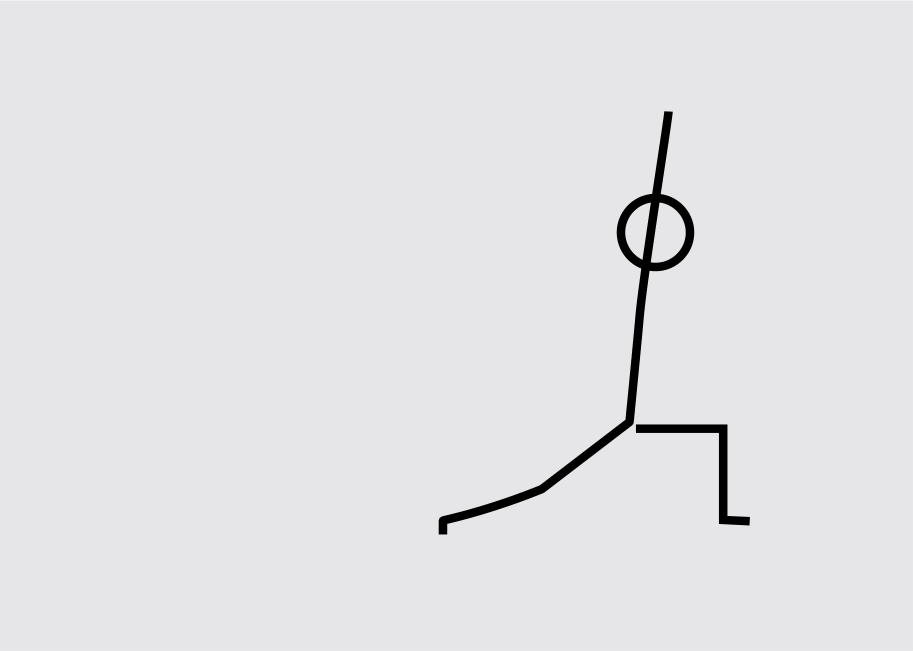
Benefits
Transition/Setup Cues
Deepening Cues
Misalignment
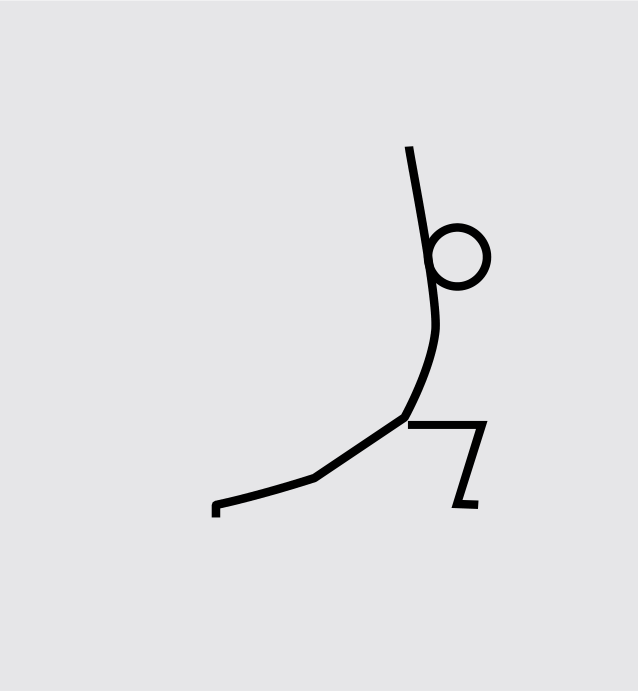
Modifications
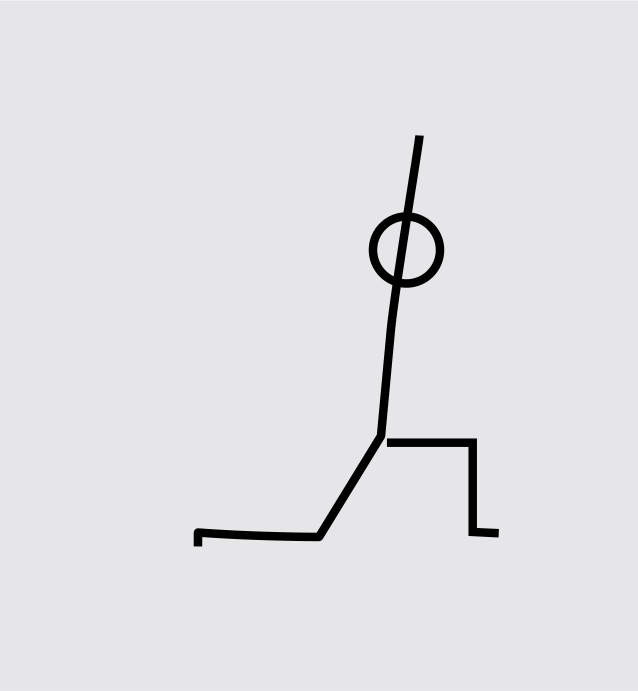
Twisting Low Lunge
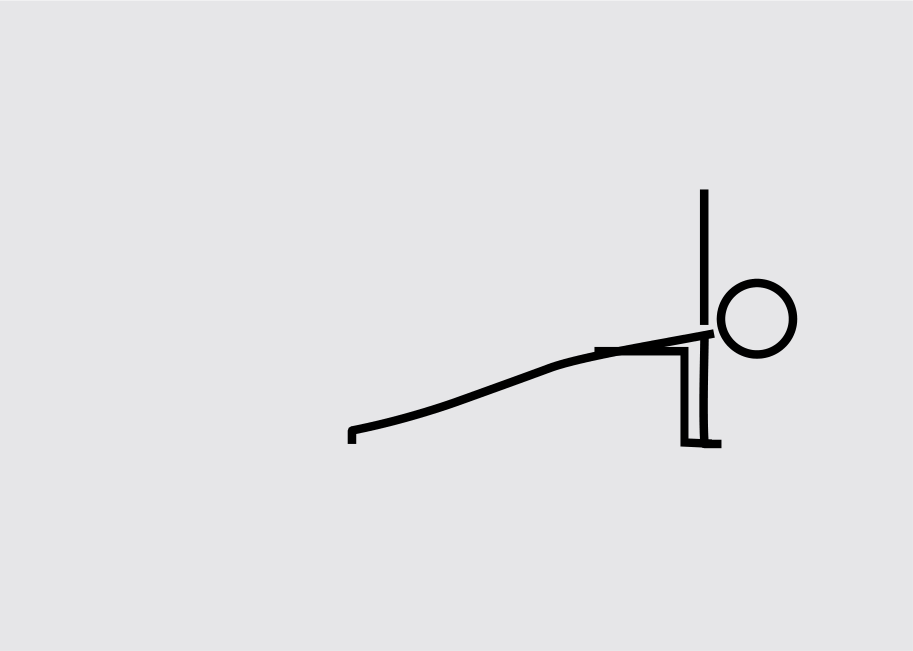
Benefits
Transition/Setup Cues
Deepening Cues
Misalignment
Modifications
Warrior Two
Benefits
Transition/Setup Cues
Deepening Cues
Misalignment
Modifications
Side Angle Pose
Benefits
Transition/Setup Cues
Deepening Cues
Misalignment

Modifications
Reverse Warrior
Benefits
Transition/Setup Cues
Deepening Cues
Misalignment
Modifications
Revolved Crescent
Benefits
Transition/Setup Cues
Deepening Cues
Misalignment
Modifications
Pyramid Pose
Benefits
Transition/Setup Cues
Deepening Cues
Misalignment

Modifications
Runner’s Lunge
Benefits
Transition/Setup Cues
Deepening Cues
Misalignment

Modifications
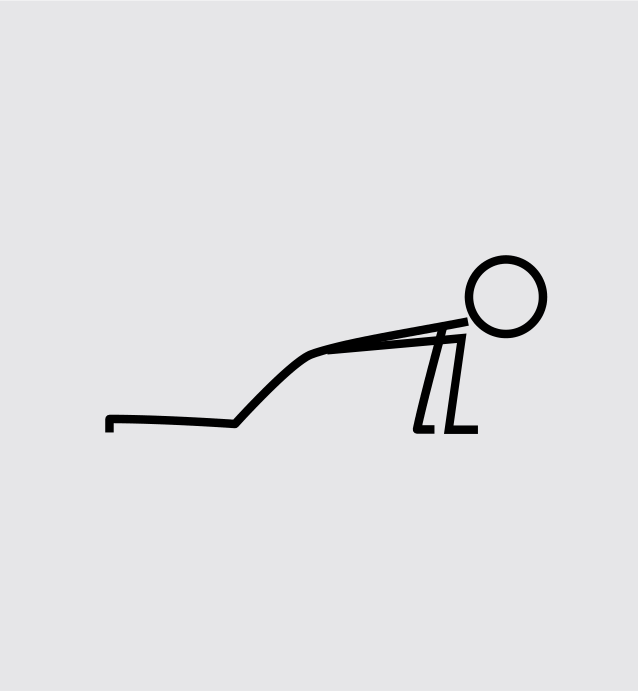
Side Plank

Benefits
Transition/Setup Cues
Deepening Cues
Misalignment

Modifications
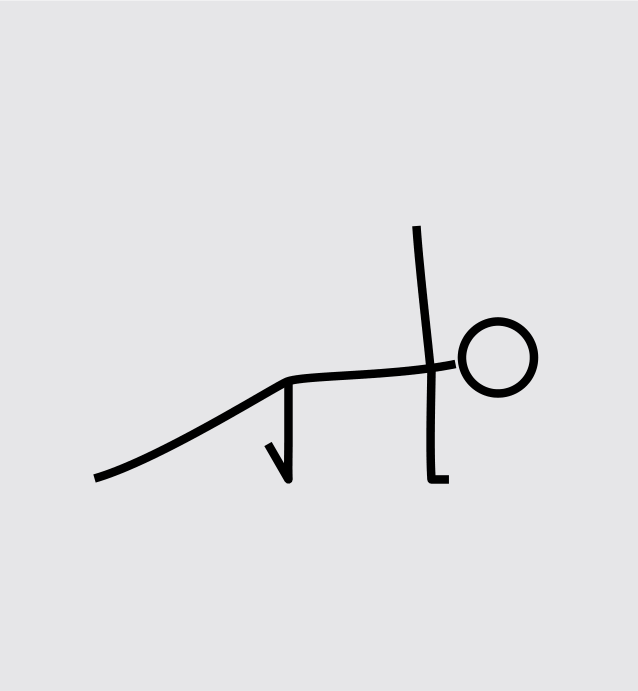
Warrior 1
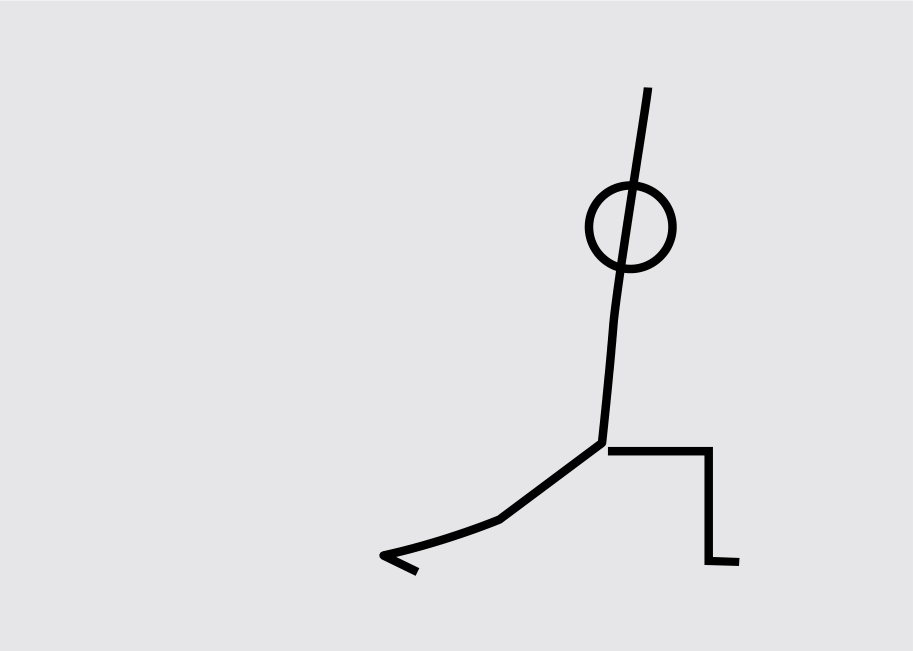
Benefits
Transition/Setup Cues
Deepening Cues
Misalignment
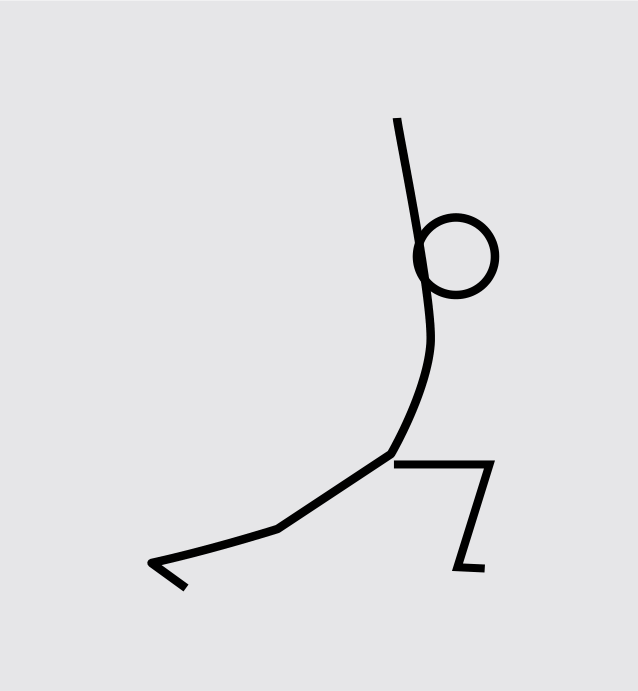
Modifications

Warrior 3
Benefits
Transition/Setup Cues
Deepening Cues
Misalignment

Modifications
Standing Splits
Benefits
Transition/Setup Cues
Deepening Cues
Misalignment
Modifications
Triangle Pose
Benefits
Transition/Setup Cues
Deepening Cues
Misalignment
Modifications

Half Moon Pose
Benefits
Transition/Setup Cues
Deepening Cues
Misalignment
Modifications
Twisting Triangle
Benefits
Transition/Setup Cues
Deepening Cues
Misalignment
Modifications
Twisting Half Moon
Benefits
Transition/Setup Cues
Deepening Cues
Misalignment
Modifications
Basic Crunch

Benefits
Transition/Setup Cues
Deepening Cues
Misalignment
Modifications
Bicycle Sit Ups
Benefits
Transition/Setup Cues
Deepening Cues
Misalignment

Modifications

Reverse Crunch
Benefits
Transition/Setup Cues
Deepening Cues
Misalignment
Modifications

Bridge Pose

Benefits
Transition/Setup Cues
Deepening Cues
Misalignment

Modifications

Happy Baby
Benefits
Transition/Setup Cues
Deepening Cues
Misalignment

Modifications

Supine Figure Four

Benefits
Transition/Setup Cues
Deepening Cues
Misalignment

Modifications

Supine Forward Fold
Benefits
Transition/Setup Cues
Deepening Cues
Misalignment

Modifications

Supine Twist

Benefits
Transition/Setup Cues
Deepening Cues
Misalignment

Modifications

Savasana
Benefits
Transition/Setup Cues
Deepening Cues
Misalignment

Modifications
Anatomy
A solid understanding of anatomy equips you, as an instructor, with the knowledge to guide your students safely throughout their practice. As you deepen your understanding, you'll empower your students to connect more deeply with their own bodies.
human body
Why Anatomy Matters
To support students in feeling strong, aligned, and at ease in their bodies, we study the fundamental principles of movement, with a particular focus on how the body functions in relation to the core elements of asana.
Power yoga, with its dynamic mix of strength and restoration, is an invaluable tool for bridging the mind-body connection, promoting harmony, peace, and a more purposeful, meaningful life.
The ability to read and support the room, combined with a strong grasp of anatomy, will help you guide your students in a way that ensures they experience the full benefits of this transformative practice.
This knowledge also prepares you to address the unique differences in each student's physical body and mental state, allowing you to provide tailored guidance.
In this section, we will explore the foundational teachings of anatomy, physiology, and biomechanics. These principles will allow you to safely guide your students through a mindful and intentional practice, while helping them connect to a deeper, more meaningful form of movement.
By understanding natural skeletal structure, joint function, muscle mechanics, range of motion, and more, we can honor the body's inherent structural integrity while expanding our capabilities for safe strength-building.
Benefits of Understanding Anatomy
Tensegrity in the Body
The body is not a stack of blocks held up by gravity—it is a living tensegrity structure. The word combines tension and integrity: rigid elements (the bones) float inside a continuous network of tensional elements (fascia, muscles, tendons, and ligaments).
In a tensegrity system, no single bone sits on top of another. The skeleton is suspended and balanced by the pull of the soft tissue that surrounds it. Load is distributed across the whole network rather than concentrated in one joint.
This is why a shift in one area of the body affects every other area. A tight hip can pull on the shoulder; a collapsed arch can travel all the way up to the neck. Everything is connected through the web of tension.
When you teach alignment, you are tuning this system—not stacking blocks, but rebalancing the tension lines so that compression (bones) and tension (fascia) share the load evenly.
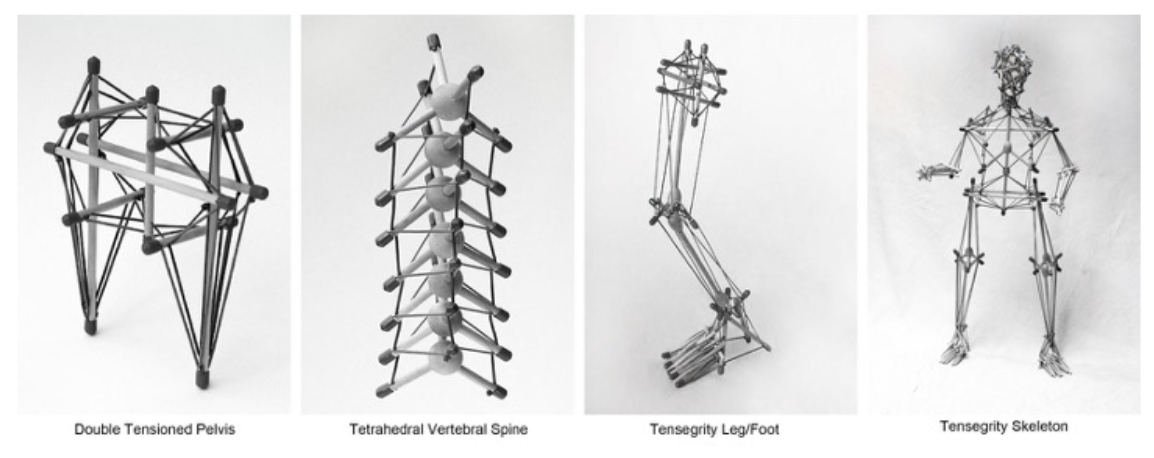
Healthy Muscle
Within the tensegrity network, muscle is the tissue that dynamically modulates tension. For the system to stay balanced, each muscle has to be able to move through its full range of capability—not locked short, not stuck long, not always “on.”
When a muscle loses one of these capacities—stuck tight, unable to fire, or always bracing—the tensegrity system compensates elsewhere. Much of what we guide in asana is helping each muscle remember how to do all four.
Anatomical Neutral + Alignment
- Make sure all four corners of your feet are pressing into the ground
- Lift the inner arches of your feet by flexing your toes off the ground, feel the lift of the muscles in your feet and then gently release your toes back down without gripping
- Align your second toes to face forward
- Point your knees directly forward in the same line as your second toes
- Ensure your hip points are facing forward
- Neutralize your pelvis—the triangle of your sacrum pointing directly down to the floor, waistband completely even
- Pull your core in and up, soften it gently
- Elevate, retract, and depress your shoulders
- Externally rotate your shoulders so your palms face forward
- Hug your front ribs down to neutralize your spine and ribcage
- Tuck your chin and extend the back of your head over your shoulders
- Create axial extension of your spine by lifting the crown of your head higher
- Now breathe naturally
Can you notice a difference?

Alignment is important because improper alignment puts undue stress on the body, and distortion of the joints can result in joint degeneration and excessive load to supporting structures—soft tissue, tendons, ligaments, cartilage.
Planes of Motion
There are three major planes of motion that basic movement, especially in practice, takes place in the body.
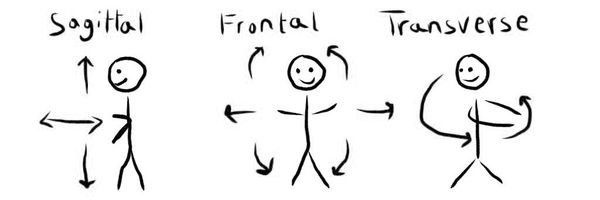
Types of Movement / Terms Glossary
Bones
Bones make up the support system for the body and protect the internal organs. They are connective, living tissue that form the body's structural framework.
- Provide calcium and minerals storage important for muscle contraction
- Grow and strengthen with resistance and gravitational pressure
- Resistance training and muscle strength gained from activities like yoga stimulates bone growth and can contribute to increased bone density
- Hardest tissue in the body, filled with soft foam called marrow
- Lack of healthy stress weakens the bones
- Weight-bearing exercises aid in preventing osteoporosis
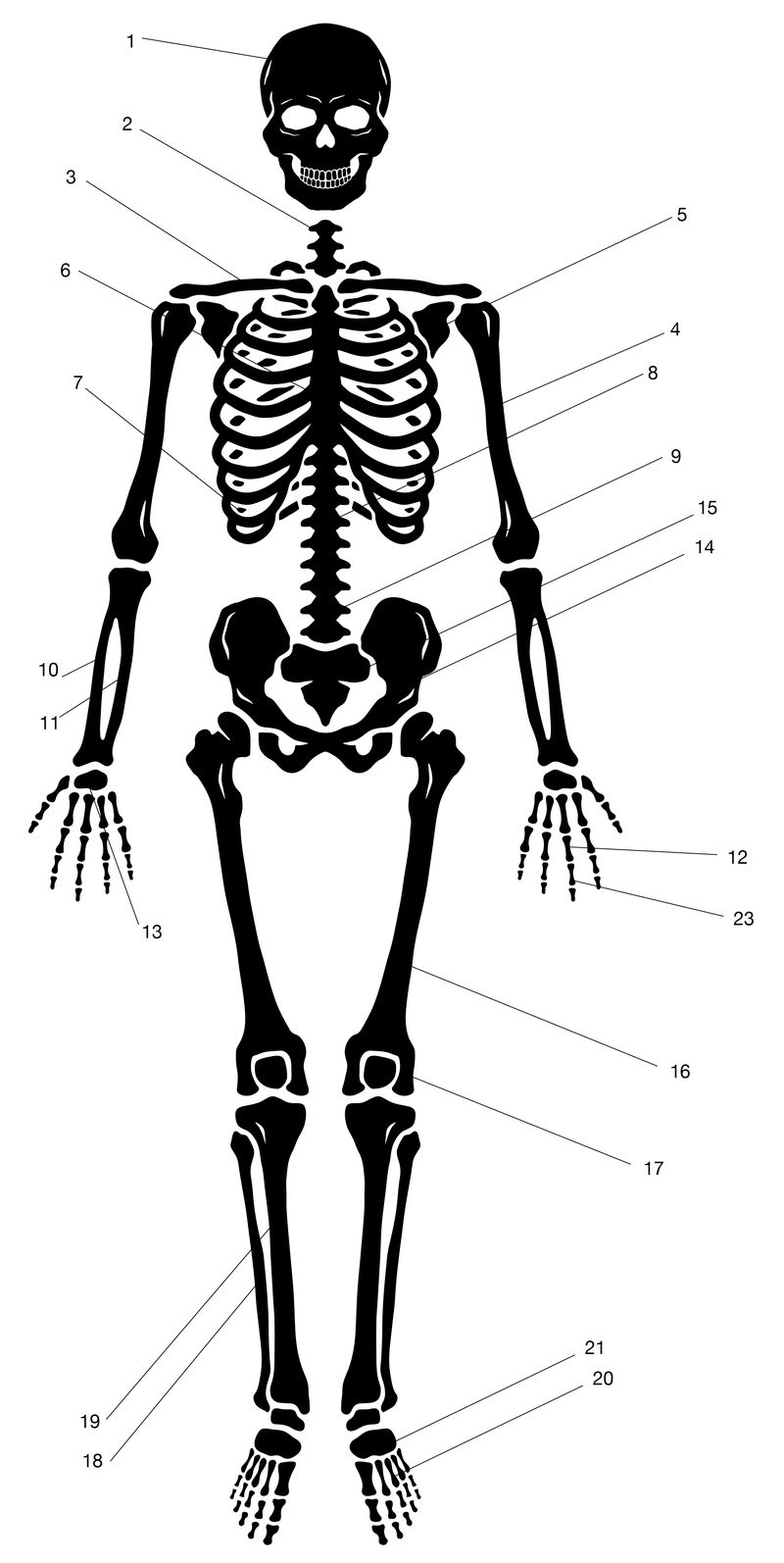
Axial
- 9. Lumbar Spine
- 8. Thoracic Spine
- 7. Ribcage
- 6. Sternum
- 2. Cervical Spine
- 1. Skull
Upper Appendicular
- 23. Phalanges
- 13. Carpals
- 12. Metacarpals
- 11. Ulna
- 10. Radius
- 4. Humerus
- 3. Clavicle
- 5. Scapula
Lower Appendicular
- 21. Tarsals
- 20. Metatarsals
- 19. Tibia
- 18. Fibula
- 17. Patella
- 16. Femur
- 14. Ilium
- 15. Sacrum
- 20. Phalanges
The Spine
The spine is composed of 24 vertebrae with natural curves that allow for shock absorption and movement.
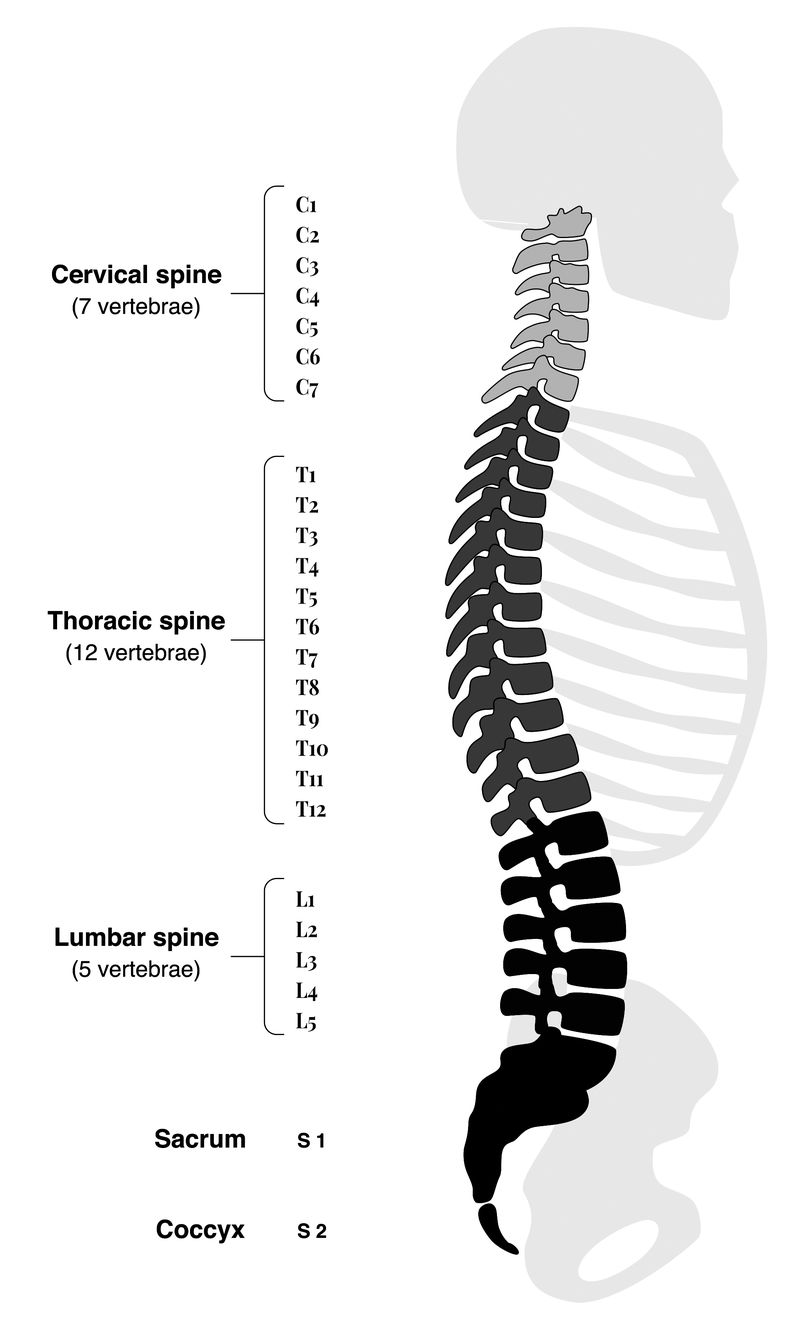
The areas of our spine connected to more structure and more bone are the most protected and stable. There is also compromise where the vertebrae change from different sections: where C7 meets T1, where T12 meets L1, and where L5 meets S1.
The Pelvis
The pelvis is the central mass that connects our upper body with our lower body. Even though it's not part of the axial skeleton, understanding its function with regards to stability is an important way to keep the body safe, especially when doing more strenuous postures.
The main most commonly used movements of the pelvis are tilting forward and backward—anterior and posterior tilts. This movement can be connected to stretching, engaging, and strengthening much of the surrounding muscles, and muscles that attach onto the pelvis itself, such as the abdominal muscles, hip flexors, psoas, quadriceps, and glutes.
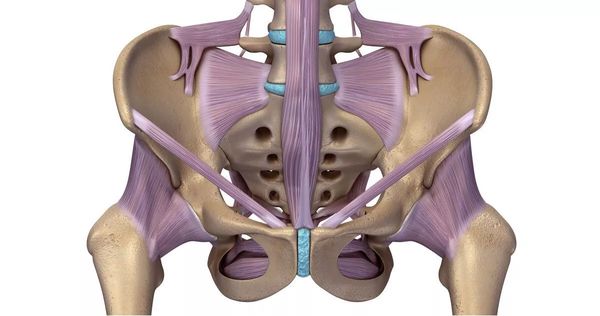
Hinging at the hips with a straight spine is the safest position for a forward fold. As this happens, the pelvis must undergo an anterior tilting action to maintain alignment to keep a stable spine.
Tight hamstrings may prevent this rhythm, so a bend in the knees will be the best way to support proper form. Without the pelvic tilt, you'll experience an overcompensation pattern where muscles of the low back can become strained to try and do the work of the glutes and hamstrings.
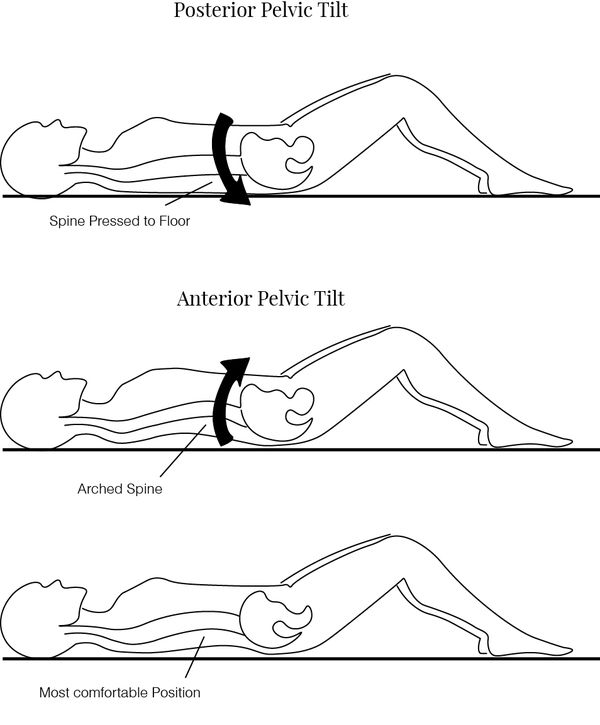
Joints
Joints are intersections in the body where two bones meet and allow for mobility, movement, and provide support. The three major joints that we emphasize focus on in yoga practice are:
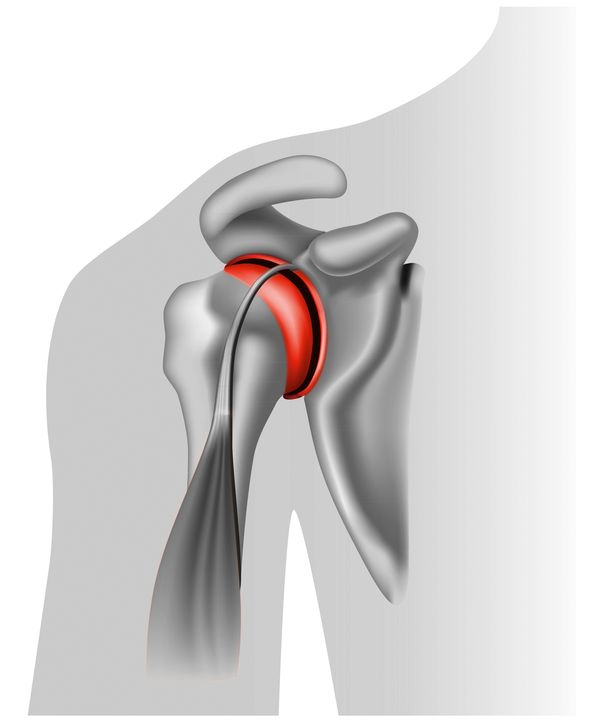
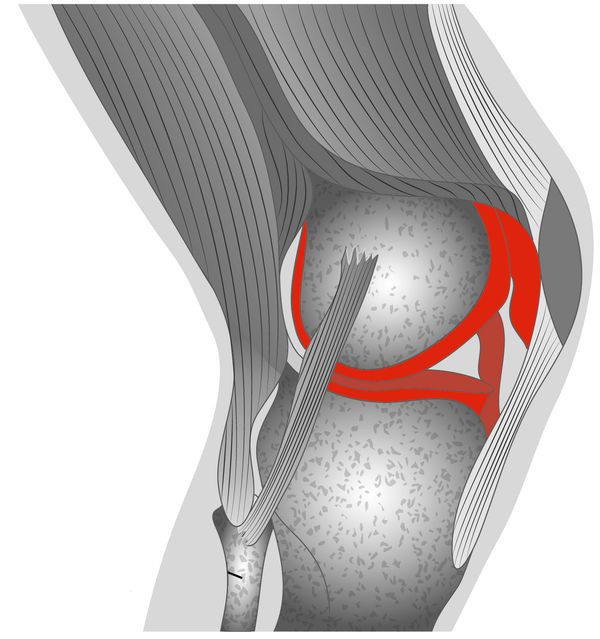
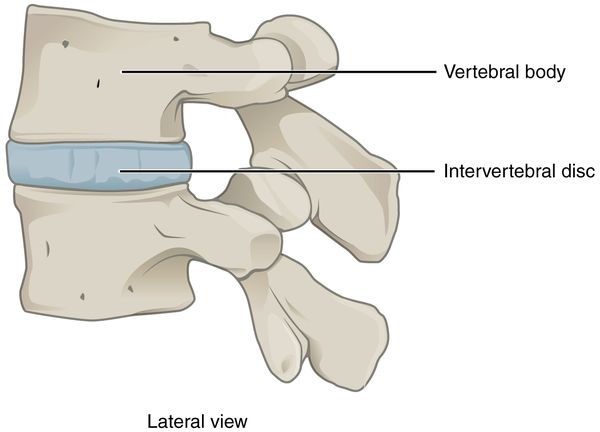
Connective Tissue
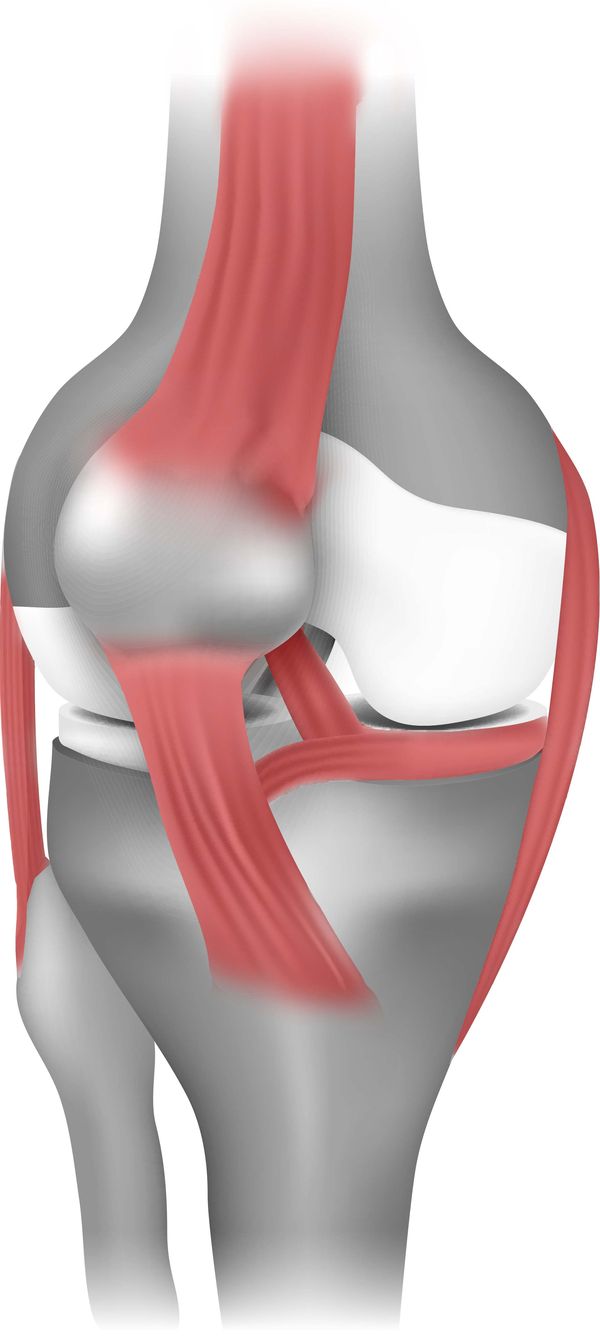
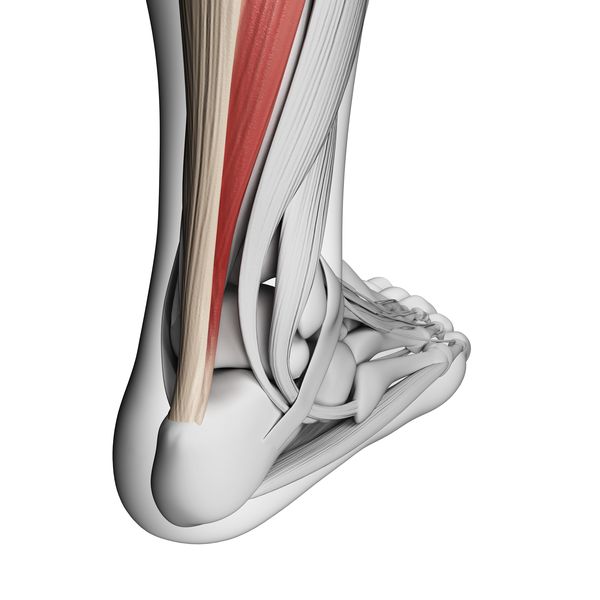

Muscles
Muscles are elastic fibers organized in small, bundled shapes and enclosed with fascial wrap throughout the body. Different movements require different amounts of these fibers to be active. The more you perform a posture or exercise increases the number of muscle fibers that engage to strengthen a particular muscle group.
Muscle fibers contract in response to the brain sending nerve stimuli to the central nervous system. This is a process that involves the release of calcium from the bones to the muscle. This signal causes the muscle to contract or shorten into what we call engagement, or lengthen and extend into what we call stretch.
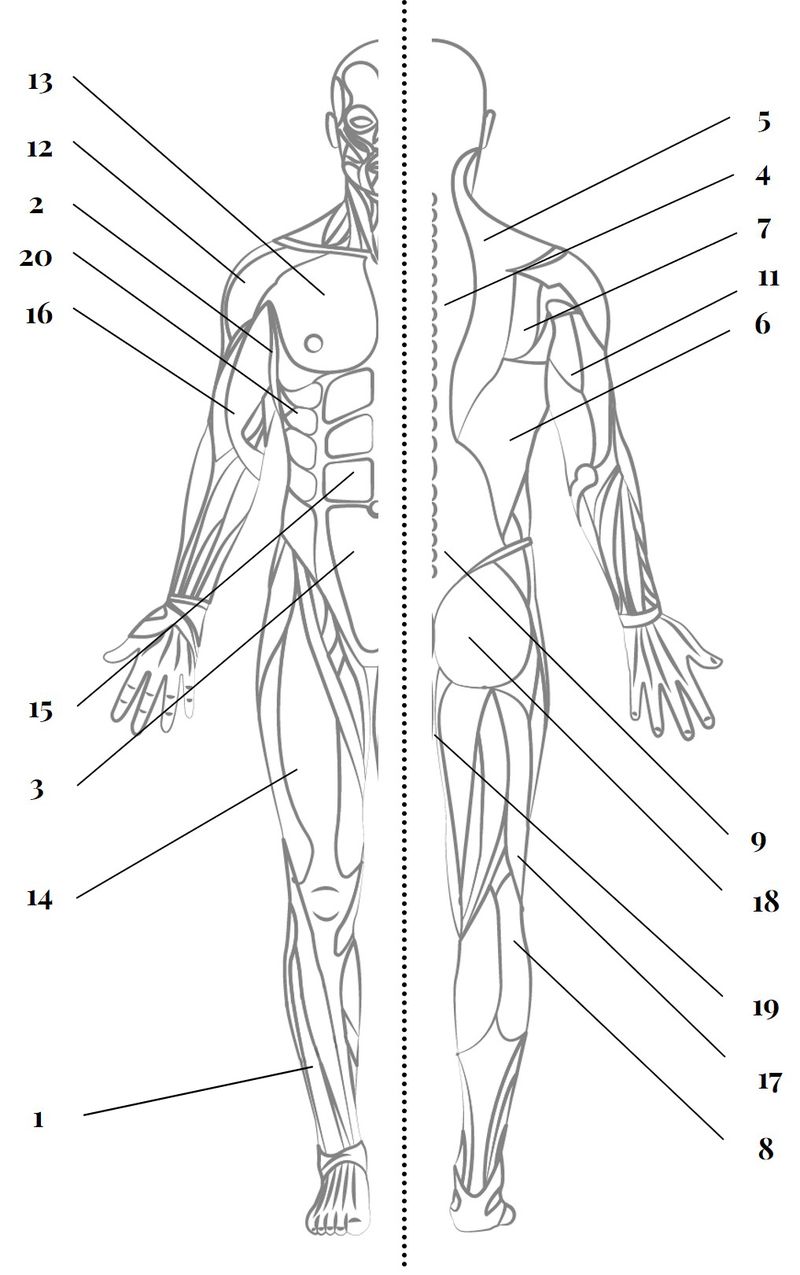
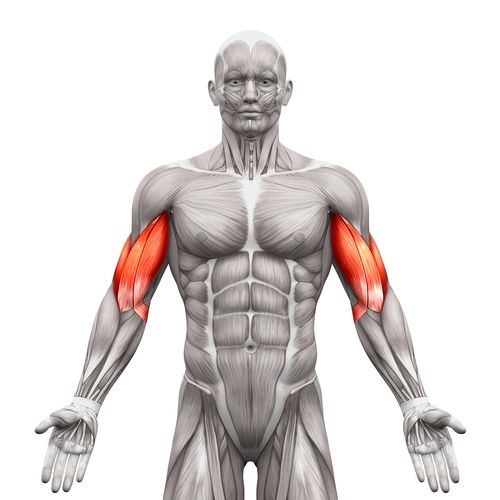
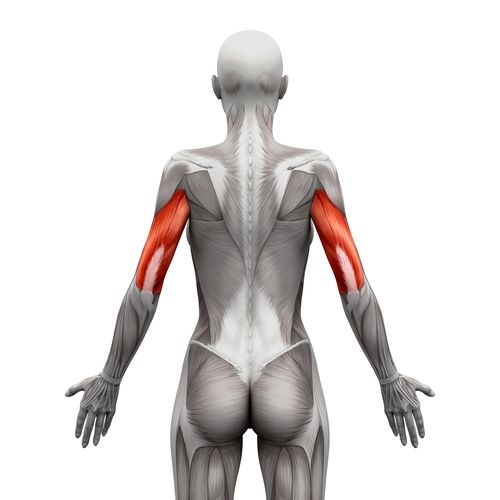
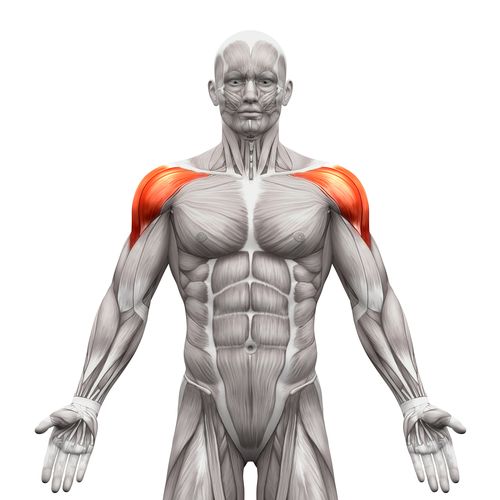
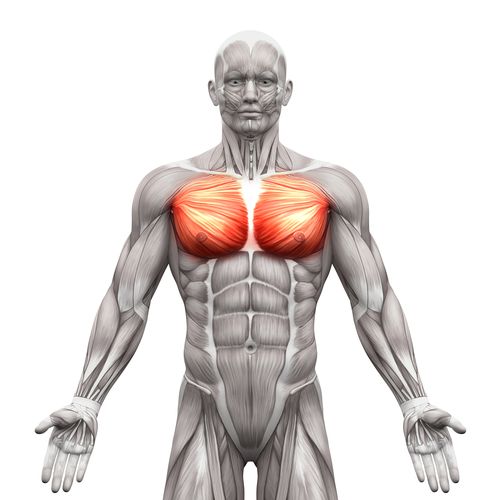
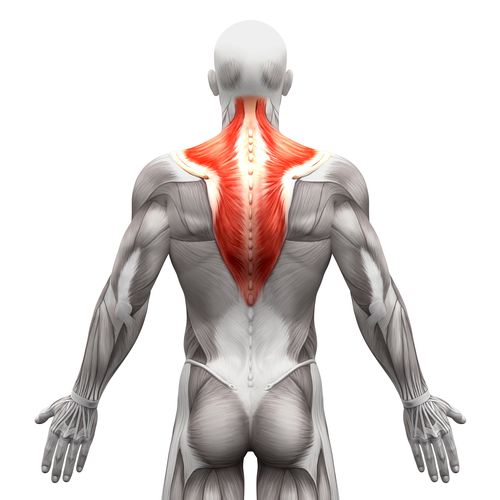
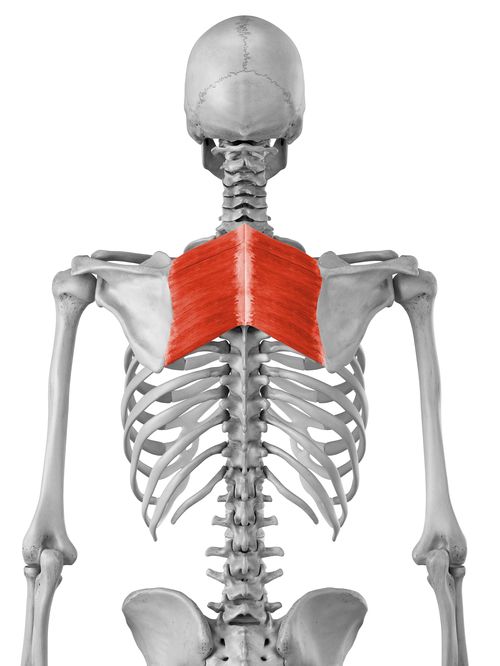
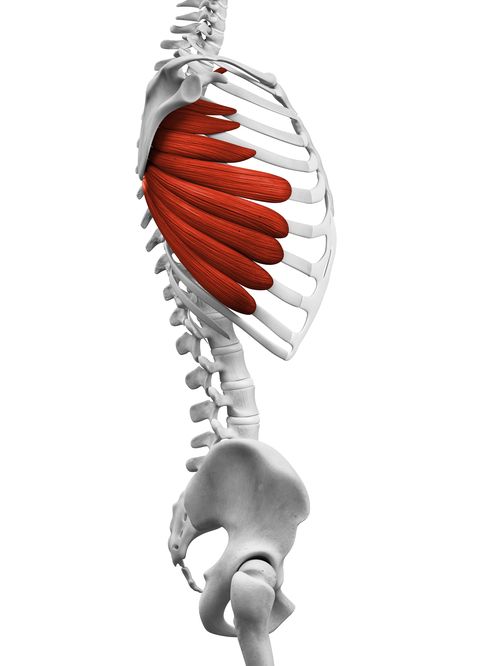
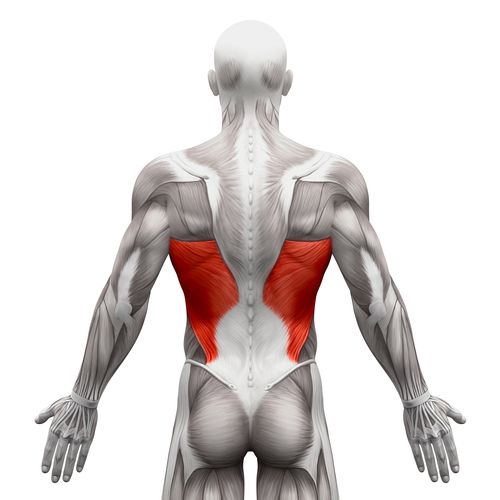
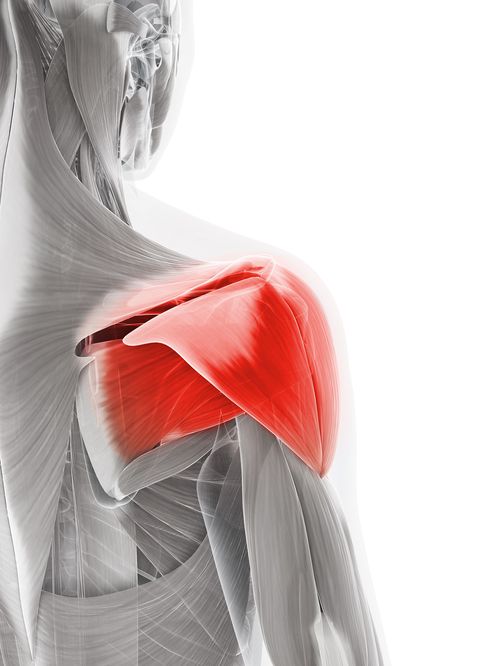
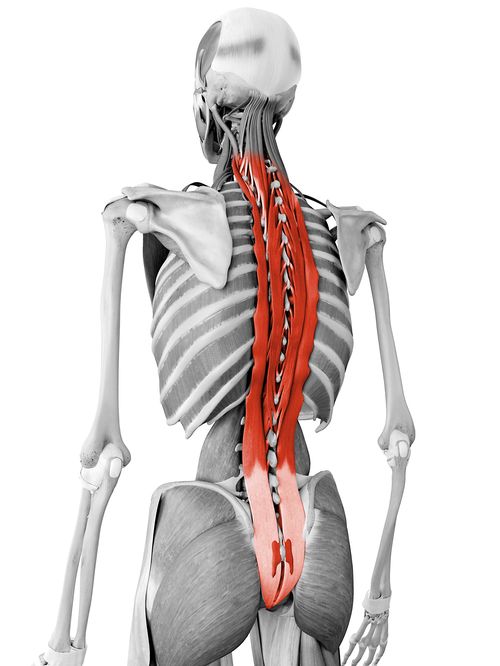
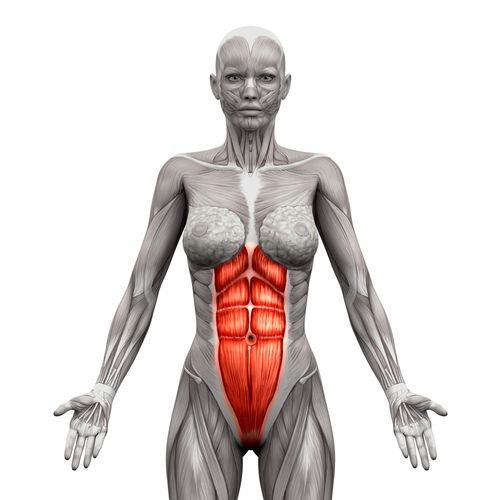
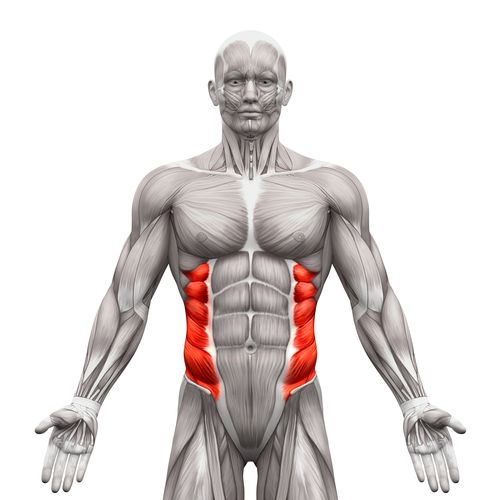
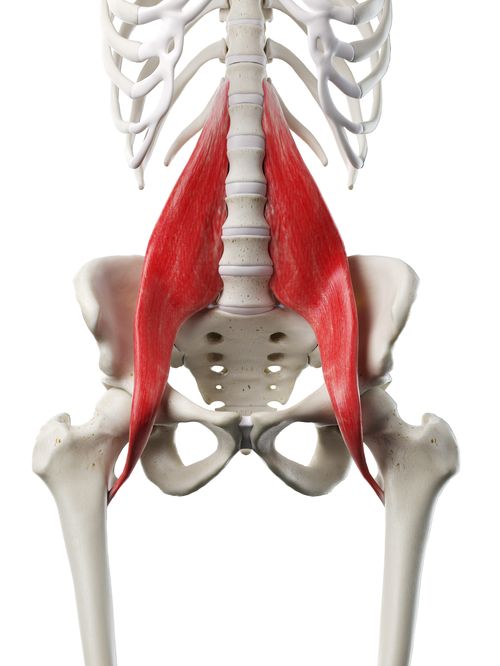
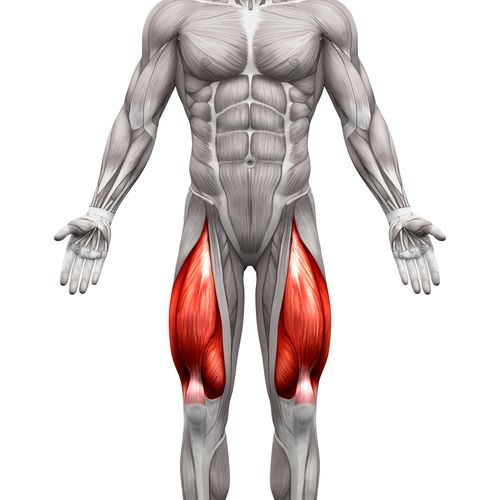
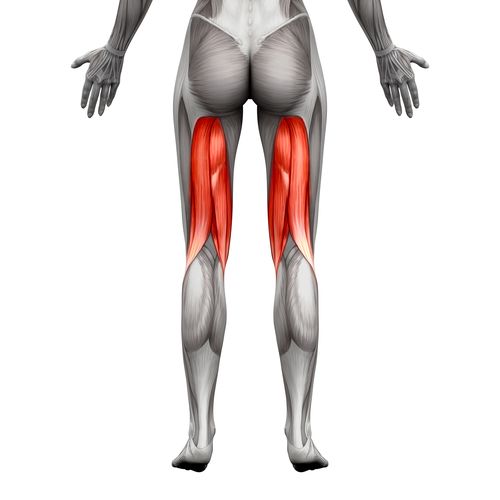
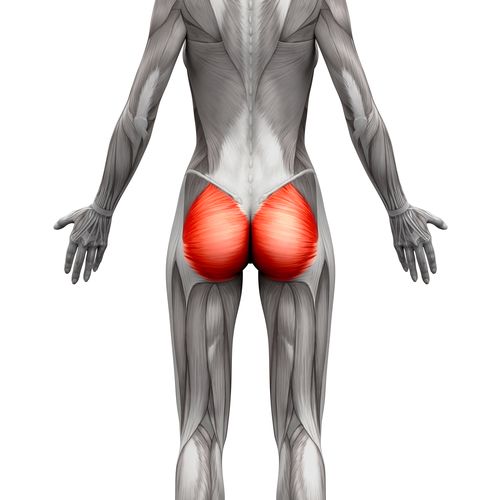
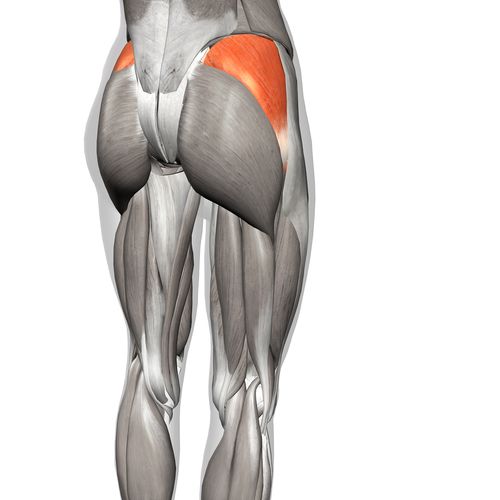
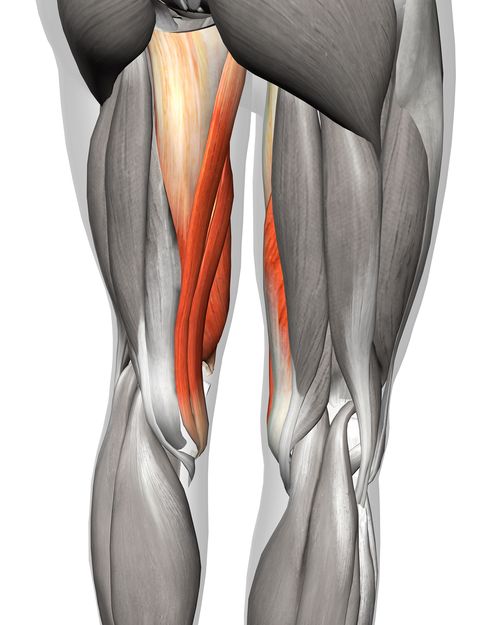
Types of Engagements
Muscles engage in three ways. Understanding the biomechanics of how we move gives us perspective on muscle function, cueing, and being able to target a specific result.
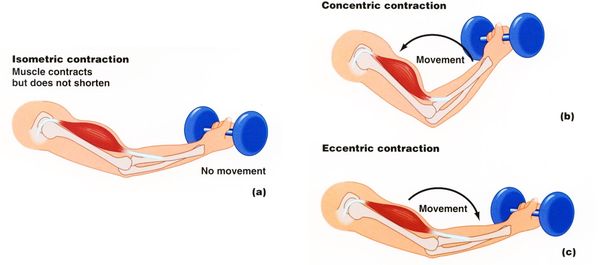
As muscles are working, usually a counteraction happens in the opposite muscle. For example, when the bicep contracts, the tricep lengthens, and vice versa. When the quadricep contracts, the hamstring lengthens.
This is known as agonist and antagonist muscle function. The agonist is the muscle contracting; the antagonist is the muscle lengthening.
The agonist (contracting muscle) pairs with its antagonist (lengthening muscle) across every joint action.
Compression vs. Tension
When it comes to physical body limitations, it can be difficult to discern the difference between structural, functional, and tension-based abilities. It's important to look at bodies like you have X-ray vision so you can see joints and bones aligned properly and offer support to ensure safety.
Where it can be interesting is when a student has physical limitations or other soft tissue that appear they are moving into their edge as a posture but have a stopping point. This stopping point is usually categorized into one of two things:
Contraindications + Injuries
A contraindication is any condition that makes a particular practice inadvisable for a student—a kneeling lunge with someone recovering from a knee replacement, a deep twist for someone in their third trimester, a full inversion for someone with unmanaged blood pressure. Knowing when not to offer a shape is as much a part of teaching as knowing how to guide one.
You are not a doctor, and you don't need to be. What you do need is a working understanding of the most common injuries and conditions you'll encounter on the mat, so that you can hold space for healing rather than unintentionally add to harm.
Most injuries are the slow accumulation of stress over time—a joint or tissue that has been overloaded for months or years until a single movement becomes the “straw that breaks the camel's back.” If something hurts your student, that is the body asking you to back off. When in doubt, leave it out.
When a student is rehabilitating an injury, refer them to a doctor or physical therapist for specialized care. This doesn't mean they have to step away from yoga—quite the opposite. It means your job becomes one of guiding intelligent modifications so their practice supports the healing already in motion.
Our role is to observe, prevent, and support—never to diagnose or treat. Intelligent teaching prioritizes function over form: the shape only matters insofar as it serves the body inside it. Help your students distinguish sensation—the stretch, effort, and muscular engagement that are part of practice—from pain—sharp, pinching, or radiating discomfort that signals it's time to modify or stop.
Above all, teach to the body in front of you. Every student arrives carrying a different history, and meeting them where they are is the work.
Forward Head Posture
Also known as “iHunch,” poking chin posture, upper cross syndrome, or text neck. It's when a person develops an excessive kyphosis of the thoracic spine, sending the neck and head forward. Usually developed over time from hunching over our devices with many negative side effects such as lack of blood flow to the muscles, headache, neck strain, and dysfunctional breathing.
Poor Posture
Also common, even in people with developed movement practices. Sometimes neutral posture can be over corrected and create issues in the opposite direction. “Good” or neutral posture comes with natural curves of the spine being aligned and no straining in the muscles.
.jpg)
Modifications: lower the knees in chaturanga, skip the vinyasa entirely when fatigue sets in, drop to forearms in plank or dolphin, use blocks under the hands in down dog, and avoid forced binds, deep flys, or heavy shoulder compression in postures like wheel.
Modifications: warm the wrists thoroughly at the start of class with circles, flexion/extension, and tabletop shifts. Cue students to spread the fingers wide, ground through the knuckles and fingertips (not just the heel of the hand), and lift slightly through the center of the palm. Offer the option to make fists, use wedges, drop to forearms, or take the pose against a wall when symptoms flare.
Modifications: always offer a generous micro-bend in the knees during forward folds. Cue core engagement before any twist or backbend. In seated forward folds, sit on a folded blanket to tilt the pelvis forward. For SI sensitivity, keep the hips square in lunges and warriors and avoid extreme asymmetric stretches like deep pigeon. Never deliver a hands-on assist that deepens a back bend or twist without explicit consent and clear knowledge of the student's history.
Modifications: in standing postures, cue the front knee to track over the middle of the foot, never past the toes. In kneeling postures, pad the knees with a folded blanket or double mat. For students with knee sensitivity, skip deep lotus, half lotus, hero's pose, and forced pigeon—offer figure-four on the back instead. In low lunges, slide the back knee further behind the hip to relieve patellar pressure.
Modifications: avoid postures that compress or impinge the joint—deep pigeon, sleeping pigeon, runner's lunge with the hip dropped, and even some side angle variations. Offer figure-four on the back, supported pigeon with a bolster under the hip, or thread-the-needle as alternatives. Emphasize strengthening the glutes and deep hip rotators rather than chasing more flexibility, and remember that “tight hips” are often weak hips in disguise.
Modifications: generous knee bend in all forward folds, especially seated. Cue students to draw the front of the thigh up and back, engaging the quadriceps to take load off the hamstring. Pair flexibility work with strength: bridge variations, deadlifts off the mat, and active engagement in poses like warrior III. Less stretch, more strength is the rule for any healing hamstring.
Modifications: in plank, chaturanga, and upward dog, cue students to keep the back of the neck long and the gaze just slightly forward of the mat—never craning up. In camel and other back bends, offer the option to keep the chin tucked toward the chest. Avoid teaching headstand and shoulderstand to beginners; offer legs-up-the-wall, supported bridge with a block, or dolphin pose as inversions instead. Use a folded blanket under the shoulders in shoulderstand to protect the cervical curve.
General Red Flags
- Acute pain or inflammation
- Recent surgery
- Unmanaged high blood pressure
- Herniated discs
- Severe joint instability
Pregnancy
- Avoid deep abdominal compression
- Modify deep twists
- Prioritize stability and breath awareness
Older Adults
- Move slower
- Emphasize balance and joint mobility
Hypermobile Students
- Emphasize strength over flexibility
Post-Injury Students
- Encourage medical clearance when appropriate
Teach language that is invitational, not corrective and empowering, not restrictive. Examples: “If it supports your body, try…” • “Option to…” • “Listen to what your body needs today…”
Replace “fix” with “support.” Replace “perfect pose” with “functional movement.” Encourage curiosity, not fear, around modifications. Avoid diagnosing or providing medical advice.
The Nervous System
The nervous system is a complex system within our bodies that essentially communicates sensory information between the body and the brain. Understanding how these systems work allows you to provide the most effective experience.
The two main components:
- Central Nervous System (CNS) — composed of the brain and spinal cord
- Peripheral Nervous System (PNS) — consists mainly of nerves connecting to every other part of the body
Part of the PNS we study quite a bit within healing practice is the autonomic nervous system, which contains the sympathetic and parasympathetic branches.
It can be difficult for an individual to process information rationally when their body is in sympathetic nervous system activation because the main goal of sympathetic is to get out of danger.
The goal through healing practices is to spend more time in the parasympathetic so we can promote healing, well-being, restoration, and recovery—even if the modality to do so is rigorous yoga practice.
Sympathetic
Increases heart rate & alertness
Energizing postures activate
Parasympathetic
Promotes healing & recovery
Restorative postures activate
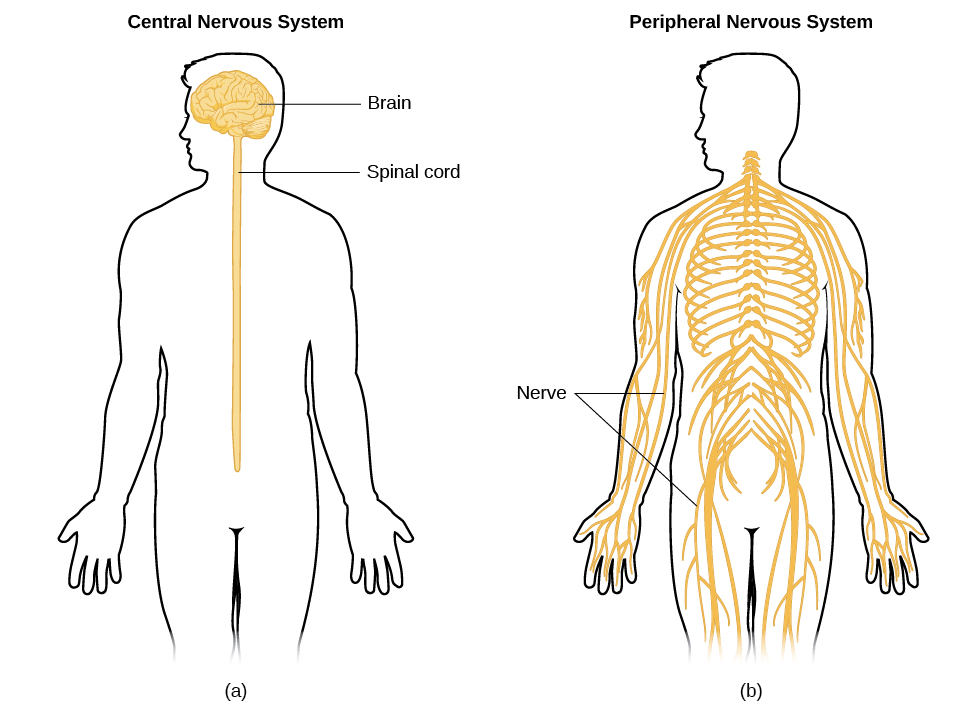
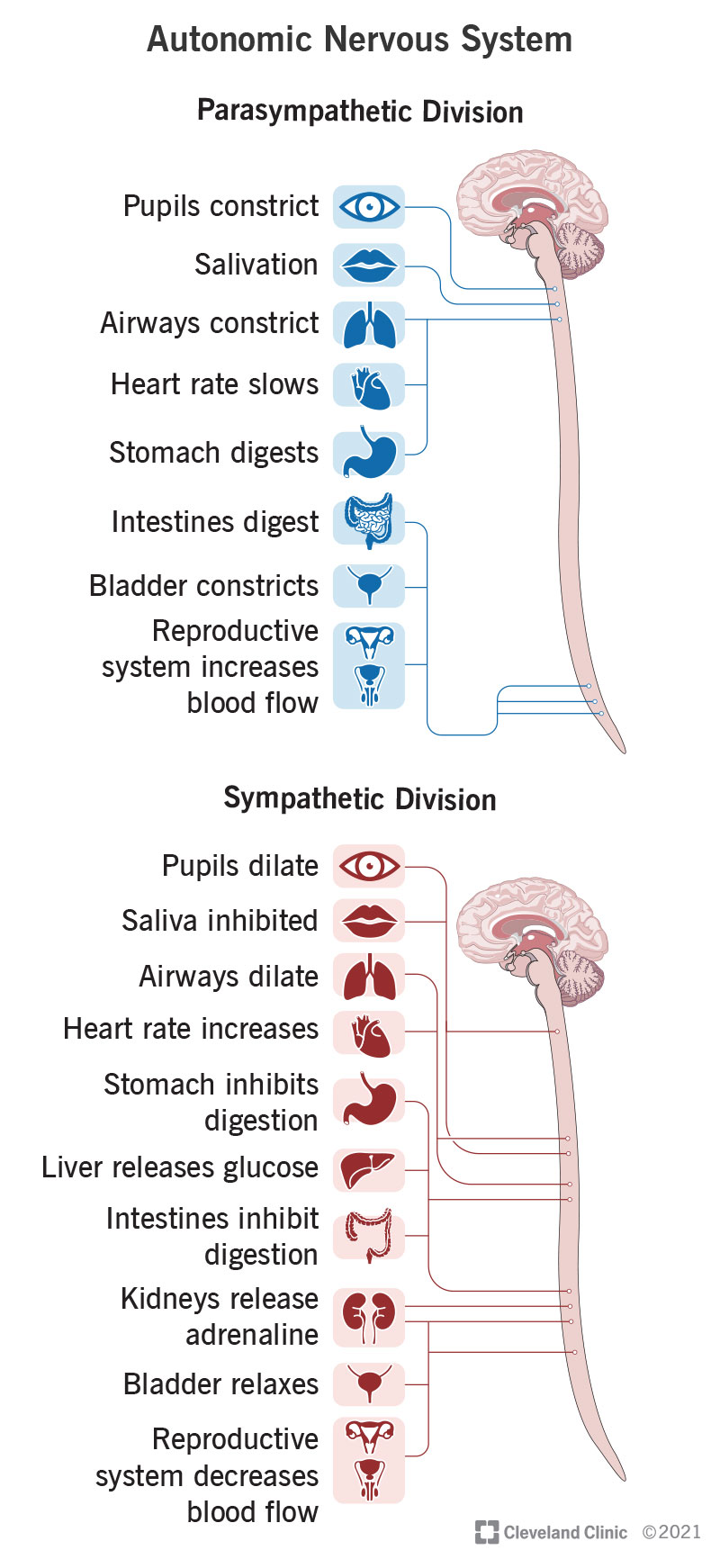
Yoga is one of the few practices that gives us conscious access to the autonomic nervous system—the part of us that normally runs on its own. Through a combination of breath, movement, and attention, we can deliberately shift between sympathetic and parasympathetic states, train the system to recover faster from stress, and build the kind of nervous-system flexibility that researchers call vagal tone. A teacher who understands these mechanisms can sequence a class to land students exactly where they need to be by the end of practice.
Other Body Systems
Our systems are all connected, which is why our physical yoga practice not only has an impact on our bodies but also the functions within that body system. We experience direct and indirect physiological effects on each of the following systems.
Pranayama / Breathwork
The breath is one of the most extraordinary and accessible forces within us. With every inhale and exhale, we engage a direct doorway into the nervous system—the system that continually regulates our inner balance, or homeostasis. Through conscious breathing, we gain the rare ability to influence our physical, mental, and emotional states from the inside out. Breath practices can calm or energize us, build resilience within the body and mind, and become profound tools for healing and self-regulation. For centuries, yogic traditions have also recognized the breath as a bridge between the physical and the subtle realms, a pathway through which we can deepen awareness, expand consciousness, and connect to something far greater than ourselves.
per day
The Science of Breath
On average, you take roughly 20,000 breaths per day. Although a primarily subconscious process, breathing is complex and influences every system in the body. When you breathe, the respiratory system draws oxygen into the lungs, where it passes into the bloodstream and is delivered to your body’s cells. In return, the cells produce carbon dioxide as a metabolic waste product, which is carried back to the lungs and released with each exhale. This continuous exchange of gases fuels cellular energy production and supports the vital functions that keep the body alive, balanced, and functioning efficiently.
Beyond its role in oxygen exchange, the breath is deeply connected to the nervous system, circulation, and brain function. The rhythm, depth, and pace of breathing send signals throughout the body that can either activate the sympathetic “fight or flight” response or stimulate the parasympathetic “rest and digest” response, helping regulate heart rate, blood pressure, stress hormones, and overall homeostasis. Because breathing is one of the few bodily processes that is both automatic and consciously controllable, it offers a powerful bridge between the body and the mind. In yoga, conscious breath practices—known as pranayama—allow us to intentionally influence these physiological systems, creating states of calm, focus, vitality, and resilience that support both physical practice and deeper states of awareness.
Anatomy of Breathing
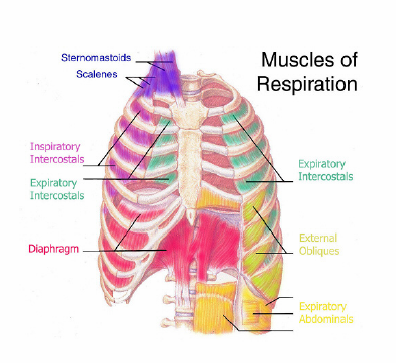
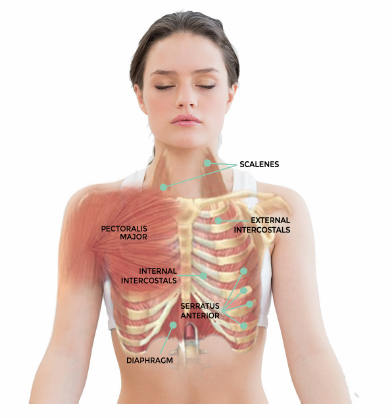
Inspiration (Inhale)
The diaphragm contracts and descends on the organs below while the intercostal muscles contract and pull upward. The pressure created expands the thoracic cavity, giving space for the lungs to fill with air.
Expiration (Exhale)
The diaphragm relaxes upward as the ribcage releases inward. The inward pulling pressure of the thoracic cavity decreases the space. As a result, the lungs contract and air is forced out.
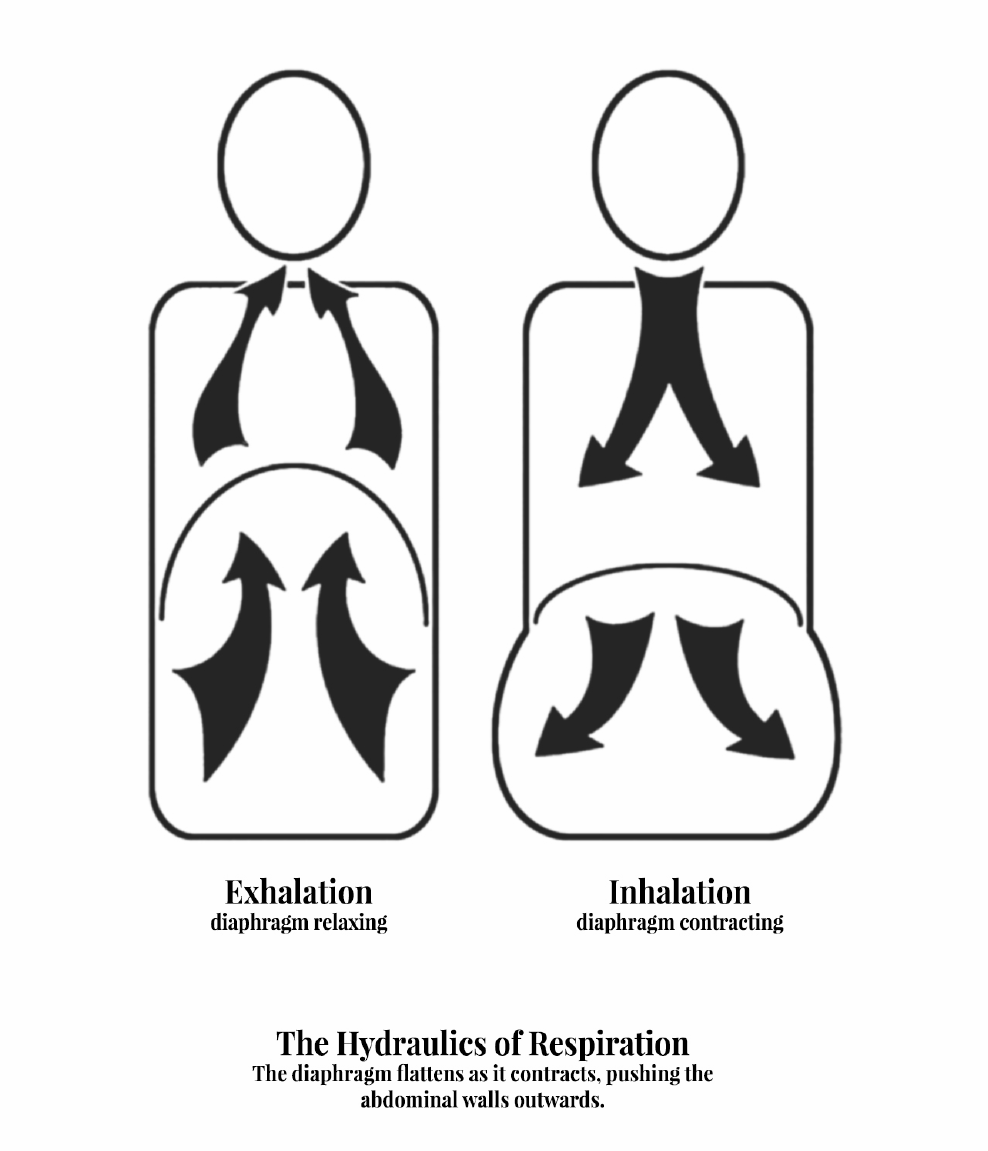
Breathwork is a powerful tool used widely amongst both Eastern and Western cultures to promote wellbeing. It’s said that 80% of average Americans do not breathe properly, which in turn, can lead to stress-based injuries and other major health issues.
Even though breathing is a physical, biological function of the body, it also affects our subtle energy and life force. Breathing is a non-voluntary and voluntary function, and because it happens without us thinking about it, many of us aren’t breathing properly.
Dysfunctional breathing has been connected to migraines, upper body pain, stress-based injury, poor posture, overstrained neck muscles and tension. Chest and neck breathing, the most common improper breathing, can lead to chronic conditions, poor posture and lack of breath awareness.
Breath & the Nervous System
The breath is one of the most powerful tools we have for influencing the nervous system because it is both automatic and voluntarily controllable. This dual nature makes the breath a powerful bridge into the control panel of the nervous system—because it operates voluntarily, we can consciously use it to shift our physiological state at will.
During a slow, controlled inhale, pressure changes within the thoracic cavity stimulate the sympathetic nervous system, often leading to a temporary increase in heart rate, alertness, and blood pressure as the body prepares for action. In contrast, a slow, extended exhale activates the parasympathetic nervous system, promoting relaxation, lowering heart rate and blood pressure, and supporting recovery and restoration. These responses are not isolated events but rather part of a dynamic, continuous regulatory process designed to maintain balance within the body.
Research shows that the nervous system naturally cycles between sympathetic and parasympathetic dominance approximately every 90 minutes, creating a rhythmic wave of activation and rest throughout the day. This natural ultradian rhythm supports homeostasis, allowing periods of focus, productivity, and alertness to be followed by phases of recovery and integration. The breath is already functionally designed to participate in this regulation. By consciously working with breathing patterns, we can amplify or soften these natural oscillations and intentionally influence our physiological and emotional states. Through pranayama and mindful breathing practices, we can learn to induce specific nervous system states on command—cultivating calm, focus, resilience, or energy depending on the needs of the moment. In this way, the breath becomes a bridge between biology and conscious experience, giving us direct access to our internal balance and our capacity for self-regulation.
Sympathetic
Blood pressure rises
Energy & alertness heighten
Parasympathetic
Blood pressure drops
Calm & recovery deepen
Ratio Breathing
Pranayama
Pranayama is the fourth of the eight-limbed path of Ashtanga Yoga mentioned in verse 2.29 of the Yoga Sutras of Patanjali. It's defined by the regulation of the breath through certain techniques, patterns, and exercises.
In western culture, we call it "breathwork," whereas in Hindu yoga, it's referred to as "Pranayama." One of the main goals of pranayama is to bring connection between the body and the mind.
Breathing practices "can balance, strengthen, and increase the adaptive flexibility of stress response systems, potentially counteracting the detrimental effects of excess stress, neglect, and trauma on emotion regulation, physical health, and the ability to experience love and compassion."
Richard P. Brown & Patricia L. Gerbarg — Kripalu InstituteSome studies suggest yogic breathing exercises affect the HPA axis, which regulates digestion, the immune system, sexuality, emotions, and mood through interactions among the hypothalamus, adrenal, and pituitary glands.
Breath Techniques
There are many ways you can perform intentional breathwork, or Pranayama, for healing. First, make sure you are functionally breathing properly so you can use these modalities to amplify your wellbeing.
- Regulates oxygen circulation
- Increases blood to heart & arteries
- Increases circulation to brain
- Lowers blood pressure
- Helps in healing unresolved trauma
- Supports creative flow
- Increases focus, removes blockages
- Clears emotions into neutral
How to Practice
- Sit tall or stand in a comfortable position. Begin by breathing naturally through the nose.
- Open your mouth and exhale slowly, making a “HAAA” sound—as if you are fogging up a mirror. Notice the gentle constriction at the back of the throat.
- Now close the mouth and maintain that same throat constriction while exhaling through the nose. You should hear a soft, ocean-like or whispering sound.
- Apply the same gentle constriction on the inhale, creating the oceanic sound in both directions of breath.
- Keep the breath smooth, steady, and even—inhales and exhales should be approximately equal in length. Avoid forcing or straining the throat.
- During asana practice, maintain Ujjayi breath throughout the sequence. Let the sound guide your rhythm—if you lose the breath, slow down the movement.
- Builds internal heat and supports detoxification
- Creates a rhythmic pace for flowing sequences
- Calms the mind and promotes focused concentration (pratyahara)
- Increases oxygen absorption and improves lung efficiency
- Regulates blood pressure and slows the heart rate
- Provides an audible feedback loop—the sound serves as a meditation anchor
How to Practice
- Sit comfortably with a tall spine and close the eyes. Take a few natural breaths to settle in.
- Raise the hands to the face and position the fingers in Shanmukhi Mudra: thumbs gently on the ear flaps (tragus), index fingers resting lightly on the eyelids, middle fingers on the sides of the nose, ring fingers above the upper lip, and pinkies below the lower lip.
- Inhale deeply through the nose, filling the lungs completely.
- On the exhale, keep the mouth closed and produce a low, steady humming sound—like the buzzing of a bee. Feel the vibration resonate through the skull, sinuses, and chest.
- Keep the humming smooth and continuous for the entire length of the exhale. Experiment with pitch—a lower tone produces deeper vibration.
- At the end of the exhale, release the hands briefly, inhale naturally, then resume the mudra and repeat. Practice 5–10 rounds.
- After the final round, sit quietly with the eyes closed and observe the resonance and stillness within.
- Immediately calms the mind and reduces anxiety, anger, and frustration
- Lowers blood pressure and heart rate
- Stimulates the parasympathetic nervous system
- Relieves tension in the head, sinuses, and jaw
- Improves concentration and prepares the mind for meditation
- The vibration stimulates the pineal and pituitary glands
How to Practice
- Sit tall in a comfortable seated position with a straight spine. Rest your hands on your knees in Jnana Mudra or simply palms down.
- Take two deep cleansing breaths to prepare. On the third inhale, breathe in to about 75% lung capacity.
- Forcefully expel the air through the nose by sharply drawing the navel toward the spine. The exhale should be short, powerful, and audible.
- Release the abdominal contraction and allow the lungs to refill naturally—the inhale is completely passive.
- Repeat in quick, rhythmic cycles. Start with 20–30 pumps per round at a moderate pace.
- After completing one round, inhale deeply, hold the breath briefly at the top (optional Mula Bandha), then exhale slowly. Sit quietly and observe the sensations.
- Practice 3 rounds, gradually increasing to 50–100 pumps per round as you build capacity.
- Purifies the nasal passages, lungs, and entire respiratory system
- Stimulates the abdominal organs and improves digestion
- Increases oxygen supply to cells and energizes the nervous system
- Builds heat and activates the manipura (solar plexus) chakra
- Sharpens concentration and clears mental fog
- Strengthens the abdominal muscles and diaphragm
How to Practice
- Fold the tips of the right index and middle fingers inward until they touch the palm at the base of the thumb. Use the right thumb to close the right nostril and the right ring and pinky fingers (together) to close the left nostril.
- Close the right nostril with your thumb. Exhale gently through the left nostril. Keeping the right closed, inhale through the left nostril deep into the belly. Allow the breath to travel upward along the left side of the body. Pause briefly at the crown of the head.
- Close the left nostril with ring and pinky fingers while releasing the right. Exhale through the right nostril, surrendering the breath down the right side. Pause at the bottom of exhalation.
- Keeping the left closed, inhale through the right nostril. Allow the breath to travel up the right side of the body.
- Close the right nostril, release the left. Exhale through the left nostril, surrendering breath down the left side. Pause at the bottom.
- Repeat for 10–15 cycles.
How to Practice
- Belly (Adham Pranayama): Place one hand on your belly. Inhale and direct the breath deep into the lower abdomen, feeling the belly expand outward like a balloon. Exhale and let the belly gently draw back in.
- Ribcage (Madhyam Pranayama): Place hands on the sides of your ribcage. Inhale and after filling the belly, continue breathing into the middle torso, feeling the ribs expand laterally. Exhale and feel them contract inward.
- Chest (Adhyam Pranayama): Place one hand on the upper chest. Inhale and after filling belly and ribs, continue the breath up into the upper chest and collarbones. Exhale and release from top to bottom: chest, ribs, belly.
- Full Three-Part Breath: Combine all three stages into one seamless inhale: belly expands, ribs widen, chest lifts. On the exhale, reverse: chest softens, ribs contract, belly draws in. The breath becomes one continuous, wave-like movement.
- Practice 5–10 rounds, allowing each breath to become longer and smoother. This technique is excellent for beginners and can be practiced lying down or seated.
- Teaches full lung capacity awareness
- Calms the nervous system and reduces anxiety
- Improves oxygenation and circulation
- Foundation for all other pranayama techniques
How to Practice
- Sit tall with a straight spine. Take a few natural breaths to center yourself.
- Begin by inhaling deeply and forcefully through the nose, expanding the belly and chest.
- Exhale forcefully through the nose, drawing the navel toward the spine.
- Continue this rhythmic pumping—both inhale and exhale are equal, strong, and rapid—for 10–20 breaths per round.
- After each round, take a deep breath in, hold briefly, then exhale slowly. Rest and observe the sensations before beginning the next round.
- Practice 3 rounds, gradually increasing the number of breaths per round as your capacity builds.
- Increases oxygen supply and energizes the entire body
- Stimulates the metabolic rate and digestive fire (Agni)
- Clears the nasal passages and strengthens the lungs
- Balances and strengthens the nervous system
How to Practice
- Posture: Sit comfortably in Sukhasana (easy cross-legged seat) with a straight spine. Close the eyes and bring awareness to the breath.
- Inhale (Prana): Inhale slowly through the nose, expanding the belly and filling the chest. Feel the energy lift and nourish—prana moves upward.
- Exhale (Apana): Exhale deeply through the nose, contracting the pelvic floor and visualizing toxins or tension releasing downward into the earth—apana moves downward.
- Continue this rhythmic pattern for 6 rounds or up to 6 minutes.
Associated Mudras
- Prana Mudra (Inhale): Join the tips of the thumb, ring finger, and little finger together, keeping index and middle fingers straight. This mudra boosts vitality and balances energy.
- Apana Mudra (Exhale): Join the tips of the thumb, middle finger, and ring finger, keeping the index finger and little finger straight. This mudra promotes grounding, digestion, and detoxification.
- Balances the upward (prana) and downward (apana) energy currents in the body
- Grounds and energizes simultaneously
- Supports the body’s natural detoxification and elimination processes
- Promotes deep grounding while maintaining alertness
- Creates a sense of inner equilibrium and wholeness
Application in Power Yoga
In western asana-based yoga practices, especially when referring to physical asana, breath patterns are most synced to what is happening in the physical body. It's important to use the breath as a tool, particularly with physical practice, as it's the way we bring oxygen into our bodies to use for movement.
General Rule
Twisting Postures
Flowing Sequences
Rigorous Classes
Ujjayi Breath
A closed-mouth, oceanic-sounding breath that builds heat within the body. Supports the intention of building strength and focus. Used as the primary breath throughout vinyasa.
Open Mouth Exhale
Used when feeling overwhelmed or dysregulated to slow systems down. Best used after completing a flow or in a focused balance posture to reset mind and body.
Meditation
Meditation asks us to take a seat and quiet ourselves. It whispers to us about how to be creative in life, about what is true and not true, about how to heal and how to mourn, and about the joys that come from simply being, rather than wanting and trying.
in the human mind
Introduction to Meditation
"At its core, meditation is a blossoming of spirit—an individual reply to a call from within. Unlike the more familiar ways in which we normally think and act, meditation asks us to take a seat and quiet ourselves. Then it whispers to us about how to be creative in life, about what is true and not true, about how to heal and how to mourn, and about the joys that come from simply being, rather than wanting and trying. All this amounts to a welling up of spirit that permeates both heart and mind."
Rolf Sovik, PsyD — Moving InwardAt its essence, meditation is the art of turning inward—a simple, deliberate act of pausing to meet the present moment with quiet attention.
Its roots reach back more than 5,000 years, woven through the early Vedic traditions of India and echoed across nearly every spiritual lineage that followed. Wherever it arose, the intention remained the same: to know the self more deeply and touch something greater than the thinking mind.
We practice because life is loud. Between the pull of our devices, the pace of our days, and the weight of our inherited patterns, the inner voice becomes difficult to hear.
Meditation offers a sacred pause—a steady return to presence that softens the nervous system, clears the mind, and reconnects us to the wisdom already living within. From this stillness, we begin to meet ourselves, and our world, with more awareness, compassion, and grace.
Let's Dive Deeper
DHYANA
Known as Dhyana, the 7th of the 8 limbs of the yoga sutras, meditation is the practice of sustained, voluntary attention—the deliberate training of the mind to move beyond its habitual chatter into a clearer, more spacious state of awareness.
Its earliest traces appear in the Vedantic traditions of India, dated as far back as 5000–3500 BCE, and echo through nearly every spiritual lineage that seeks union with something greater.
The effects of this practice ripple through our mental, emotional, physical, and spiritual health—touching the psychological, neurological, immune, endocrine, and cardiovascular systems alike.
Consider that the brain generates 50,000–70,000 thoughts a day across 80–100 billion neurons, each capable of forming thousands of connections.
Studies, Science & Benefits
The Effects of Meditation
Understanding what happens in the brain and body during meditation helps us appreciate its transformative power and communicate its benefits to students.
Brainwaves
Our brain continuously generates electrical activity in the form of brainwave frequencies, and each frequency corresponds to a different state of consciousness. Meditation allows us to access and cultivate specific brainwave states for healing, insight, and expanded awareness. During meditation and deep rest, the brain naturally shifts from high-frequency, alert states into slower rhythms associated with relaxation, emotional processing, and restoration. These shifts help support nervous system balance, reduce stress signaling, and promote conditions associated with physical and mental recovery.
Research in neuroscience shows that meditation can help train the brain’s ability to move flexibly between states of attention and deep rest. Over time, this can support improved emotional regulation, reduced pain perception, and enhanced regenerative processes in the body. The diagram below illustrates how different brainwave patterns relate to various states of consciousness, from active thinking to deep healing and integration.
Hemispheres of the Brain
The two hemispheres of the brain govern different but complementary modes of thinking and being. The left hemisphere is often associated with analytical thought, language, linear reasoning, and detail-oriented processing, while the right hemisphere is more connected to spatial awareness, emotional and intuitive processing, pattern recognition, and holistic perception. Meditation helps integrate these complementary aspects of our consciousness by encouraging communication and balance between both hemispheres rather than dominance of one over the other.
Neuroscience research suggests that regular meditation can improve functional connectivity across brain networks, helping logical analysis and intuitive awareness work together more fluidly. This integration can support clearer decision-making, greater emotional resilience, and a stronger sense of present-moment awareness. As the brain enters deeper states of relaxation during meditation, activity associated with stress and habitual mental looping often decreases, allowing more coordinated and harmonious brain function across both hemispheres.
Types of Meditation
Most meditation modalities fall into guided or unguided practice. Guided meditation uses a voice leading the experience, while unguided is self-directed. For beginners, guided meditation is recommended.
These are the core meditation practices woven throughout the CEREMNY training experience. Each practice offers a unique doorway into presence, connection, and self-discovery.
Somatic
Visualization
Compassion
Healing
Somatic
Mantra
Embodiment
Restorative
Osho’s Dynamic Meditation is a powerful, active meditation technique designed to release deep emotional and physical tension before moving into stillness. Unlike traditional silent meditation, it uses movement, breathing, catharsis, and stillness phases to help break through habitual mental and emotional patterns. It is considered impactful because it helps people discharge stored stress and access deeper states of relaxation and awareness more quickly than passive meditation methods.
Leading Meditation
As a meditation instructor, you are the anchor and guide for the space. You hold the container for the experience, creating an environment where students feel safe to explore their inner world. Your sensory acuity—your ability to observe subtle cues in body language, breath, and energy—helps you intuitively understand what each student or the group needs in the moment.
The quality of your presence is the foundation of every session. Your calm, grounded, and attentive state sets the tone for the group, often more powerfully than words or instructions. Students sense your energy and mirror your state, so the steadiness, clarity, and openness you bring directly impact the depth and effectiveness of the meditation experience you facilitate.
Leading meditation is less about performing or instructing and more about embodying the experience and guiding others through your grounded, mindful presence. It is an art of balancing observation, intuition, and compassionate support, allowing each participant to access their own inner awareness safely and fully.
Centered & Grounded
Vocal Intonation
Body Awareness
Clean & Minimal Environment
Neutral & Open Leadership
Attunement
Creating a Safe Container
Utilize the Spaciousness
Preparation
Prepare a theme that follows a personal story, concept, or throughline that develops a concept students can utilize as an anchor. This guiding thread gives the session coherence and gives students something meaningful to work with. Preparation is the foundation of a powerful meditation experience.
Environment
Create a space that supports inward focus. Consider lighting (dim or soft), temperature (slightly cool), sound (quiet or ambient), and aroma (subtle or none). Remove distractions.
Physical Posture
Guide students into a sustainable position. The body should feel supported enough that it can remain still and comfortable for the duration of practice. Ensure the spine is tall and the breath can flow freely.
Equipment
Know what you need to guide your session before you begin. For online classes, test your software, camera, microphone, and internet connection ahead of time. For in-person sessions, prepare music, speakers, mats, cushions, blankets, bolsters, and any other props you may need. Having everything ready allows you to be fully present from the moment students arrive.
A meditation session is a container—a structured, intentional space that holds both the guide and the student through the experience. The following framework outlines the structure for a core 20-minute CEREMNY community meditation practice, from open to close.
Introduction — Land the Theme
To set up the practice and inform and prepare students on their experience
2–3 minutes total
Overview: Share your name, welcome your students to the space, extend gratitude. Share the type of class they will be participating in and the duration of the session. Share the theme or concept you will be focused on during the meditation and that there will be time for shares for those who would like to stay later. Offer instructions to set space/body (anything they need to know about mudra or body position, setting up their space, using airpods, etc).
Example: “Hi, I’m Ashley. (pause) Welcome to class, (pause), I am so grateful you are here—whether livestream or visiting this recording after. I will be guiding you through a 20 minute meditation practice. (pause) Today we will be focusing on the heart chakra (pause) and how to embody more unconditional love. (pause) I chose this theme because… We will be using jala mudra today to support our practice, so please look up here so I can show you how to place your hands. (pause, repeat succinctly, go slow) This mudra represents X and will help us with X. Please use airpods or headphones for this practice and ensure you have set up a quiet space for your practice today. Let’s begin. Please sit in a comfortable position, (pause) and set your body in a way that feels supportive. (pause) Close your eyes and begin to allow your breath to filter in and out of your body gently. Inhale (pause). Exhale. (pause)”
The Drop In — Guiding into the Portal
To create a safe transition into the meditation practice using guidance, pranayama, visualization, and somatic support
3–7 minutes total
Overview: Start with 3 deep breaths that open the container—these are part of a ceremony, a ritual—these breaths invite students into their body. Continue with other breath practices such as sama vritti, box breath, OMs, humming exhales, etc. Guide students into feeling the experience of their body, the sounds/music, present moment—use sensory based cues to support a transition of getting there to actually “being there.”
The Body — Hold the Space
To contain the meditation experience, offer a space for students to build self trust, and hold space
4–12 minutes total
Overview: Leave ample space for students to sit. Use discernment to drop little encouraging, gentle words if necessary to guide the practice into more quiet and stillness. Use vocal tone and inflection to create resonance.
Example cues: “Allow yourself to continue to deepen your practice.” • “Come back to the foundation of your breath.” • “Let go of distractions.” • “Notice how you can easily be present.” • “Give the thinking mind a rest.” • “Relish in the space and stillness.”
Closing / Orienting — Seal the Deal
To gently bring students back and honor the transition out of the meditation experience
1–2 minutes total
Overview: Slowly orient your students back into their body giving time for transition. Invite deeper breath awareness and witness sensations in the body. Offer encouragement around movement and awakening and particularly allowing the body to offer guidance as to how that movement happens. Eventually suggest a gentle opening of the eyes and rejoining of the community space. Community announcements or updates.
Example: “Slowly begin deepening your breath. (pause) Observe your awarenesses from our practice as you integrate back into your body. (pause) Take your time, wiggle your fingers and toes, start to bring movement into your body. (pause) Gently blink your eyes open and see into the space you’re sitting in. (pause) Take your time, slowly come back into our space. (pause) It’s beautiful to watch how when we focus on one intention and topic, we allow ourselves access to how that thing resonates within and what it offers to spend more time understanding it. It’s with such gratitude I thank you for joining me in this practice—if you would like to stay for shares, please feel free otherwise I hope to see you for Saturday’s in person meditation workshop.”
Sharing
Offer an opportunity for students to integrate their experience, practice vulnerability, and cultivate community connections
2–5 minutes (optional—students may leave on time)
Overview: Create a safe, judgment-free space for community to reflect and witness each other. Invite shares as a reflection of experience and a chance for others to grow. Hold space, offer encouragement, and gratitude for their bravery. Remembering, sometimes sharing is just sharing space and time without any words—so feel free to invite students into just marinating silently together.
Example: “Thank you for making yourself available for shares today. (pause) Often, when we integrate our learnings, it can come from being in a group space and witnessing each other’s growth. (pause) I’d like to make space for anyone to offer their experience by unmuting and sharing. This community is a safe space and a chance to go a little deeper, so please feel free to jump in here and unmute yourself should you feel called. (pause)” • “Sometimes we grow through witnessing each other and being seen. How was today’s experience for you?”
Homework
A 10-week reflective journey of self-discovery, integration, and transformation. Each week pairs readings from The Untethered Soul by Michael Alan Singer with asana and meditation practice, journaling prompts, and worksheet exercises designed to deepen your understanding of yourself as both practitioner and teacher.
self-study & practice
Week 1
Reading, Activities, & Journaling
Week 1
Worksheet
I’m the Guardian Angel for
What is your relationship like to your yoga practice right now? How has yoga impacted your life, and the lives of those around you?
What is one way you can demonstrate personal responsibility as a leader?
Part One: What are the qualities you value in your favorite instructors, teachers, leaders, and guides?
Part Two: What qualities are innate to you that will positively influence your ability to lead, teach, and guide?
What are the key elements to the language formula and cueing?
Write out a full introduction & grounding sequence.
Based on what you know about our language formula, please write down how to set up, cue, and deepen: Warrior 2.
What did you experience during the inner sanctuary meditation practice? Reflect on something you noticed or realized.
Complete your Dosha Quiz: https://kripalu.org/living-kripalu/whats-your-dosha-take-quiz
Week 2
Reading, Activities, & Journaling
Week 2
Worksheet
Write a script for cueing Ujjayi breath.
What are the components of holistic wellness that you previously overlooked or that could use some improvement in your personal practice?
How could you invite a student to find more balance when their core belief is that their wellness is only based on how many times a day they work out?
Consider each of the 5 Pillars of Emotional Intelligence. Match each of the concepts with an example of how they would be demonstrated with a high EQ.
a. Your team member just found out a loved one was diagnosed with cancer. They are struggling to even respond to emails, yet a huge project was just dropped on your team’s plate. You reach out to them and tell them to take all the time they need and that you are happy to cover in the meantime. You let your supervisor know the situation and that you will ask for help if you need it.
b. Your partner just got an intense phone call. They cannot make the dinner you’ve been planning for months for that evening. You observe the frustration coming up inside. You notice how you feel secondary and deprioritized. You acknowledge that these feelings are present.
c. You are riddled with stress from an overflowing email inbox and deliverables that you’ll never finish unless you work late. You choose to close your laptop, take 5 minutes of deep breaths, give yourself permission to move the energy in your body, and tackle the situation with a brand new mindset.
d. You were just given a subordinate. You already know their love language is quality time and you feel like they are always really present. You take them to lunch knowing that this will push them to care more about the relationship you have, therefore they will be more inspired to do a better job at work.
e. You walk into the room at a party. You notice everyone having a blast and you hop right in! After a few hours of enjoying time, listening to music, you notice people beginning to clear out and the host is cleaning up. You take the cue and offer to support with clean-up and get yourself ready to end the night.
Label each layer of the Pancha Kosha diagram, from the outermost sheath to the innermost. Then share your understanding of each layer in the lines below.
Write the name of each Kosha layer and describe what it represents:
1. Name:
2. Name:
3. Name:
4. Name:
5. Name:
Reflect on your own experience of the five koshas (Annamaya, Pranamaya, Manomaya, Vijnanamaya, Anandamaya). Which layer do you feel most connected to, and which one feels more distant or unfamiliar? How does this awareness impact your yoga practice or teaching?
Week 3
Reading, Activities, & Journaling
Week 3
Worksheet
What preframe would you use before giving any hands-on assists?
What are the four types of assists you can give a student? (See manual.)
If you were guiding the inner-child meditation, what would you include (visualizations, tone, ideas, concepts, etc.)?
Write a script for how to cue Three-Legged Dog to Low Lunge to Crescent Lunge. Use the language formula with 3–5 cues from the ground up for each pose.
Draw a diagram of what box breathing would look like if it was a picture.
What did you notice about yourself during the eye-gazing meditation? Was there a common tendency or behavior that you felt arose in the presence of being seen?
Please pair each city with the dosha that best describes its qualities:
Week 4
Reading, Activities, & Journaling
Week 4
Worksheet
What is your favorite posture in the standing balancing series? Why?
What is your least favorite posture in the standing balancing series? Why?
How would you respond to a student that’s asking you how to heal an injury outside of your scope of knowledge?
How would you communicate with a student that is constantly late and disruptive to class, asks a lot of your time and energy, and uses their phone during class?
How many vertebrae are in the Thoracic Spine?
What are the major bones you learned about in the lower half of the body (from the pelvis, down)?
What are the 3 planes of motion?
What are some reasons poses look different in different bodies?
What is something you learned in our anatomy lecture that surprised you or that you connected with?
What should all healthy muscles be able to do?
What is the difference between mobility and flexibility?
Explain the natural curves of the spine.
Week 5
Reading, Activities, & Journaling
Week 5
Worksheet
Write a script of a standing/balancing series from our power yoga sequence. Use breath, posture, cue, transitions, set up cues, and deepening cues.
What am I really good at naturally as I practice teach?
What is the main thing I would like to work on when practice teaching?
What are your favorite types of meditation?
What meditation practices would you suggest for a student who is suffering from anxiety?
(a) Longer inhale / shorter exhale
(b) Shorter inhale / longer exhale
Pair the brainwave frequencies with the state of being that you would experience:
Week 6
Reading, Activities, & Journaling
Week 6
Worksheet
What are some of the common ways to modify for wrist injuries in our power yoga sequence?
Name some of your favorite props to use. For what poses and why?
Please write how you’d utilize these resources and tools to cultivate a mindful, trauma-informed class:
Match the vocal tone and inflection for each bucket section of class:
What are the 3 layers of the core muscles?
How would you modify the following postures for a student with a low back injury?
Week 7
Reading, Activities, & Journaling
Week 7
Worksheet
What are three song examples you would select for surrender series and why?
What is the type of breath practice that helps down regulate the nervous system?
List each Limb and provide examples of experiencing it in your life right now:
In your own words and with your own understanding, define each:
Explain Prakriti and Purusha.
What are the primary muscles used in breathing?
What are the secondary muscles used in breathing?
What type of prop would you use for the 360-degree breathing exercise?
What is the major, most common condition that constricts regular breathing?
Put your student into savasana and wake them up. Use your teaching methodology skills in meditation and explain your vocal tone, inflection, and subtle energy verbs that support your student’s rest.
Week 8
Reading, Activities, & Journaling
Week 8
Worksheet
Write the letter that matches each deity to what they represent:
What are the 3 gunas and what do each represent?
What is the purpose of surrender/savasana?
What’s one way our teaching methodology lecture topics can be applied in your life besides teaching?
Notice your behaviors and tendencies as they relate to the chakras. For each chakra, write a sentence noting the behaviors you find yourself doing that correspond with each.
How can asana practice be used to activate, balance or unblock the chakras? Choose 2 chakras and discuss how specific poses influence those energy centers — including physical alignment, emotional release, and energetic flow.
Choose a specific chakra to theme a class around. What postures would you use? What cues and verbiage would you emphasize?
Choose a theme that you might center your class around. Write a script for Sun B that incorporates the theme that you’ve chosen.
Theme:
Script:
Week 9
Reading, Activities, & Journaling
Week 9
Worksheet
Pick a posture in our sequence. Write out a script or how you would make the adjustment for this posture using each type of assist (of the four types).
Posture:
Script to set up the posture:
What would you use Kapalabhati breath for?
What is one powerful thing that resonated with you from our Ayurveda section?
What is your favorite thing about inversions/arm balances? What different iterations of this felt the best for you during our practice?
Week 10
Reading, Activities, & Journaling
Week 10
Worksheet
As a healing practitioner, what are some elements of holistic wellness from our lecture that you would value integrating into your own personal rituals?
Appendix: References & Resources
https://www.ncbi.nlm.nih.gov/pmc/articles/PMC1361002/
https://www.nccih.nih.gov/health/meditation-and-mindfulness-what-you-need-to-know
https://nyaspubs.onlinelibrary.wiley.com/doi/abs/10.1111/nyas.12998
https://psycnet.apa.org/record/2014-45101-001
https://www.teachpe.com/anatomy-physiology/structure-of-bones
Hours
Tracker
Use these tracking sheets to log your observations, assists, outside studio classes, and weekly practice hours. Each entry requires a teacher signature for verification.
complete
Hours Allocation
| Category | Hours |
|---|---|
| In Person Session Hours | 120 |
| Yoga Classes Hours | 30 |
| Meditation Hours | 10 |
| Observation Hours | 6 |
| Outside Studio Classes Hours | 6 |
| Assists Hours | 6 |
| Homework Hours | 12 |
| Practice Teaching Hours | 10 |
| Total | 200 |
Observations
Log each class you observe. Have the teacher sign to verify your attendance.
| # | Class Name | Date / Time | Teacher Signature | Notes |
|---|---|---|---|---|
| 1 | ||||
| 2 | ||||
| 3 | ||||
| 4 |
Outside Studio Classes
Log classes taken at studios outside of CEREMNY.
| # | Class Name | Date / Time | Teacher Signature | Notes |
|---|---|---|---|---|
| 1 | ||||
| 2 | ||||
| 3 | ||||
| 4 |
Assists
Log each class where you provided hands-on or verbal assists.
| # | Class Name | Date / Time | Teacher Signature | Notes |
|---|---|---|---|---|
| 1 | ||||
| 2 | ||||
| 3 | ||||
| 4 |
CEREMNY Meditation Classes
Log your meditation classes — aim for 3 per week.
| # | Class Name | Date / Time | Teacher Signature | Notes |
|---|---|---|---|---|
| 1 | ||||
| 2 | ||||
| 3 | ||||
| 4 | ||||
| 5 | ||||
| 6 | ||||
| 7 | ||||
| 8 | ||||
| 9 | ||||
| 10 | ||||
| 11 | ||||
| 12 | ||||
| 13 | ||||
| 14 | ||||
| 15 | ||||
| 16 | ||||
| 17 | ||||
| 18 | ||||
| 19 | ||||
| 20 | ||||
| 21 | ||||
| 22 | ||||
| 23 | ||||
| 24 | ||||
| 25 | ||||
| 26 | ||||
| 27 | ||||
| 28 | ||||
| 29 | ||||
| 30 |
CEREMNY Yoga Classes
Log your yoga classes — aim for 3 per week. This includes all yoga formats — Power Yoga, Slow Flow, Yoga Nidra, and Restorative.
| # | Class Name | Date / Time | Teacher Signature | Notes |
|---|---|---|---|---|
| 1 | ||||
| 2 | ||||
| 3 | ||||
| 4 | ||||
| 5 | ||||
| 6 | ||||
| 7 | ||||
| 8 | ||||
| 9 | ||||
| 10 | ||||
| 11 | ||||
| 12 | ||||
| 13 | ||||
| 14 | ||||
| 15 | ||||
| 16 | ||||
| 17 | ||||
| 18 | ||||
| 19 | ||||
| 20 | ||||
| 21 | ||||
| 22 | ||||
| 23 | ||||
| 24 | ||||
| 25 | ||||
| 26 | ||||
| 27 | ||||
| 28 | ||||
| 29 | ||||
| 30 |